
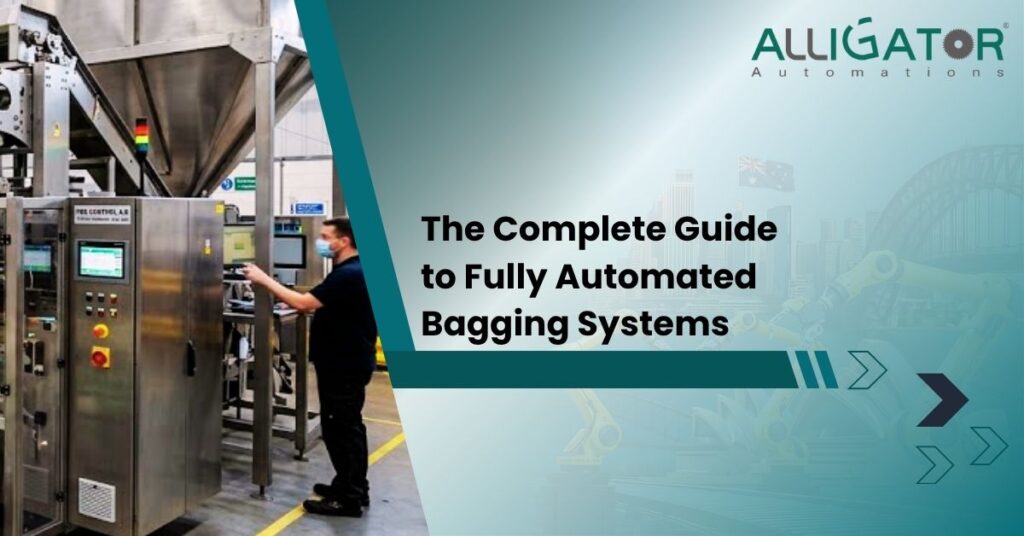
The Complete Guide to Fully Automated Bagging Systems
Summary : In this guide, we’ll explore everything businesses need to know about fully automated bagging systems, including how they work, their key components, major benefits, industry applications, return on investment, and important factors to consider before implementation. Whether you’re looking to improve packaging efficiency, reduce labor dependency, or scale production capacity, this article provides a comprehensive overview of how automated bagging technology can support long-term operational success.
Table of Contents
ToggleManufacturers across multiple industries are under increasing pressure to improve efficiency, maintain product quality, and keep operational costs under control. As production volumes grow and packaging requirements become more demanding, traditional manual bagging processes often struggle to deliver the speed, accuracy, and consistency needed for modern operations.
Fully automated bagging systems provide a practical solution by automating every stage of the packaging process—from bag feeding and product filling to sealing, conveying, and palletizing. These systems help businesses increase throughput, reduce human error, and create more streamlined production workflows.
Whether handling agricultural products, chemicals, plastic pellets, minerals, or building materials, automated bagging technology enables businesses to package products more efficiently while minimizing manual handling and improving overall productivity.
What Are Fully Automated Bagging Systems?
A fully automated bagging system is an integrated packaging solution that automates every stage of the bagging process with minimal human involvement.
Unlike manual or semi-automated systems, fully automated solutions manage the complete workflow automatically, including:
- Bag feeding and placement
- Product weighing
- Material filling
- Bag sealing or closing
- Product conveying
- Inspection and quality checks
- Palletizing and load preparation
The result is a continuous and highly efficient packaging operation capable of handling large production volumes while maintaining consistent quality standards.
As manufacturers across Australia continue investing in automation, fully automated bagging systems have become an essential component of modern production facilities.
What Are the Different Types of Bagging Machines?
Bagging machines are available in various configurations to suit different products, bag types, and production requirements. Choosing the right system depends on factors such as product type, packaging speed, accuracy, and automation needs.
Open-Mouth Bagging Machines
Designed for pre-opened bags, these machines are commonly used for grains, seeds, fertilizers, animal feed, and building materials.
Valve Bag Filling Machines
Ideal for powders and granular products such as cement, chemicals, and minerals, these machines fill bags through a valve opening while reducing dust.
Form-Fill-Seal (FFS) Machines
FFS machines create, fill, and seal bags automatically from a roll of film, making them suitable for high-volume production.
Bulk Bag Filling Machines
Also known as FIBC or jumbo bag fillers, these systems handle large-volume materials used in mining, agriculture, and bulk material operations.
Automatic Bagging Machines
These machines automate bag feeding, filling, weighing, and sealing processes to improve efficiency and reduce labor requirements.
Robotic Bagging Systems
Robotic systems provide flexible and precise bag handling while integrating seamlessly with conveyors, palletizers, and other automation equipment.
Selecting the right bagging machine depends on your product, production goals, and operational requirements.
How Does a Fully Automated Bagging System Work?
Although configurations vary depending on the product and industry, most systems follow a similar process.
Automatic Bag Feeding
The process begins with an automatic bag feeder that picks empty bags from a magazine and accurately positions them for filling. This eliminates manual bag placement and ensures consistent operation throughout the production cycle.
Product Weighing and Filling
Once the bag is positioned, the product is measured using advanced weighing systems.
Depending on the application, the system may use:
- Net weighers
- Gross weighers
- Volumetric fillers
- Auger filling systems
These technologies ensure accurate bag weights while minimizing product giveaway and material waste.
Bag Sealing and Closing
After filling, bags move automatically to the closing station.
Depending on the bag type and product requirements, closure methods may include:
- Heat sealing
- Sewing or stitching
- Pinch-top sealing
- Valve bag sealing
Proper sealing helps maintain product integrity during storage and transportation.
Product Conveying
Sealed bags are transferred through conveyor systems for inspection, labeling, and preparation for shipment. Automated conveying reduces handling time and keeps production flowing smoothly.
Robotic Palletizing
At the end of the line, robotic palletizers stack bags according to predetermined patterns. This creates stable pallet loads while eliminating repetitive manual lifting tasks.
Main Components of a Fully Automated Bagging System
Several technologies work together to create a seamless packaging process.
Core Components
- Automatic bag placer
- Product feeding system
- Weighing equipment
- Bag filling machine
- Bag sealing or closing unit
- Conveyor systems
- Check weigher
- Product inspection equipment
- Labeling system
- Robotic palletizer
- Stretch wrapping machine
- Central PLC control system
Each component plays a critical role in ensuring packaging accuracy, production speed, and operational efficiency.
The ability to integrate these technologies into a single automated line is what makes fully automated bagging systems so effective.
What Are the Benefits of Fully Automated Bagging Systems?
The growing adoption of automated packaging technology is driven by the significant advantages it delivers.
Increased Production Speed
Automated systems operate continuously and can process significantly more bags per hour than manual operations.
Improved Accuracy
Precise weighing technology ensures every bag meets required specifications, reducing overfilling and product giveaway.
Lower Labor Dependency
Automation minimizes the need for manual handling, allowing employees to focus on higher-value operational tasks.
Enhanced Workplace Safety
Reducing repetitive lifting and bag handling helps lower the risk of workplace injuries.
Consistent Product Quality
Automated controls maintain uniform packaging standards throughout production runs.
Reduced Product Waste
Accurate filling systems minimize material loss and improve resource utilization.
Greater Operational Efficiency
Automated processes reduce downtime, improve workflow consistency, and support higher production output.
Easier Business Scalability
As demand grows, automated systems can accommodate increased production requirements without significant labor expansion.
Which Industries Use Fully Automated Bagging Systems?
Automated bagging technology supports a wide range of industries that handle bulk materials and packaged products.
Common Industries
- Industrial Manufacturing
- Chemicals
- Carbon Black
- Plastic Pellets
- Building Materials
- Agriculture
- Grain Processing
- Seed Processing
These industries often require high-volume packaging operations where speed, consistency, and safety are critical.
Automated systems help maintain production efficiency while ensuring packaging quality remains consistent across every bag.
What Is the Difference Between Fully Automated and Semi-Automated Bagging Systems?
Many businesses evaluating packaging automation compare fully automated systems with semi-automated alternatives.
Feature | Semi-Automated System | Fully Automated System |
Labor Requirement | Moderate to High | Minimal |
Production Speed | Medium | High |
Accuracy | Good | Excellent |
Workplace Safety | Moderate | High |
Scalability | Limited | Excellent |
Operational Efficiency | Moderate | High |
Long-Term Cost Savings | Moderate | Significant |
Semi-automated systems may be suitable for lower production volumes, but businesses seeking long-term efficiency and scalability often benefit more from fully automated solutions.
How Do Fully Automated Bagging Systems Improve Workplace Safety?
Workplace safety remains a priority for manufacturing facilities. Manual bagging operations often involve repetitive lifting, bending, carrying, and handling heavy materials. Over time, these tasks can increase the risk of injuries and employee fatigue.
Fully automated bagging systems help create safer workplaces by:
- Reducing manual lifting
- Minimizing repetitive movements
- Lowering exposure to dust and airborne materials
- Improving ergonomic working conditions
- Reducing forklift traffic in production areas
- Enhancing process monitoring and control
A safer working environment often contributes to improved productivity and employee satisfaction.
Understanding the ROI of Fully Automated Bagging Systems
Investing in automation requires careful financial evaluation. While the initial investment may be significant, many businesses achieve strong long-term returns through operational improvements.
Labor Cost Savings
Reducing manual packaging activities lowers ongoing labor expenses while helping address workforce shortages.
Reduced Product Giveaway
Accurate filling systems ensure product quantities remain consistent, reducing unnecessary material loss.
Higher Throughput
Faster production rates enable facilities to process more products within the same operating hours.
Lower Downtime
Modern automation systems improve reliability and reduce interruptions caused by manual processes.
Improved Operational Efficiency
Automation creates a streamlined workflow that supports sustained productivity and growth. Over time, these benefits can generate substantial cost savings and improve overall profitability.
What Should You Consider Before Choosing a Fully Automated Bagging System?
Not all bagging systems are the same. Selecting the right solution requires evaluating operational requirements carefully. Important Considerations :
Product Characteristics
The type of product being packaged affects the bagging system you need. Factors such as size, density, moisture content, and flowability influence filling accuracy and equipment selection.
Bag Type and Material
The system should be compatible with the bags you use, whether they are paper, plastic, woven polypropylene, valve bags, or bulk bags. This helps ensure proper handling and secure sealing.
Desired Production Capacity
Consider both your current production volume and future growth plans. Choosing a system with the right capacity helps maintain efficiency and avoid production bottlenecks.
Available Floor Space
Fully automated bagging systems require adequate space for equipment such as conveyors and palletizers. Evaluating your facility layout helps ensure smooth installation and operation.
Filling Accuracy Requirements
If precise bag weights are important for your products, select a system with advanced weighing and filling technology. Accurate filling reduces waste and improves consistency.
Integration with Existing Equipment
The bagging system should integrate easily with your existing machinery and material handling equipment. Good integration improves workflow and overall productivity.
Future Expansion Plans
Businesses expecting growth should choose a scalable system that can be upgraded as production demands increase. This helps protect your long-term investment.
Maintenance Requirements
Consider maintenance needs, spare parts availability, and technical support before making a decision. Easy-to-maintain equipment can reduce downtime and improve reliability.
Energy Efficiency
Energy-efficient systems can help lower operating costs while maintaining high performance. This can also support sustainability initiatives.
Return on Investment Goals
Evaluate how the system can improve productivity, reduce labor costs, and minimize product waste. Understanding the expected ROI helps justify the investment and supports better decision-making.
Understanding these factors helps businesses choose a system that aligns with both current needs and future growth objectives.
Future Trends in Automated Bagging Technology
Automation technology continues to evolve rapidly, bringing new capabilities to packaging operations.
Emerging trends include:
- Advanced robotic integration
- Smart sensor technology
- Predictive maintenance systems
- Industry 4.0 connectivity
- Real-time performance monitoring
- Remote diagnostics
- AI-driven process optimization
- Enhanced quality control systems
These innovations are helping manufacturers improve operational visibility, reduce downtime, and maximize equipment performance.
As industrial automation adoption continues to grow across Australia and global markets, businesses that invest in modern bagging technologies will be better positioned to meet future production demands.
Why Are Australian Manufacturers Investing in Automated Bagging Systems?
Manufacturers across Australia are increasingly turning to fully automated bagging systems to remain competitive in a rapidly evolving industrial landscape. Rising labor costs, workforce shortages, and growing production demands are making manual packaging processes less sustainable for many businesses. Automated bagging solutions help improve productivity by increasing packaging speeds, maintaining consistent bag weights, and reducing the risk of human error, allowing facilities to meet customer expectations more efficiently.
In addition to boosting operational performance, fully automated bagging systems support long-term business growth by improving workplace safety and reducing reliance on labor-intensive tasks. Industries such as agriculture, mining, chemicals, and building materials are adopting automation to streamline packaging operations, lower operating costs, and integrate with broader warehouse and manufacturing automation strategies. As businesses continue to focus on efficiency, scalability, and profitability, automated bagging technology is becoming an essential investment for modern production facilities.
The continued growth of Australia’s manufacturing industry is driving greater demand for automation solutions that help businesses increase output, reduce costs, and maintain consistent product quality.
Why Choose Alligator Automations Australia for Automated Bagging Systems?
With extensive experience in industrial automation and material handling, Alligator Automations Australia provides advanced bagging systems engineered to perform in demanding production environments. Whether a business requires a standalone bagging solution or a fully integrated end-of-line automation system, the company is committed to delivering technology that improves workplace safety, minimizes downtime, and maximizes return on investment. Alligator Automations Australia supports businesses operating in industries such as:
- Agricultural Equipment Operations
- Minerals & Mining
- Coal
- Sand
- Bulk Material Operations
- Fertilizer Manufacturing
- Animal Feed Production
- Food Processing
- Pet Food Manufacturing
By partnering with Alligator Automations Australia, businesses can implement automation solutions that help improve efficiency, strengthen competitiveness, and support future production demands.
Improve Efficiency with Advanced Automated Bagging Systems
As production demands continue to grow, investing in the right automation technology can make a significant difference to your operational efficiency, product consistency, and long-term profitability. At Alligator Automations Australia, we help businesses streamline their packaging processes with reliable and innovative automatic bagging machines, systems & solutions in Australia designed to reduce manual handling, increase throughput, and support sustainable business growth.
Whether you’re looking to upgrade an existing packaging line or implement a complete end-of-line automation solution, our team can help you find the right system for your specific operational requirements. Contact us today to discuss your project and discover how our automation expertise can help improve productivity, enhance workplace safety, and deliver measurable results for your business.
Frequently Asked Questions
What is a fully automated bagging system?
A fully automated bagging system is an integrated packaging solution that automatically performs bag feeding, product weighing, filling, sealing, conveying, and palletizing with minimal human intervention. It helps improve efficiency, accuracy, and productivity across industrial packaging operations.
How does a fully automated bagging system work?
The system automatically positions empty bags, fills them with the required product weight, seals the bags, and transfers them through conveyors for inspection and palletizing. All stages are controlled through automated equipment and centralized control systems.
What industries use fully automated bagging systems?
Fully automated bagging systems are widely used in industries such as agriculture, grain processing, chemicals, fertilizers, plastic pellets, minerals and mining, building materials, animal feed, food processing, and bulk material handling operations.
What are the benefits of fully automated bagging systems?
Key benefits include higher production speeds, improved weighing accuracy, reduced labor requirements, enhanced workplace safety, lower product waste, better packaging consistency, and improved operational efficiency.
What is the difference between a fully automated and semi-automated bagging system?
A semi-automated system still requires operator involvement for certain tasks, while a fully automated system handles the entire packaging process automatically. Fully automated systems typically offer higher throughput, better consistency, and greater long-term cost savings.
Can automated bagging systems handle different bag sizes and materials?
Yes. Modern automated bagging systems can be configured to handle various bag sizes, weights, and materials, including paper bags, woven polypropylene bags, plastic bags, valve bags, and bulk bags.
How do automated bagging systems improve workplace safety?
By reducing manual lifting, repetitive movements, and direct handling of heavy products, automated bagging systems help lower the risk of workplace injuries and create safer working environments for employees.
What factors should businesses consider before investing in a fully automated bagging system?
Important considerations include product characteristics, bag type, production capacity, available floor space, filling accuracy requirements, integration needs, future expansion plans, maintenance requirements, energy efficiency, and expected return on investment.
How quickly can a fully automated bagging system deliver ROI?
The return on investment varies depending on production volume and operational requirements. Many businesses achieve ROI through labor savings, increased throughput, reduced product waste, improved accuracy, and lower operating costs over time.
Are fully automated bagging systems suitable for growing businesses?
Yes. Fully automated bagging systems are designed to support scalability and can help growing businesses meet increasing production demands while maintaining efficiency, consistency, and product quality.
Recent Posts
Categories
Browse Our Automation Solutions
Explore our complete product catalogue and find the perfect solution for your industry.