
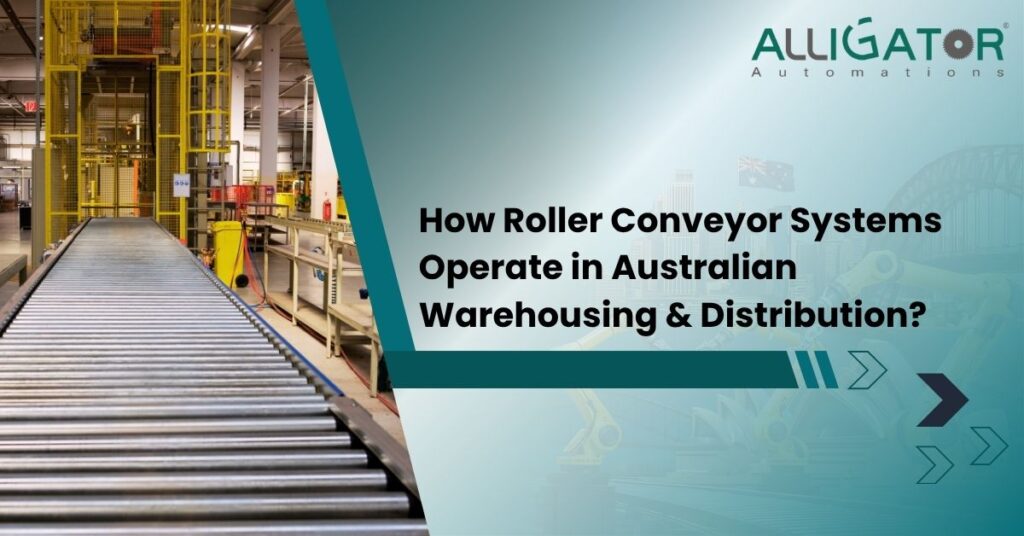
How Roller Conveyor Systems Operate in Australian Warehousing & Distribution?
Summary : Australia’s warehouse sector has had to move faster whether it wants to or not. eCommerce growth, next-day delivery pressure, and tighter margins have pushed distribution centres to rethink how products move through their buildings. Roller conveyor systems are one of the more practical answers to that problem. This guide explains how roller conveyor systems operate and why they have become a key part of warehouse operations.
Table of Contents
ToggleRoller conveyor systems help move cartons, packages, and materials quickly from one area of the warehouse to another with less manual effort. They improve workflow, reduce handling time, and support faster order processing. From receiving docks to final dispatch areas, these systems play an important role in Australian warehousing and distribution.
What Is a Roller Conveyor System?
A roller conveyor moves products using rotating rollers mounted in a frame. Workers place cartons, totes, or pallets on the rollers, and the goods travel through the facility without manual carrying at every step.
They’re used in eCommerce fulfillment, retail distribution, food and beverage warehouses, manufacturing, and 3PL operations. Depending on the setup, movement is powered by gravity, electric motors, or automated controls tied into a warehouse management system.
These systems are commonly used in:
- eCommerce fulfilment centres
- Retail distribution hubs
- Food and beverage warehouses
- Manufacturing facilities
- Third-party logistics (3PL) operations
Depending on the warehouse setup, roller conveyors may operate using gravity, motor-driven rollers, or fully automated controls integrated with warehouse management systems. Their main purpose is simple: move products efficiently while reducing time, labour, and handling errors.
How Roller Conveyor Systems Actually Operate in Australian Warehouses?
To understand their real value, it helps to follow the journey of a product moving through a typical Australian warehouse..
1. Product Loading at the Receiving Dock
When trucks unload, cartons go onto the conveyor, manually or with lifting equipment. At higher-volume sites, barcodes are scanned here. The WMS identifies the product type, destination zone, storage requirements, and dispatch priority. From that point, the conveyor handles transport.
This initial scan helps warehouse management software identify:
- Product type
- Destination zone
- Storage requirements
- Dispatch priority
Once scanned, the conveyor system takes over. Rather than requiring workers to manually transport products across the facility, the rollers move goods directly into sorting or storage areas.
2. Movement Begins Through Roller Action
This is where the conveyor system starts doing its real work. The movement depends on the type of roller conveyor being used.
Gravity conveyors use a slight downward slope. Put a carton on and it rolls forward. No electricity, low maintenance, easy to operate. They suit short-distance transfers, packing stations, and loading zones especially where the budget is tight.
Powered conveyors use electric motors or motorised drive rollers. They give operators control over speed, product spacing, direction changes, and stop-start movement. In facilities processing thousands of cartons a day, that control is what prevents bottlenecks.
3. Controlled Product Flow Through Sensors and Automation
On modern setups, sensors track each item’s position. They prevent collisions, manage speed, and control spacing between products.
One feature worth understanding: zero-pressure accumulation. Cartons queue without touching each other. That matters when products need to pause before a packing station or loading zone without it, things pile up, damage happens, and the line slows.
These sensors help regulate flow by:
- Detecting product presence
- Preventing collisions
- Managing conveyor speed
- Controlling product spacing
On a busy dispatch floor, products often need to pause before entering packing stations or loading zones. Without spacing control, cartons could collide, causing damage or operational delays.
4. Sorting and Routing Products to Their Next Destination
After movement begins, products are directed toward specific warehouse zones. This may include:
- Storage aisles
- Picking stations
- Packing benches
- Cross-docking lanes
- Dispatch staging areas
Automated diverters can route products based on barcode data.
For example, a carton destined for Perth may be directed toward one dispatch lane, while another headed to Adelaide follows a different path. In practical warehouse settings, this automated routing significantly reduces human error
5. Final Dispatch and Outbound Loading
The final stage is dispatch. Packed cartons travel through conveyor lanes toward outbound docks where they are loaded for transport. This direct movement reduces unnecessary handling.
Warehouse teams can load delivery vehicles faster, reducing truck turnaround times and improving delivery schedules. For Australian businesses managing regional distribution across large geographic areas, faster dispatch can make a major difference in customer satisfaction.
From the moment products enter the warehouse to the moment they leave, roller conveyor systems help create a continuous operational flow.
What Are the Types of Roller Conveyor Systems Used in Australia?
Different warehouse operations require different conveyor solutions. Here are the most common systems used across Australian distribution facilities.
Gravity roller conveyors
No electricity, low maintenance, affordable. Good for lower-volume operations or any business that wants a simple efficiency improvement without a large capital outlay.
Powered roller conveyors
Motor-driven, faster, more controllable. Standard in large distribution centres and eCommerce hubs.
Flexible expandable conveyors
Adjustable and reconfigurable. Useful during seasonal spikes when temporary processing lines need to go up quickly and come back down again.
Why Do Australian Warehouses Prefer Roller Conveyor Systems?
So what makes roller conveyors such a practical fit for Australian warehousing? Several operational advantages stand out.
Labour shortages in logistics are an ongoing problem. Roller conveyors cut repetitive transport tasks so workers can focus on picking, packing, and quality checks the work that requires actual judgment.
Same-day and next-day delivery expectations have also changed what’s acceptable. Continuous product flow reduces downtime between receiving and dispatch. Gravity systems use no electricity; powered systems typically run on low-voltage motors. And modular setups can expand as operations grow, without rebuilding from scratch.
On safety: less manual handling means fewer repetitive strain injuries. Worth mentioning, not overselling.
Which Industries Across Australia Use Roller Conveyor Systems?
Roller conveyor systems are used across a wide range of industries in Australia because they help improve product movement, reduce manual handling, and support faster warehouse operations.
eCommerce
The eCommerce industry relies heavily on roller conveyor systems to process large volumes of customer orders quickly and accurately. These systems help fulfilment centres move products efficiently through picking, packing, and dispatch stages.
Food and Beverage
Food and beverage warehouses use roller conveyor systems to maintain efficient workflow while handling packaged goods safely and consistently. These systems support smooth movement across storage and dispatch zones.
Retail Distribution
Retail distribution centres use roller conveyors to handle high carton volumes and ensure products move smoothly between storage, sorting, and shipping areas. This helps retailers meet tight delivery schedules.
Manufacturing
Manufacturing facilities use roller conveyors to transport products between production stages, packaging lines, and storage areas. This improves operational flow and reduces delays in the manufacturing process.
Third-Party Logistics (3PL)
Third-party logistics (3PL) providers depend on roller conveyor systems to manage products for multiple clients. Their flexibility allows these warehouses to handle changing order volumes and diverse distribution requirements efficiently.
What Is the Future of Roller Conveyor Systems in Australian Distribution?
Warehouse automation continues to evolve. Roller conveyor systems are becoming smarter through technologies like:
- IoT monitoring
- Predictive maintenance
- Smart sensors
- AI-assisted routing
- Real-time performance analytics
These innovations help Australian warehouses improve uptime and identify maintenance needs before breakdowns occur. The focus is shifting from simple transport systems to intelligent operational infrastructure.
How Do Roller Conveyor Systems Work in Warehouses?
Roller conveyor systems move products from one warehouse area to another using rotating rollers. Depending on the setup, products move through gravity or powered motors, helping cartons travel smoothly through receiving, sorting, packing, and dispatch zones.
Modern systems also use sensors to control speed and spacing, preventing delays and keeping workflow organised. This helps warehouses process orders faster, reduce manual effort, and maintain smooth day-to-day operations.
Why Choose Alligator Automations Australia for Conveyor Solutions?
Choosing the right conveyor partner can make a big difference to how efficiently your warehouse or production facility operates. Alligator Automations Australia delivers practical and reliable automation systems designed to match the real needs of Australian industries. With a strong focus on performance, durability, and customised engineering, the company provides advanced intralogistic conveyor solutions that help businesses improve workflow, reduce manual handling, and create smoother material movement across every stage of operations.
From specialised tyre handling solutions for manufacturing environments to efficient pallet handling solutions for high-volume warehouse operations, Alligator Automations Australia offers systems built for productivity and long-term reliability. The company also provides smart product handling solutions for cases, bags, and crates, ensuring safe and efficient movement for a wide range of materials. Whether your goal is to streamline warehouse distribution or optimize factory processes, Alligator Automations Australia delivers conveyor solutions designed to support better operational performance.
Let’s Design a Conveyor System That Works for You
Looking to improve warehouse efficiency and create a smoother material handling process? At Alligator Automations Australia, we design advanced conveyor solutions built to match the real operational needs of Australian warehouses and distribution centres. As a trusted intralogistics conveyors manufacturer in Australia, we help businesses reduce manual handling, improve workflow accuracy, and build scalable systems that support long-term growth.
Whether you’re upgrading an existing facility or planning a new automation setup, our team is here to help you find the right solution for your operation. Contact us today to discuss your warehouse requirements and discover how Alligator Automations Australia can deliver smart conveyor systems tailored for better performance, faster throughput, and efficient distribution across Australia.
Frequently Asked Questions
What is a roller conveyor system used for in warehouses?
A roller conveyor system is used to move cartons, packages, and other materials efficiently within a warehouse. It helps streamline product movement between receiving, sorting, packing, and dispatch areas while reducing manual handling.
How do roller conveyor systems work in Australian warehouses?
Roller conveyor systems operate by using rotating rollers to transport goods across different warehouse zones. Depending on the system type, movement is powered either by gravity or electric motors, allowing smooth and controlled product flow.
What are the main types of roller conveyor systems?
The three main types are gravity roller conveyors, powered roller conveyors, and flexible expandable roller conveyors. Each type is designed for different warehouse needs based on product volume and operational requirements.
Why are roller conveyor systems important for warehouse efficiency?
They improve warehouse efficiency by reducing manual labour, speeding up product movement, minimising delays, and helping businesses process orders faster with greater accuracy.
Which industries in Australia commonly use roller conveyor systems?
Roller conveyor systems are widely used in eCommerce, retail distribution, manufacturing, food and beverage, and third-party logistics (3PL) warehouses across Australia.
Recent Posts
Categories
Browse Our Automation Solutions
Explore our complete product catalogue and find the perfect solution for your industry.