
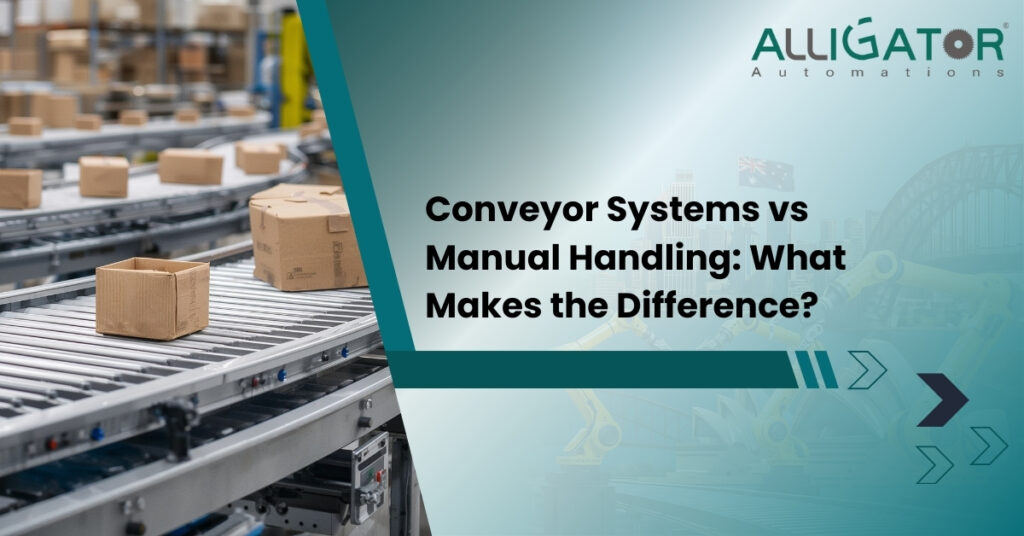
Conveyor Systems vs Manual Handling: What Makes the Difference?
Summary: In modern industries, choosing between conveyor systems and manual handling can significantly impact productivity, safety, and operational costs. Conveyor systems automate material movement, while manual handling relies on human labor. This blog explores the differences, benefits, challenges, and key factors businesses should consider when deciding the best approach for their operations.
Table of Contents
ToggleEfficient material handling is critical for manufacturing, warehousing, and logistics operations. Companies face the challenge of deciding whether to rely on traditional manual handling methods or invest in automated conveyor systems. Each option has distinct advantages, limitations, and cost implications. Understanding these differences helps businesses increase productivity, reduce workplace injuries, and optimize operational efficiency.
What is Manual Handling?
Manual handling refers to tasks where human workers lift, move, carry, push, or pull materials without mechanized assistance. It is one of the oldest and most common methods of material transport in industries, warehouses, and retail environments.
Examples include:
- Workers lifting boxes onto shelves or pallets
- Loading/unloading goods from trucks
- Moving items between workstations by hand
Manual handling is flexible and requires minimal equipment, but it comes with challenges like fatigue, injury risk, and inconsistent productivity.
What are Conveyor Systems?
Conveyor systems are mechanical systems designed to transport materials or products automatically from one point to another. They are widely used in manufacturing, packaging, and logistics to streamline operations and improve efficiency.
Types of conveyor systems include:
- Belt conveyors: Ideal for moving bulk items and packaged goods
- Roller conveyors: Efficient for heavy pallets or boxes
- Chain conveyors: Used in manufacturing for heavy-duty items
- Automated sorting conveyors: For warehouses and e-commerce fulfillment
Conveyor systems reduce manual labor, improve speed, and ensure consistent workflow.
Key Differences Between Conveyor Systems and Manual Handling
Feature | Manual Handling | Conveyor Systems |
Labor Requirement | High, relies entirely on human workforce | Minimal, automated operation |
Speed | Moderate, limited by human endurance | High, consistent, and programmable |
Safety | Higher risk of injuries (back, strain, slips) | Safer, reduces repetitive strain and accidents |
Flexibility | Can adapt to irregular shapes and tasks | Limited to system design; less flexible |
Cost | Low initial investment | Higher upfront cost but long-term savings |
Consistency | Dependent on worker skill and fatigue | Consistent output and reliability |
Maintenance | Minimal, mainly human training | Requires routine mechanical maintenance |
Advantages of Conveyor Systems
Increased Productivity: Conveyor systems move materials faster and more efficiently than manual labor, reducing processing time and increasing throughput.
Improved Safety: By reducing manual lifting, pushing, and carrying, conveyor systems minimize workplace injuries, such as strains, sprains, and repetitive motion injuries.
Consistency and Accuracy: Automation ensures consistent movement and handling of goods, reducing human errors in transport, sorting, or packaging.
Long-Term Cost Savings: Although initial investment is high, conveyor systems reduce labor costs, minimize downtime, and prevent product damage, providing a strong return on investment.
Scalability: Conveyor systems can expand with business growth, supporting higher volumes and more complex operations without significantly increasing labor costs.
Advantages of Manual Handling
Flexibility: Manual handling allows workers to adapt to unusual shapes, sizes, or fragile items that may not fit standard conveyor systems.
Low Initial Investment: It requires minimal capital expenditure, making it suitable for small-scale operations or startups.
Easy Implementation: Manual handling does not require specialized equipment or installation. Training workers is usually sufficient to start operations immediately.
Adaptable to Changing Layouts: Manual systems can adjust to changes in workspace or production layout without major modifications.
Challenges of Conveyor Systems
While conveyor systems offer many benefits, they also come with challenges:
- High upfront cost for purchase and installation
- Maintenance requirements for belts, motors, and rollers
- Limited flexibility for unusual product sizes or shapes
- Energy consumption may increase operational expenses
Challenges of Manual Handling
Manual handling, while flexible, presents its own risks:
- Injury risk: Back strains, slips, and repetitive motion injuries
- Fatigue: Productivity decreases as workers tire
- Inconsistency: Human error can affect speed, accuracy, and quality
- Higher labor costs for large-scale operations
When to Choose Conveyor Systems?
Conveyor systems are ideal for:
- High-volume manufacturing or warehousing operations
- Repetitive tasks requiring speed and consistency
- Heavy or bulky items that are difficult to handle manually
- Operations where workplace safety is a priority
- Long-term cost savings and scalability are needed
When to Choose Manual Handling?
Manual handling is better suited for:
- Small-scale operations or startups with low budgets
- Tasks requiring flexibility for irregular or delicate items
- Environments where installation of conveyors is not feasible
- Temporary projects or short-term workflows
Hybrid Approach: Best of Both Worlds
Many businesses adopt a hybrid approach, combining conveyor systems with manual handling. For example:
- Conveyors for bulk movement of goods across long distances
- Manual handling for fragile, irregular, or customized items
This approach maximizes efficiency while retaining flexibility.
Making the Right Material Handling Choice!
Choosing between conveyor systems and manual handling depends on your business needs, volume, budget, and safety priorities. Conveyor systems provide speed, consistency, and long-term cost savings, while manual handling offers flexibility and low upfront costs.
For companies looking to optimize warehouse operations or manufacturing efficiency, a careful evaluation of workflow, product type, and labor availability will help determine the most suitable solution—or even a hybrid approach combining both methods. Businesses in Australia can explore intralogistics conveyor solutions in Australia to implement tailored systems that improve safety, productivity, and operational efficiency.
FAQ’s
Are conveyor systems safer than manual handling?
Yes, they reduce risks of back injuries, slips, and repetitive motion injuries.
Can conveyor systems handle fragile items?
Yes, but they may require customized belts, padding, or handling mechanisms.
Do conveyor systems require a lot of maintenance?
Yes, regular inspection and maintenance of belts, rollers, and motors are necessary.
How does manual handling impact worker fatigue?
Extended manual handling can cause fatigue, reducing productivity and increasing injury risk.
Recent Posts
Categories
Browse Our Automation Solutions
Explore our complete product catalogue and find the perfect solution for your industry.