Common Palletizing Problems and How to Solve Them?

Common Palletizing Problems and How to Solve Them? Summary : From product misalignment and conveyor jams to unstable pallet loads, gripper failures and unexpected downtime, palletizing problems can affect the entire end-of-line process. This guide explains the most common palletizing problems, what causes them, practical ways to solve them, and how proper maintenance, integration and automation design can help prevent recurring issues. Palletizing is often the final step before products move into storage, transport or distribution. When the system works properly, products are stacked consistently and production runs smoothly. However, issues with conveyors, sensors, grippers or control systems can quickly stop the process and create bottlenecks. Problems may also result from product dimensions, packaging quality, conveyor speed or poor communication between machines. Identifying the root cause instead of repeatedly resetting the equipment helps reduce downtime, recognise warning signs early and keep the production line running reliably. What Are The Most Common Palletizing Problems? Common issues include product misalignment, conveyor jams, unstable pallet loads, product slipping, inconsistent stacking patterns, sensor faults and unexpected machine stops.The right solution depends on where the fault occurs and what causes it. A palletizer should therefore be assessed as part of the complete production line rather than as a standalone machine. Product Misalignment During Palletizing Product misalignment occurs when cartons, bags, boxes or other products do not reach the palletizing area in the expected position. This can make accurate picking and stacking difficult and may result in poor pallet patterns. Common Causes Of Product Misalignment Several factors can contribute to alignment problems, including incorrect conveyor spacing, worn guides, poorly positioned sensors, inconsistent packaging dimensions and excessive conveyor speed. Products may also arrive rotated or shifted after passing through transfer points. How To Solve Product Misalignment Start by checking the conveyor guides and confirming that products have enough space to move without touching one another. Inspect and clean sensors, then verify that they are positioned correctly. Conveyor speed should also be matched with the requirements of the palletizing process. If different products are being handled, confirm that the programmed settings match their dimensions and orientation. For applications with greater product variation, positioning or vision-based systems may provide better control than relying only on basic detection sensors. Palletizing Systems Experience Conveyor Jams A conveyor jam can quickly stop a palletizing cell and may lead to product accumulation upstream. The palletizer itself may be functioning correctly while the actual problem occurs at an infeed or transfer point. Common Causes Of Conveyor Jams Typical causes include incorrect product spacing, damaged belts or rollers, poorly adjusted guides, unsuitable conveyor speeds and inconsistent product dimensions. A product that is slightly larger or misshapen can also create repeated problems at the same transfer location. How To Prevent Conveyor Jams Inspect transfer points regularly and check whether products are entering the palletizer with consistent spacing. Conveyor speeds should be coordinated across connected equipment so products do not arrive too quickly or too slowly. Recurring jams should be recorded so the exact location and conditions can be identified. Operators should also follow safe jam-clearing practices for palletising machines rather than reaching into an operating system. . Unstable Pallet Loads A pallet may look complete while still being unstable. Products can lean, shift or collapse during transport if the stacking pattern does not provide enough support. Common Causes Of Unstable Pallets Poor load stability can result from an unsuitable stacking pattern, uneven product dimensions, incorrect orientation, excessive pallet height or weak packaging. Bags and flexible packages can be particularly challenging because their shape may change as layers are built. How To Improve Pallet Stability? The pallet pattern should be selected according to product size, weight, shape and packaging characteristics. Weight should be distributed consistently, and layers need to remain as square as practical. For suitable applications, layer sheets, compacting systems, wrapping equipment or other load-stabilisation methods can improve the finished pallet. The key is to assess the complete load rather than looking only at whether every product has been placed on the pallet. Products Slip Or Fall During Robotic Palletizing Products slipping from a robot gripper can damage packaging and create repeated stops. In many cases, the problem is related to the end-of-arm tooling rather than the robot itself. Common Causes Of Product Slippage Possible causes include low vacuum pressure, damaged suction cups, leaks, incorrect gripping force or an unsuitable gripper design. Product weight, surface finish and packaging material can also change how securely an item can be handled. How To Solve Gripper Problems? Inspect hoses, valves, fittings, suction cups and other tooling components. Confirm that vacuum or air pressure remains within the required operating range. The tooling should be selected around the actual product rather than based only on the robot’s payload. Cartons, bags, drums, buckets and shrink-wrapped products can require very different handling methods. When products or packaging change, the tooling and gripping settings should also be reviewed. Inconsistent Pallet Patterns A palletizing system may complete the required number of products but still create an inconsistent pattern. Products may sit too far apart, rows may be misaligned or layers may not match the programmed arrangement. How To Fix Inconsistent Pallet Patterns? Check whether the correct pallet recipe or product program is selected. Verify product dimensions and review the robot’s programmed positions or layer settings. Positioning errors may also result from conveyor movement or changes in product presentation. Make sure the product reaches the pick point in the same orientation expected by the program. For operations handling several SKUs, flexible palletizing systems can make pattern changes easier. Robotic palletizing systems, for example, can be configured for different products and pallet patterns when the application calls for greater flexibility. Sensors Cause Palletizer Faults Sensors are responsible for detecting products, pallets, positions and operating conditions. When a sensor becomes dirty, damaged or misaligned, the machine may stop even though there is no obvious mechanical fault. How To Troubleshoot Sensor Problems? Begin with a visual inspection. Clean sensor lenses and reflectors and check whether the sensor has
How to Choose the Right Conveyor System in Australia?

How to Choose the Right Conveyor System in Australia? Summary : Choosing a conveyor system is about more than finding equipment that moves products from one point to another. The right solution needs to match the products you handle, production volume, available space, operating environment, safety requirements and future plans. This guide explains the key factors businesses should assess before investing in a conveyor system, including conveyor types, speed and capacity, layout, maintenance, energy use, safety, integration and long-term operating costs. Conveyor systems are widely used in manufacturing, warehousing, logistics, food processing, packaging and distribution to move products efficiently between different stages. They reduce manual handling, improve workflow consistency and support smoother material movement throughout a facility. However, the right conveyor depends on your products, required speed, available space and future production needs. A system suitable for cartons may not work for pallets, bulk materials or delicate items, so it is important to assess your operation first and choose a conveyor that integrates effectively with your existing processes. Factors To Consider When Choosing The Right Conveyor System Assessing these factors before making a decision can help you select a system that performs reliably today and remains suitable as your operation grows. Application Requirements Start by understanding exactly what the conveyor needs to handle. Consider the type of products, their size, weight, shape, surface and packaging. A system designed for cartons may have very different requirements from one handling pallets, bags or bulk materials. You should also determine the required throughput and conveying speed. Consider peak production periods rather than relying only on average volumes. If products are fragile, unstable, hot, wet or prone to damage, these characteristics should also be included in the initial conveyor design. Conveyor Type Different conveyor types are suited to different material-handling applications. Belt conveyors can provide continuous movement for cartons, bags and packaged products, while roller conveyors are commonly used for cartons, totes and pallets. Chain conveyors can be considered for heavier loads, whereas screw conveyors are generally used for specific bulk-material applications. Modular and accumulation conveyors can also be useful where flexible layouts, controlled product flow or buffering between production stages are required. Rather than choosing a conveyor because it is widely used, match the conveyor type to the product and process. The right choice should provide stable movement, appropriate capacity and compatibility with the rest of your operation. Conveyor Length And Configuration The available space in your facility will influence the conveyor’s length, height and overall configuration. Before finalising the design, map the complete product movement path and identify walls, columns, machinery, doors, walkways and other obstacles. Consider whether your application requires straight sections, curves, transfers, inclines or declines. Maintenance and operator access should also be included in the layout rather than added later. It is also worth considering future expansion. A layout that allows additional conveyor sections, equipment or automation to be added later can provide greater flexibility as production requirements change. Speed And Capacity Conveyor speed should match the actual requirements of the process. Faster movement is not always better if products become difficult to control or the next production stage cannot keep up. Look at the required units per hour, product spacing, loading and unloading times, cycle times and accumulation requirements. The conveyor should have sufficient capacity to handle normal and peak workloads without creating unnecessary bottlenecks. A properly sized system balances speed with reliable product handling and the capacity of connected machinery. Safety And Maintenance Safety should be considered from the beginning of the conveyor design. Moving belts, rollers, chains and other components can create hazards where operators have access to moving parts. Depending on the application, important considerations may include guarding, emergency stopping arrangements, safe access and suitable isolation procedures. The design should also support routine inspection and maintenance. Maintenance access is equally important. Motors, belts, rollers and other serviceable components should be reasonably accessible so inspections, cleaning, repairs and replacement work can be carried out efficiently. Integration With Existing Equipment A conveyor rarely works as a completely independent machine. It may need to connect with packaging equipment, robotic palletizers, sensors, scanners, sortation systems, PLC controls or other production machinery. Before selecting a system, check how it will interact with your existing equipment. Consider product transfer points, control interfaces, communication requirements and available space around connected machinery. Good integration helps create a continuous workflow rather than separate pieces of equipment that operate independently. Durability And Reliability The conveyor should be capable of handling the demands of your working environment and expected workload. Consider the construction of the frame and the suitability of belts, rollers, chains, motors and other components for the application. Think about the maximum load, operating hours, environmental conditions and expected usage. Components that are exposed to dust, moisture, heat or frequent cleaning may need different specifications from equipment operating in a dry, controlled environment. Reliability is particularly important where conveyor downtime can interrupt production or delay warehouse operations. Selecting suitable components and allowing for proper maintenance can support more consistent operation. Energy Efficiency Energy consumption can become an important operating cost, particularly when conveyors run for long periods or form part of a larger automated system. Look for solutions that can operate at the speed required for the application without unnecessary energy use. Depending on the system, variable speed drives, efficient motors and suitable controls can help match conveyor operation with actual production requirements. Energy efficiency should be considered alongside throughput and performance rather than treated as a separate issue. A well-designed system should provide the required material flow without unnecessarily overworking the equipment. Cost And Long-Term Value The initial purchase price is only one part of the total investment. Compare the expected costs of installation, controls, energy consumption, routine maintenance, spare parts and potential downtime. A lower-priced conveyor may not provide the best value if it requires frequent repairs or is difficult to maintain. Similarly, paying for unnecessary capacity or features can increase costs without delivering a useful benefit. Consider the overall return
How Palletizing and Conveyor Automation Work Together?
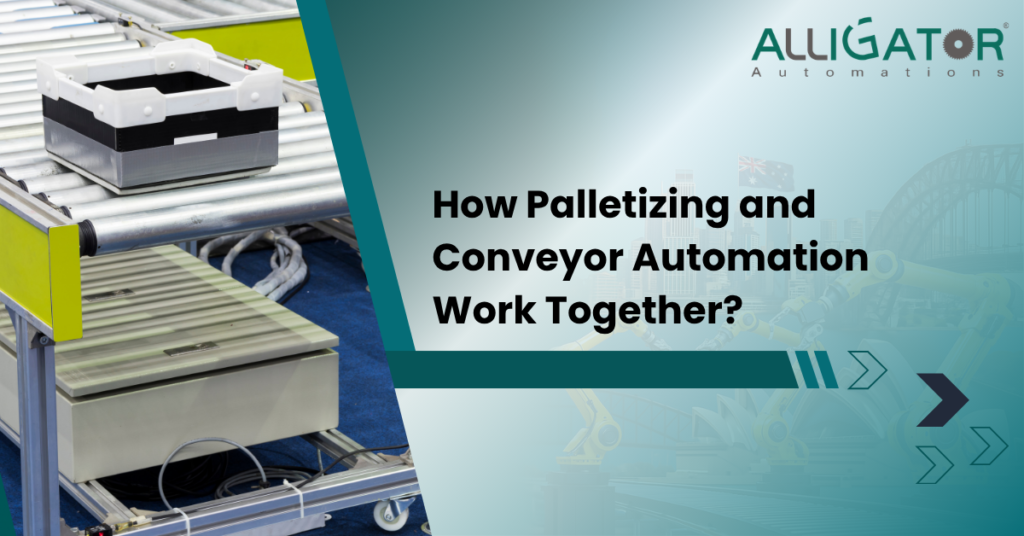
How Palletizing and Conveyor Automation Work Together? Summary: This blog explains how palletizing and conveyor automation work together to create a smoother end-of-line process, covering product movement, robotic stacking, sensors, controls, pallet handling, key benefits, integration considerations, common applications, and ways businesses can improve efficiency through connected automation. Modern manufacturing and packaging operations depend on more than simply producing products quickly. Once goods are packed, they need to be moved, organised and prepared for storage or dispatch without creating unnecessary delays. This is where palletizing and conveyor automation can work together to improve the final stages of production. A conveyor keeps products moving between different points, while a palletizer arranges those products into stable and organised pallet loads. When both systems are properly integrated, they can operate as part of one coordinated workflow rather than as separate machines. The connection between the two is important because a palletizer needs products to arrive at the right position and at the right time. A well-designed conveyor system helps make that possible, while sensors, controls and pallet handling equipment coordinate the overall process. What Is Palletizing Automation? Palletizing automation is the process of automatically placing packaged products onto pallets in a planned arrangement. Depending on the application, this may be carried out using robotic palletizers or other automated palletizing equipment. Instead of relying entirely on workers to repeatedly lift and stack cartons, bags, trays or cases, an automated system performs the task according to predefined settings. What Does A Palletizer Do? A typical palletizing process follows a straightforward sequence. Products arrive at the palletizing area, are detected and positioned, and are then picked and placed onto a pallet according to the programmed pattern. Once the pallet reaches its required configuration, it can be transferred to another stage such as wrapping, storage or dispatch. What Role Does The Conveyor Play? The conveyor is responsible for moving products or pallets between different stages of the operation. In an automated palletizing system, its role is much more than simply transporting products from one place to another. The conveyor can control how products approach the palletizer by maintaining appropriate spacing and positioning. This allows the palletizer to pick products more reliably and maintain a consistent cycle. Why Is Product Flow Important? A palletizer can only work effectively when products reach it in a controlled manner. If products arrive too close together, too far apart or out of position, the automated process may be interrupted. A properly designed conveyor system helps create a predictable flow so that the palletizer can perform each movement efficiently. Palletizing And Conveyor Automation Working Process Palletizing and conveyor automation work together by creating a coordinated flow from finished product to completed pallet. Each part of the system performs a specific job, but the controls and equipment allow them to operate as one process. 1. Products Leave The Packaging Line Once products have been packed, they enter the conveyor system and begin moving towards the palletizing area. This automated transfer reduces the need for workers to carry individual products, helping improve efficiency, maintain a steady production flow and reduce unnecessary manual handling at the end of the packaging line. Conveyors can also receive products directly from filling, sealing, cartoning or case-packing equipment, creating a continuous connection between packaging and palletizing. This smooth handover helps reduce bottlenecks, supports consistent output and allows operators to focus on monitoring equipment rather than repeatedly moving finished products by hand. 2. The Conveyor Controls Product Flow Sensors and conveyor controls monitor product movement, detect incoming items and maintain the required spacing between packages. Consistent spacing helps prevent collisions, reduces interruptions and allows the palletizer to identify, approach and pick each product in the correct sequence without unnecessary delays or positioning errors. Variable-speed drives and programmed conveyor zones can regulate movement according to the palletizer’s cycle time and production demand. If a product is missing, misaligned or delayed, the control system can pause or adjust the line, helping protect equipment, maintain accurate timing and prevent poorly formed pallet layers. 3. Products Reach The Palletizing Cell The conveyor transports products to a defined pickup or positioning point inside the palletizing cell. Products must arrive in a consistent orientation and location so the robotic or automated palletizer can complete each movement accurately, maintain the programmed cycle and place items correctly within the developing pallet pattern. Guides, stops, alignment devices and positioning conveyors may be used to prepare each product before pickup. These components help compensate for minor movement variations and ensure that cases, bags, cartons or containers are presented correctly for reliable gripping, accurate placement and repeatable pallet construction. 4. The Palletizer Picks And Places The Product The palletizer picks each product using suitable end-of-arm tooling and places it onto the pallet according to a programmed stacking pattern. The selected gripper depends on the product’s size, shape, weight and packaging, while the programmed arrangement helps create stable, organised and space-efficient pallet loads. Robotic palletizers can change patterns between products, allowing one system to handle different package formats and pallet sizes. During placement, the equipment controls speed, position and release timing to reduce product damage, maintain layer alignment and produce loads that are easier to wrap, transport and store. 5. The Pallet Conveyor Handles Pallet Movement When a pallet is complete, a pallet conveyor moves it away from the palletizing area and makes space for the next empty pallet. The finished load may then travel to a stretch wrapper, labelling station, storage area or dispatch zone, depending on the facility’s workflow. Pallet conveyors may include roller conveyors, chain conveyors, turntables or transfer units selected according to load weight and available floor space. Automated pallet detection confirms that the load has moved safely before another pallet enters, helping maintain a continuous cycle and reducing congestion around the palletizing cell. 6. Controls Coordinate The Entire Process Sensors, PLCs, HMIs and safety systems coordinate the movement of conveyors, pallets and palletizing equipment. These controls allow connected machines to communicate, respond to product or pallet availability
When Should You Replace Your Palletizing System?
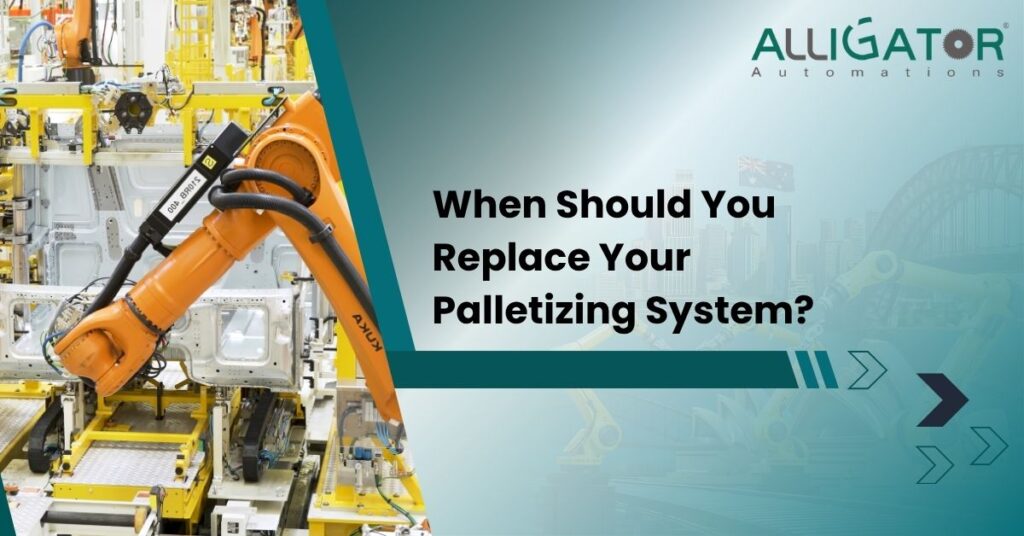
When Should You Replace Your Palletizing System? Summary : A palletizing system can keep running for many years, but that does not always mean it is still the right solution for your production line. As equipment gets older, frequent faults, rising maintenance expenses, outdated controls and changing production demands can make an existing system harder to manage. This guide explains the key signs that your palletizing system may be ready for an upgrade or replacement and what to consider before making the decision. Replacing a palletizing system does not always mean removing every part of the existing setup and installing a completely new line. Depending on the condition of the equipment, businesses may have several options. A system can sometimes be improved by replacing outdated controls, upgrading safety components, changing the end-of-arm tooling or improving the software and communication between machines. In other cases, the existing equipment may have reached a stage where a complete replacement is more practical. The right choice depends on the condition of the system and the production requirements it needs to meet. What Signs Show That Your Palletizing System Needs Replacement? Knowing the warning signs can help you make a decision before a major failure causes extended production disruption. 1. Frequent Breakdowns Are Becoming Normal Every industrial machine requires maintenance from time to time. The concern starts when breakdowns become a regular part of production. Repeated electrical faults, conveyor problems, sensor failures, robot errors or mechanical issues can indicate that the system is reaching the limits of its useful service life. Frequent breakdowns also have an indirect cost. Operators lose valuable production time, maintenance teams spend more hours troubleshooting, and production schedules become harder to maintain. One isolated failure may not justify replacement. A pattern of recurring faults is much more important. 2. Maintenance And Repair Costs Keep Increasing An older system can become expensive without appearing expensive at first. A replacement sensor or motor may seem like a manageable cost. However, when repair expenses continue throughout the year, the total can become significant. Add technician visits, emergency repairs, replacement components and lost production, and the true cost of keeping an aging machine running becomes much clearer. It is useful to compare your recent maintenance and downtime costs with the potential investment in a modern palletizing solution. For a broader perspective, reviewing the growth analysis report (2026-2035) for the MRO Market can also help businesses understand maintenance, repair and operations trends, cost pressures and future investment considerations. If you are repeatedly spending money to keep an unreliable system operating, replacement may provide better long-term value. 3. Spare Parts Are Difficult To Source Spare-parts availability can become a major issue as equipment ages. Older palletizing systems may depend on components that are no longer manufactured or supported. Finding suitable alternatives can take longer, and waiting for a critical component can keep production offline. Problems may include discontinued electronic components, outdated PLC hardware, older drives, specialised mechanical parts and limited technical support. A system that becomes increasingly difficult to maintain because of unavailable parts deserves closer attention. Planning a replacement before a critical component becomes impossible to source can help reduce unexpected interruptions. 4. Your Production Requirements Have Changed The system may still work exactly as designed, but your business may have moved on. Perhaps production volumes have increased. Maybe you have introduced new products, additional packaging formats or more product variations. You may also be operating additional shifts or planning future expansion. A palletizing system designed for yesterday’s production requirements may not be suitable for today’s workload. The important question is not simply, “Does the system still work?” It is, “Does the system still meet our current and future production needs?” 5. The System Has Become A Production Bottleneck Your palletizer is part of a larger production process. If upstream machines have become faster while the palletizing stage has remained unchanged, it can eventually become a bottleneck. For example, your packaging line may complete products faster than the palletizer can handle them. Products then begin to accumulate, operators may need to intervene, and the entire line can eventually be stopped. A modern palletizing solution should be considered as part of the complete end-of-line process. The goal is to maintain a suitable flow from packaging through pallet handling rather than improving one machine in isolation. 6. Safety Requirements Are Becoming Harder To Manage Safety should always be considered when reviewing older automation equipment. An ageing system may have older guarding arrangements, safety controls, emergency-stop components or access arrangements that require assessment. Increased manual intervention can also create additional opportunities for operator exposure to moving equipment. This does not automatically mean an old palletizer is unsafe. Instead, it means the existing system should be professionally assessed against the safety requirements applicable to your operation. If major safety improvements are required and the existing equipment is already outdated, replacement may be more practical than continually modifying old hardware. 7. The System Requires Too Much Manual Intervention Automation is intended to make repetitive production tasks easier and more consistent. When operators regularly need to correct the system, clear jams, reposition products or manually recover from routine faults, the benefits of automation can start to decline. Frequent manual intervention may point to issues with system design, controls, product handling or equipment capability. Consider how much operator time is being spent keeping the palletizing process running. If employees are repeatedly required to compensate for limitations in the automation, it may be time to reassess the system. 8. Controls And Software Are Outdated Mechanical equipment can sometimes remain functional for many years, while its control technology becomes outdated much sooner. Older PLCs, HMIs, drives and communication systems can make maintenance and troubleshooting more difficult. It may also be harder to integrate new equipment, collect useful production information or modify the system for new requirements. A system with poor diagnostics can take longer to troubleshoot because maintenance teams may have less information about what caused a fault. Modernising the control architecture may solve
The Benefits of Integrating Robotic Palletizers with Conveyor Systems
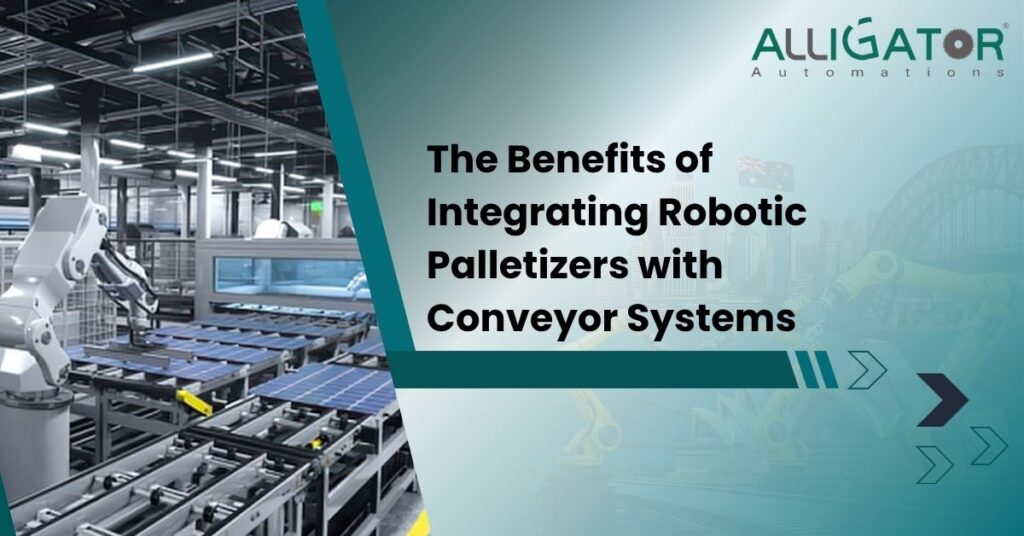
The Benefits of Integrating Robotic Palletizers with Conveyor Systems Summary : This blog explains how integrating robotic palletizers with conveyor systems can improve end-of-line operations. It covers the benefits of connecting product movement and palletising, including reduced manual handling, more consistent pallet stacking, smoother production flow, and greater flexibility for future automation. Modern production lines are expected to move products quickly, consistently, and safely from manufacturing to dispatch. However, even when production and packaging are highly automated, palletising can still become a bottleneck when products have to be transferred and stacked manually. Integrating robotic palletizers with conveyor systems creates a more connected end-of-line process, allowing products to move from one stage to the next with less interruption. This approach can reduce repetitive manual handling, improve pallet consistency, support smoother production flow, and make it easier to expand automation as operational requirements change. For businesses handling high product volumes, the combination of robotics and conveyors can become an important part of a more efficient material-handling strategy. How Does Robotic Palletizer Integration With Conveyors Work? The combined process usually begins when packaged products leave the production or packaging area. The conveyor carries them toward the palletising cell while sensors and controls monitor their position and movement. Once products reach the required pickup point, the robot uses its gripper to collect them and place them onto a pallet according to the selected stacking pattern. The process continues until the pallet is complete. A typical workflow can look like this: Production → Packaging → Product Conveyor → Detection & Positioning → Robotic Palletizing → Pallet Conveyor → Wrapping/Storage/Dispatch The control system coordinates the movement of products, robot operation, conveyor speeds, sensors, safety devices, and other equipment. This coordination is what allows the complete end-of-line process to operate more smoothly. Key Benefits Of Robotic Palletizers With Conveyor Systems Higher Production Throughput One of the most important benefits is the potential to improve production flow. In a manual setup, products may need to be collected, carried, positioned, and stacked by operators. These activities can introduce pauses between production stages. With an integrated conveyor and robotic palletizer, products can move continuously toward the palletising cell. The robot can then handle the stacking process without requiring repeated manual transfer. This can help reduce waiting between processes, improve equipment utilisation, and minimise bottlenecks at the end of the production line. The actual improvement will depend on product characteristics, robot capacity, conveyor design, and required production rates. Reduced Repetitive Manual Handling Manual palletising can involve frequent lifting, carrying, bending, turning, reaching, and stacking. When these activities are repeated throughout a shift, they can place significant physical demands on workers. Automation can reduce the amount of repetitive handling required by allowing the robotic system to perform the physical palletising task. Employees can instead focus on activities such as machine monitoring, quality checks, production supervision, maintenance support, and material coordination. Reducing repetitive lifting and other physically demanding tasks can contribute to a safer and more comfortable working environment. Improved Palletising Accuracy And Consistency A robotic palletizer follows programmed movements and stacking patterns. This creates a high level of repeatability when the same products and pallet configurations are being processed. Consistent pallet formation can help improve: Product positioning Load stability Stack uniformity Repeatability between production runs Overall presentation of finished pallets A well-designed stacking pattern can also make finished pallets easier to wrap, transport, store, and handle. Smoother Product Flow And Fewer Bottlenecks A robotic palletizer alone does not automatically create a smooth production line. The way products arrive at the robot is equally important. An appropriately designed conveyor system can maintain product flow, provide controlled accumulation, and deliver products at the required position and rate. This reduces unnecessary stops and manual intervention around the palletising station. When conveyor controls and robotic operation are properly coordinated, the result is a more predictable transition between packaging and palletising. Better Use Of Labour Automation does not necessarily mean removing people from the process. Instead, it can change how employees spend their time. Instead of having workers continuously perform repetitive pallet stacking, businesses can use their workforce for tasks that require observation, decision-making, technical knowledge, or quality control. This can create a better balance between human expertise and automated equipment while reducing the amount of labour tied directly to repetitive end-of-line activity. Better Workplace Ergonomics Some production environments involve products that are heavy, awkward, or difficult to handle repeatedly. Moving them manually onto pallets can require considerable physical effort. Robotic palletising can reduce the number of repetitive lifting and positioning tasks operators have to perform. The robot takes on the physically repetitive part of the process while workers supervise and manage the operation. The ergonomic benefits will depend on how the complete system is designed and which manual tasks are being removed. More Flexible Product Handling Modern production environments often handle multiple SKUs, packaging formats, and pallet configurations. A properly programmed robotic palletizer can accommodate different patterns and product requirements. Depending on the application, the system can be configured for products such as cartons, bags, crates, totes, drums, and other packaged goods. Gripper selection is particularly important because the end-of-arm tooling must be suitable for the product’s size, weight, shape, packaging and handling characteristics. Better Use Of Available Floor Space Factory space is often limited, particularly when businesses are trying to increase production without significantly expanding their facilities. Robotic systems can be designed around the available production layout. The robot’s reach, conveyor routing, pallet positions, guarding, and operator access can all be considered during system planning. A compact design can help make better use of the available area, although the final footprint always depends on the application and required safety clearances. Easier Scalability For Growing Operations Production requirements can change over time. A system designed only for today’s requirements may become restrictive as product volumes increase or additional SKUs are introduced. An integrated automation solution can be planned with future requirements in mind. Depending on the design, businesses may later add conveyor sections, pallet
Warehouse Automation Solutions: Conveyors, Palletizing, and Robotics Explained
Warehouse Automation Solutions: Conveyors, Palletizing, and Robotics Explained Summary : This blog explains how integrating robotic palletizers with conveyor systems can improve end-of-line operations. It covers the benefits of connecting product movement and palletising, including reduced manual handling, more consistent pallet stacking, smoother production flow, and greater flexibility for future automation. Modern production lines are expected to move products quickly, consistently, and safely from manufacturing to dispatch. However, even when production and packaging are highly automated, palletising can still become a bottleneck when products have to be transferred and stacked manually. Integrating robotic palletizers with conveyor systems creates a more connected end-of-line process, allowing products to move from one stage to the next with less interruption. This approach can reduce repetitive manual handling, improve pallet consistency, support smoother production flow, and make it easier to expand automation as operational requirements change. For businesses handling high product volumes, the combination of robotics and conveyors can become an important part of a more efficient material-handling strategy. How Does Robotic Palletizer Integration With Conveyors Work? The combined process usually begins when packaged products leave the production or packaging area. The conveyor carries them toward the palletising cell while sensors and controls monitor their position and movement. Once products reach the required pickup point, the robot uses its gripper to collect them and place them onto a pallet according to the selected stacking pattern. The process continues until the pallet is complete. A typical workflow can look like this: Production → Packaging → Product Conveyor → Detection & Positioning → Robotic Palletizing → Pallet Conveyor → Wrapping/Storage/Dispatch The control system coordinates the movement of products, robot operation, conveyor speeds, sensors, safety devices, and other equipment. This coordination is what allows the complete end-of-line process to operate more smoothly. Key Benefits Of Robotic Palletizers With Conveyor Systems Higher Production Throughput One of the most important benefits is the potential to improve production flow. In a manual setup, products may need to be collected, carried, positioned, and stacked by operators. These activities can introduce pauses between production stages. With an integrated conveyor and robotic palletizer, products can move continuously toward the palletising cell. The robot can then handle the stacking process without requiring repeated manual transfer. This can help reduce waiting between processes, improve equipment utilisation, and minimise bottlenecks at the end of the production line. The actual improvement will depend on product characteristics, robot capacity, conveyor design, and required production rates. Reduced Repetitive Manual Handling Manual palletising can involve frequent lifting, carrying, bending, turning, reaching, and stacking. When these activities are repeated throughout a shift, they can place significant physical demands on workers. Automation can reduce the amount of repetitive handling required by allowing the robotic system to perform the physical palletising task. Employees can instead focus on activities such as machine monitoring, quality checks, production supervision, maintenance support, and material coordination. Reducing repetitive lifting and other physically demanding tasks can contribute to a safer and more comfortable working environment. Improved Palletising Accuracy And Consistency A robotic palletizer follows programmed movements and stacking patterns. This creates a high level of repeatability when the same products and pallet configurations are being processed. Consistent pallet formation can help improve: Product positioning Load stability Stack uniformity Repeatability between production runs Overall presentation of finished pallets A well-designed stacking pattern can also make finished pallets easier to wrap, transport, store, and handle. Smoother Product Flow And Fewer Bottlenecks A robotic palletizer alone does not automatically create a smooth production line. The way products arrive at the robot is equally important. An appropriately designed conveyor system can maintain product flow, provide controlled accumulation, and deliver products at the required position and rate. This reduces unnecessary stops and manual intervention around the palletising station. When conveyor controls and robotic operation are properly coordinated, the result is a more predictable transition between packaging and palletising. Better Use Of Labour Automation does not necessarily mean removing people from the process. Instead, it can change how employees spend their time. Instead of having workers continuously perform repetitive pallet stacking, businesses can use their workforce for tasks that require observation, decision-making, technical knowledge, or quality control. This can create a better balance between human expertise and automated equipment while reducing the amount of labour tied directly to repetitive end-of-line activity. Better Workplace Ergonomics Some production environments involve products that are heavy, awkward, or difficult to handle repeatedly. Moving them manually onto pallets can require considerable physical effort. Robotic palletising can reduce the number of repetitive lifting and positioning tasks operators have to perform. The robot takes on the physically repetitive part of the process while workers supervise and manage the operation. The ergonomic benefits will depend on how the complete system is designed and which manual tasks are being removed. More Flexible Product Handling Modern production environments often handle multiple SKUs, packaging formats, and pallet configurations. A properly programmed robotic palletizer can accommodate different patterns and product requirements. Depending on the application, the system can be configured for products such as cartons, bags, crates, totes, drums, and other packaged goods. Gripper selection is particularly important because the end-of-arm tooling must be suitable for the product’s size, weight, shape, packaging and handling characteristics. Better Use Of Available Floor Space Factory space is often limited, particularly when businesses are trying to increase production without significantly expanding their facilities. Robotic systems can be designed around the available production layout. The robot’s reach, conveyor routing, pallet positions, guarding, and operator access can all be considered during system planning. A compact design can help make better use of the available area, although the final footprint always depends on the application and required safety clearances. Easier Scalability For Growing Operations Production requirements can change over time. A system designed only for today’s requirements may become restrictive as product volumes increase or additional SKUs are introduced. An integrated automation solution can be planned with future requirements in mind. Depending on the design, businesses may later add conveyor sections, pallet positions,
10 Tips on How to Avoid Common Automation Mistakes?
10 Tips on How to Avoid Common Automation Mistakes? Automation can streamline your business processes, reduce manual errors, and increase efficiency. However, many organizations struggle with common pitfalls that undermine their automation initiatives. This comprehensive guide provides ten essential tips to help you avoid costly mistakes and maximize the success of your automation projects. Automation has become a cornerstone of modern business operations. From workflow automation to robotic process automation (RPA), organizations worldwide are investing in technology to improve productivity and reduce operational costs. However, the path to successful automation is fraught with potential challenges. Without proper planning and execution, automation projects can lead to significant financial losses, employee frustration, and wasted resources. Understanding common automation mistakes is the first step toward implementing a successful automation strategy. Whether you’re just beginning your automation journey or looking to optimize existing processes, these ten tips will guide you toward better outcomes and help you avoid expensive errors. 10 Tips to Avoid Common Automation Mistakes Thoroughly Analyze Your Current Processes Before Automating One of the most common mistakes is automating processes without properly analyzing them first. Before implementing any automation solution, take time to document your current workflows, identify bottlenecks, and understand the complete process flow. This analysis will help you select the right automation tools and ensure you’re automating the right processes. Automating a poorly designed or inefficient process will simply amplify the problems. Start Small and Scale Gradually Many organizations attempt to automate too many processes at once, leading to implementation failures and resource depletion. Instead, start with a pilot project focused on a single, high-impact process. This allows your team to learn, make adjustments, and build confidence before scaling automation across your entire organization. A successful pilot creates internal advocates and demonstrates clear ROI. Invest in Proper Planning and Requirements Gathering Skipping the planning phase is a recipe for disaster. Take adequate time to gather requirements from all stakeholders, define clear objectives, and establish success metrics. A detailed project plan should outline timelines, resource allocation, budget, and potential risks. This planning investment upfront will save you from costly rework and delays later in the implementation. Choose the Right Automation Tools for Your Needs With countless automation platforms available, selecting the wrong tool can lead to poor implementation and wasted investment. Evaluate different solutions based on your specific business requirements, scalability needs, integration capabilities, and total cost of ownership. Consider factors like ease of use, vendor support, and community resources. Make sure the tool can grow with your business. Don’t Neglect Data Quality and Integration Automation relies on quality data and seamless system integration. Poor data quality, inconsistent formatting, or failed system connections will cause automation workflows to fail or produce incorrect results. Before automating, clean your data and ensure all necessary systems are properly integrated. “Garbage in, garbage out” is especially true for automated processes. Build a Strong Change Management Strategy Employees often fear automation because they worry about job security or resistance to change. Develop a comprehensive change management plan that includes clear communication, training programs, and support resources. Involve your team early in the process and help them understand how automation will make their jobs easier, not redundant. Building organizational buy-in is critical to success. Establish Clear Success Metrics and KPIs Without clear metrics, it’s impossible to determine whether your automation initiative is successful. Define key performance indicators (KPIs) before implementation, such as time savings, cost reduction, error rate improvement, and productivity gains. Regularly monitor these metrics and be prepared to adjust your approach if needed. Measurable outcomes justify continued investment and inform future automation efforts. Ensure Proper Security and Compliance Security and compliance should not be afterthoughts in automation projects. Ensure that your automation solution meets all relevant regulatory requirements, protects sensitive data, and maintains proper access controls. Implement auditing and monitoring capabilities to track automated actions. Review your automation processes regularly to identify and mitigate security vulnerabilities. Avoid Over-Automation and Maintain Human Oversight Not every task should be automated, and some processes benefit from human judgment and creativity. Over-automation can lead to rigid systems that struggle to adapt to exceptions or unique situations. Maintain appropriate human oversight in critical processes, especially those involving customer interactions or high-value transactions. Find the right balance between automation and human involvement. Invest in Ongoing Training and Maintenance Automation is not a “set it and forget it” proposition. Your team needs continuous training to use automation tools effectively, and your systems require regular maintenance and updates. Allocate budget for ongoing support, monitoring, and optimization. As your business evolves, your automation processes should evolve with it. Regular reviews and refinements will keep your automation delivering value. Why Choose Alligator Automations Australia? Alligator Automations Australia specializes in helping organizations navigate the complex landscape of business automation. With years of experience and a track record of successful implementations, we understand the common pitfalls and know how to avoid them. Our expert team provides comprehensive support from process analysis and tool selection through implementation and ongoing optimization. We believe in a consultative approach that starts with understanding your unique business needs and challenges. Rather than pushing a one-size-fits-all solution, we recommend the right automation strategy for your organization. Our team stays current with the latest automation technologies and best practices, ensuring your investment delivers maximum value and competitive advantage. Our Complete Product Suite Discover our comprehensive range of end-of-line packaging automation solutions, each engineered for precision, efficiency, and reliability: Automatic Bagging Solutions Industry-leading automatic bagging systems for efficient packaging of grains, powders, chemicals, and bulk materials. Product Lines: Automatic Bagging Solutions – Complete bagging automation Open Mouth Filling Systems – Precision filling for open-mouth bags FIBC Jumbo Bags – Flexible intermediate bulk container solutions Secondary Packaging Solutions Comprehensive secondary packaging that adds protective layers while streamlining operations. Product Lines: Case Packaging Solutions – Automated case packing systems Bag in Bag Solutions – Secondary bagging for enhanced protection Pallet Packaging Solutions Complete pallet protection systems ensuring secure and preserved palletized loads ready for transport. Product
How to Upgrade Your Existing Conveyor System with Automation?
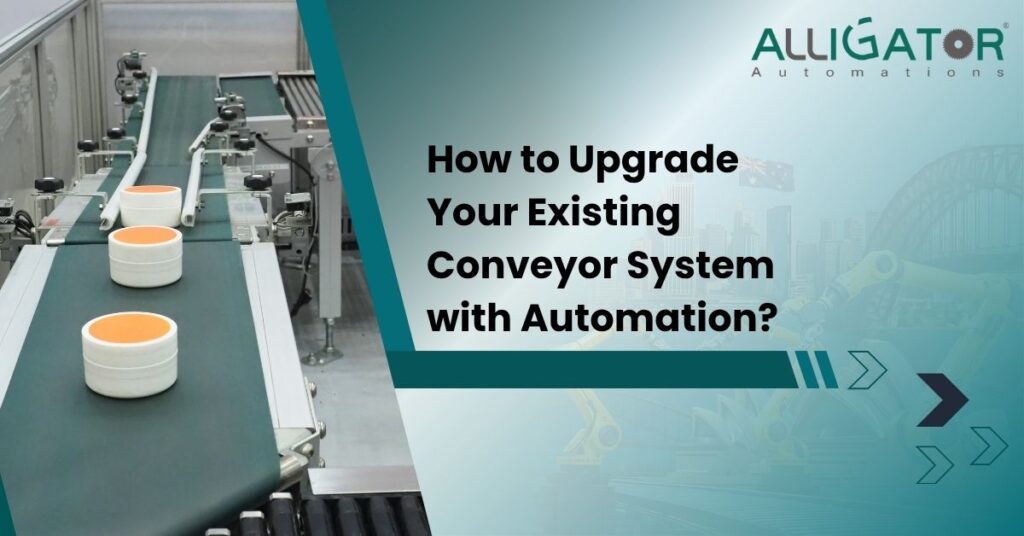
How to Upgrade Your Existing Conveyor System with Automation? Summary : Many businesses do not need a complete conveyor replacement to improve performance. In many cases, the smarter move is to upgrade the system they already have with the right automation tools, controls, and add-ons. This guide explains how to spot upgrade opportunities, which automation technologies can be added, how the process works, what benefits to expect, and how to plan a practical upgrade that supports long-term growth. A conveyor system that once worked well can slowly become a bottleneck as production changes. Higher order volumes, faster fulfilment targets, and tighter labour availability can expose weaknesses that were not obvious before. A line that was once “good enough” may now feel slow, inconsistent, or too dependent on manual handling. For many businesses, the issue is not that the conveyor itself has failed. The real problem is that the system is no longer matching the pace of the operation around it. When upstream and downstream processes become faster, older conveyor setups can struggle to keep up. Automation helps close that gap. Another common reason for upgrading is cost pressure. Hiring more people to manage basic movement, sorting, or tracking can become expensive over time. Automation can reduce repetitive manual work, improve flow, and help the system run more reliably with fewer interruptions. How Can You Identify If Your Existing Conveyor System Needs Automation? There are usually clear warning signs when a conveyor system needs more than maintenance. One of the biggest signs is frequent manual intervention. If staff constantly have to guide products, correct alignment, or move items from one stage to another by hand, the line is probably ready for an upgrade. Another sign is inconsistent product flow. When items back up in one area while other areas are underused, the conveyor is not working as efficiently as it should. That kind of imbalance often points to a lack of sensors, zone control, or integrated controls. Downtime is also an important clue. If small faults, jams, or tracking issues keep stopping the operation, the system may need smarter monitoring and control. Even if the mechanical structure is still solid, automation can make the whole line more responsive and easier to manage. You may also notice tracking problems. When products cannot be identified, counted, or redirected properly, order accuracy suffers. For growing operations, this becomes a serious issue very quickly. What Automation Technologies Can Be Added To An Existing Conveyor System? The right automation upgrade depends on what the conveyor must do. Some systems only need better control. Others need tracking, inspection, sorting, or end-of-line automation. The good news is that a full rebuild is often not required. PLC-Based Conveyor Control Systems A PLC can coordinate how different conveyor sections start, stop, slow down, or transfer products. This gives the system more intelligence and helps reduce manual control. It also makes it easier to add future automation later. Smart Sensors And Detection Systems Sensors help the conveyor respond to real product movement instead of running blindly. They can detect gaps, presence, blockages, or alignment issues. That makes the line smoother and safer. Barcode And RFID Tracking Tracking systems improve visibility across the line. They help identify products, reduce sorting mistakes, and support better inventory control. For businesses handling many SKUs, this can be a major upgrade. Automated Sorting Systems Diverters and sorters help send products to the right place without manual intervention. This is especially useful for operations that deal with different destinations, sizes, or order types. Robotic Palletizing Integration At the end of the line, robotic palletizing can remove one of the most repetitive manual tasks in the operation. It improves consistency, reduces physical strain, and supports higher output. Machine Vision Inspection Vision systems can check orientation, placement, labels, or surface quality. This is useful where accuracy matters and defects must be caught early. Real-Time Monitoring Software Monitoring software gives managers visibility into system performance. It can highlight jams, slow zones, downtime, and throughput trends so decisions can be made faster. What Steps Should You Follow Before Upgrading Your Conveyor System? A successful upgrade starts with understanding the current system properly. The first step is to assess the conveyor’s mechanical condition. If the frame, rollers, belts, or supports are still in good shape, a retrofit may be more practical than replacement. Next, define the operational goal. The upgrade should solve a specific problem. That could be reducing labour, improving speed, increasing accuracy, or preparing the line for future growth. A vague project usually leads to poor results. It is also important to map the workflow carefully. You need to know where products enter, where they slow down, where they stop, and where errors occur. Once the bottlenecks are clear, it becomes easier to choose the right automation tools. Space and layout should not be ignored. Some upgrades are simple to install, while others require extra room for controls, scanners, diverters, or safety equipment. A practical design must fit the existing facility without disrupting movement or access. How Does The Conveyor Automation Upgrade Process Work? The process usually begins with a site review. This is where the system is examined in real operating conditions so the upgrade can be designed around the actual workflow, not just a drawing. After that comes system design. The engineer or automation partner decides which parts of the conveyor should stay, which parts should be improved, and where new controls or devices should be added. At this stage, the goal is to create a solution that is efficient, safe, and compatible with the existing setup. Once the design is approved, the necessary equipment is selected. That may include sensors, motors, controllers, software, safety systems, or sortation devices. Choosing the right components matters because the upgrade should work as one system, not as separate pieces. Installation is often planned to reduce downtime. In many operations, upgrades are done in stages so production can continue where possible. After installation, the system must be tested carefully. Every sensor,
10 Things To Consider Before Choosing a Robotic Palletizer
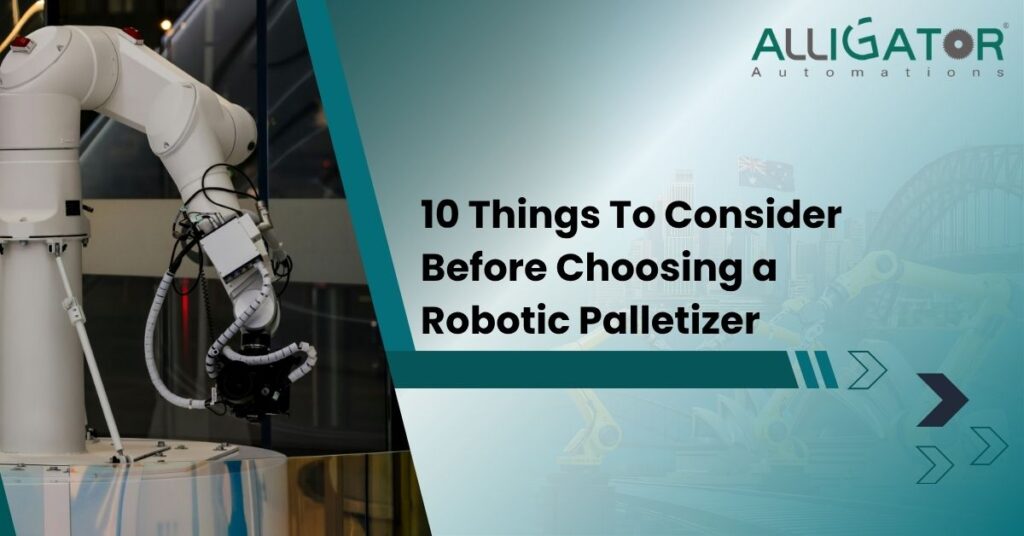
10 Things To Consider Before Choosing a Robotic Palletizer Summary: Choosing a robotic palletizer is a long-term decision that affects speed, safety, labour use, and production growth. This guide walks through the ten most important things to check before you invest, so you can choose a system that fits your products, layout, and future plans. It also helps you avoid costly mistakes and choose a solution that supports efficient, reliable operations for years to come. Robotic palletizing is no longer just a nice upgrade for large factories. In Australia, it has become a practical way for manufacturers to improve output, reduce repetitive manual work, and build a more efficient production line. For many businesses, palletizing is one of the first areas where automation delivers visible results. It sits at the end of the line, it runs every day, and it directly affects shipping, labour cost, and workplace safety. CSIRO also describes digital manufacturing as the use of modern smart technologies such as robotics, AI, and IoT to automate industrial practices, which reflects the direction many Australian manufacturers are heading in. That said, choosing the right robotic palletizer is not only about buying a robot. It is about selecting a solution that matches your products, your speed targets, your available space, and your long-term business goals. Why Is It Important To Choose The Right Robotic Palletizer For Your Business? A robotic palletizer can improve consistency, reduce strain on workers, and help a facility keep up with growing order volumes. It can also create a safer workplace by reducing hazardous manual tasks that involve repeated lifting, awkward postures, or sustained force. Safe Work Australia specifically notes that these kinds of tasks can stress the body and lead to musculoskeletal disorders. When chosen well, a palletizing system becomes part of a smoother end-of-line process. When chosen badly, it can create bottlenecks, require frequent changes, or become expensive to maintain. That is why a careful evaluation matters before you commit. What Are The 10 Things You Should Consider Before Choosing A Robotic Palletizer? Before installing a robotic palletizing system, businesses should evaluate their production goals, facility layout, product handling requirements, and future expansion plans. 1. Understand Your Product And Packaging Requirements The first step is to look closely at what the robot will actually handle. A palletizer that works well for cartons may not be the right fit for bags, trays, pouches, or mixed packaging formats. Product size, weight, surface texture, fragility, and stack stability all affect system design. If your packaging varies across product lines, the palletizer must be able to manage those differences without creating constant changeover delays. A system built for one box size may not be flexible enough for a growing business with multiple SKUs. Before looking at models, define your exact product list and packaging range. 2. Evaluate Your Required Production Speed Speed is one of the biggest reasons businesses invest in automation, but it needs to be matched to real production demand. Think about how many cases, cartons, or bags you need to palletize per hour, not just during normal production, but also during peak periods. A system that is too slow becomes a bottleneck. A system that is too large may cost more than necessary. The right choice is one that keeps pace with your line while still allowing room for future growth. In Australian manufacturing, automation is often adopted to improve productivity and support scale, so choosing a system with the right throughput is essential. 3. Check Your Available Floor Space Not every factory has unlimited room for automation. Some facilities need a compact robotic palletizer cell that fits beside an existing line, while others may have space for a larger integrated system. The footprint of the robot, conveyors, safety fencing, pallet staging area, and maintenance access all need to be considered. This is especially important in busy plants where production space is already tight. A system that seems ideal on paper may not work well if it blocks movement, creates access issues, or limits future layout changes. Good palletizing design should fit the plant, not force the plant to work around the machine. 4. Consider Flexibility For Different Products Modern production lines rarely stay the same for long. Businesses add new products, change carton sizes, and adjust packaging formats as customer demands shift. That is why flexibility matters so much. A good robotic palletizer should support multiple pallet patterns, recipe changes, and quick adjustments without requiring a full system rebuild. If your operation handles several product types, flexibility can save time, reduce downtime, and protect your investment for years. This is one of the biggest differences between a basic machine and a truly useful automation solution. 5. Review The Software And Ease Of Operation The robot itself is only part of the system. The software controls how the palletizer behaves, how easily operators can make changes, and how quickly faults can be diagnosed. If the interface is confusing, even a powerful machine can become frustrating to run. Look for user-friendly controls, clear diagnostics, recipe management, and simple changeover functions. In many plants, the best systems are the ones operators can understand quickly without needing constant technical help. Ease of use often makes the difference between a system that runs smoothly and one that causes daily delays. 6. Focus On Safety Features Safety should never be an afterthought. Robotic palletizers operate in busy environments, often near workers, forklifts, conveyors, and packaging lines. The system should include the right safety design for the job, such as emergency stops, light curtains, scanners, guarding, and controlled movement zones. This matters because palletizing often replaces tasks that are physically demanding and repetitive. Safe Work Australia identifies hazardous manual tasks as those involving lifting, lowering, pushing, pulling, carrying, or restraining loads, especially where repetitive movement or awkward posture is involved. A robotic palletizer can reduce this exposure, but only when the overall system is designed with safety in mind. 7. Understand Maintenance Requirements Every automation system needs upkeep. Before choosing
Robotic Palletizing Systems Australia: Common Buying Mistakes and How to Avoid Them?
Robotic Palletizing Systems Australia: Common Buying Mistakes and How to Avoid Them? Summary: Investing in robotic palletizing systems is a significant decision for Australian manufacturers and logistics providers. However, many businesses make costly mistakes during the selection and procurement process—from underestimating throughput requirements to choosing systems that don’t integrate with existing workflows. This comprehensive guide identifies the most common buying mistakes and provides actionable strategies to avoid them, ensuring your investment delivers maximum ROI and operational excellence. Australia’s manufacturing sector faces unprecedented challenges: rising labor costs, skilled worker shortages, increasing consumer expectations, and growing pressure to optimize operational efficiency. Robotic palletizing systems offer a proven solution, automating one of the most labor-intensive and physically demanding aspects of production and warehouse operations. Discover how top industrial automation technologies are transforming Australian manufacturing, and understand industry 4.0 and smart manufacturing principles that guide technology selection. Yet despite their proven benefits, many Australian businesses struggle with robotic palletizing investments. Some systems sit underutilized because they weren’t matched to actual production requirements. Others fail to integrate properly with existing conveyor systems and warehouse management software. Some prove far more expensive to maintain than anticipated. And many businesses discover too late that they chose the wrong type of palletizer for their specific product handling needs. The difference between a successful robotic palletizing investment and an expensive mistake often comes down to making informed decisions during the buying process. This guide reveals the most common purchasing mistakes and shows you exactly how to avoid them—so your investment delivers the efficiency gains, cost savings, and operational improvements you expect. Understanding Robotic Palletizing: A Quick Primer Before exploring buying mistakes, it’s helpful to understand what robotic palletizing systems actually are and why they matter in modern Australian operations. A robotic palletizer is an automated system equipped with an industrial robotic arm designed to pick products from a conveyor belt and place them onto pallets in structured, repeatable patterns. Unlike manual palletizing—where workers repeatedly lift, carry, and stack products—robotic systems handle this work continuously with precision and consistency. The core advantages are straightforward: increased speed, improved accuracy, enhanced safety, and reduced labor dependency. Learn more about the top benefits of installing robotic palletizing systems in modern manufacturing. But the success of any robotic palletizing investment depends entirely on whether you select the right system for your specific operational needs. Common Mistake #1: Underestimating Your Actual Production Throughput The Problem This is perhaps the most frequent mistake Australian manufacturers make. A facility calculates its average daily production volume, determines the required stacking rate, and selects a robotic palletizer based on that figure. The mistake? Average production is meaningless for automation decisions. What matters is peak production—the maximum volume your line must handle during busy periods, seasonal spikes, or when customers place urgent orders. A business processing an average of 50 cases per minute might experience peak volumes of 75-80 cases per minute during peak seasons or when filling large orders. If you buy a palletizer rated for 55 cases per minute, you’ll create a bottleneck that undermines your entire operation during exactly when you need the most efficiency. The Financial Impact Underestimating throughput leads to: Production bottlenecks that defeat the purpose of automation Inability to fulfill urgent orders Continued manual palletizing during peak periods, negating labor savings System frustration and poor ROI justification How to Avoid It Analyze Peak, Not Average: Review your production data over the past 12-24 months. Identify the highest hourly throughput, not average daily volumes. Plan for Growth: Don’t just match current peak capacity—account for 15-25% growth over the next 3-5 years. Buying a system that’s already at capacity leaves no room for business expansion. Calculate Cases Per Minute (CPM) or Layers Per Minute (LPM): Translate your throughput into the metrics palletizer manufacturers use. A robotic system handling individual cases might be rated at 25 CPM, while a conventional layer palletizer might handle 40 LPM. Make sure you understand which metric applies to your operation. Test Before Committing: Reputable integrators offer pilot projects or demonstrations. Run your actual products through proposed systems at peak volumes before signing the contract. Learn more about choosing the right palletizing system to match your specific throughput requirements. Discuss Scalability: Ask your provider how the system can be expanded if your business grows faster than anticipated. Some architectures allow adding capacity; others require complete replacement. Common Mistake #2: Ignoring Product Characteristics and Variability The Problem Many manufacturers assume all palletizing systems handle all products equally. This is dangerously false. A robotic system optimized for rigid cartons might struggle with shifting bags. A conventional layer palletizer designed for uniform cases performs poorly with mixed-SKU products. A system set up for bottles operates differently than one handling drums or palletized trays. Product characteristics that affect system selection include: Weight (light cartons vs. heavy bags vs. drums) Shape (uniform boxes vs. irregular items vs. bundles) Fragility (delicate bottles vs. sturdy packages) Consistency (identical products vs. mixed sizes) Packing material (rigid vs. flexible vs. compressible) The Financial Impact Choosing a system incompatible with your products results in: High product damage rates and loss of margin Frequent system jams and stoppages Need for expensive custom tooling or end-of-arm equipment (EOAT) Poor cycle times because the system wasn’t designed for your actual products How to Avoid It Provide Detailed Product Specifications: Before speaking with integrators, document exactly what you’re palletizing: Individual product dimensions and weight Packaging material (cardboard, plastic, film, etc.) Whether products shift, crush, or deform under pressure Variety of products handled in a single shift Understand EOAT Requirements: End-of-Arm Tooling (the gripper, vacuum, or mechanical clamp) must match your product type. Vacuum grippers work for rigid cartons but fail with open bags. Mechanical grippers excel with bags but can’t handle fragile bottles. Budget 10-20% of system cost for appropriate EOAT. Test with Actual Inventory: Don’t rely on theoretical capabilities. Test the proposed system with your actual products, packaging, and pallet types. Plan for Product Mix Changes: If you anticipate handling different products in future, discuss