What Makes an Industrial Conveyor System Future-Ready in Australia?
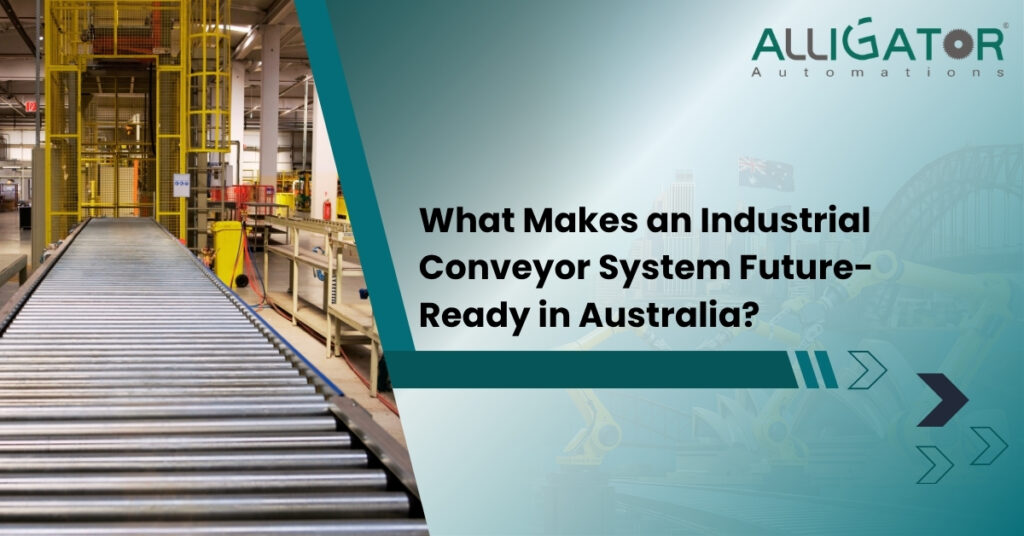
What Makes an Industrial Conveyor System Future-Ready in Australia? Summary: The industrial landscape in Australia is rapidly evolving, and conveyor systems are at the forefront of this transformation. Future-ready industrial conveyor systems integrate advanced automation, sustainability features, flexibility, and smart technology to meet the demands of modern manufacturing and logistics. This blog explores the key characteristics that define a future-ready conveyor system and why Australian businesses must prioritize these features to remain competitive. Australia’s manufacturing and logistics sectors are experiencing unprecedented pressure to innovate and optimize operations. Whether you’re in mining, food processing, retail distribution, or heavy manufacturing, the efficiency of your material handling systems directly impacts your bottom line. A future-ready industrial conveyor system goes beyond simply moving products from point A to point B. It must be intelligent, adaptable, sustainable, and capable of integrating with modern business ecosystems. As supply chain complexity increases and consumer expectations grow, businesses across Australia are discovering that investing in next-generation conveyor solutions isn’t just beneficial—it’s essential for survival in a competitive global market. Core Features of Future-Ready Industrial Conveyor Systems Smart Automation and Industry 4.0 Integration The Rise of Intelligent Material Handling Future-ready conveyor systems leverage Industry 4.0 principles to create intelligent, connected material handling environments. These systems utilize IoT sensors, real-time data analytics, and machine learning algorithms to optimize operations continuously. Discover how top industrial automation technologies are reshaping modern operations, and learn about the role of robotics and AI in creating smarter production environments. Modern conveyor systems collect vast amounts of data about speed, load, temperature, and system performance. This information is analyzed to predict maintenance needs, identify bottlenecks, and suggest operational improvements. Australian businesses can now move from reactive to proactive maintenance, reducing unexpected downtime by up to 40%. Predictive Maintenance and System Health Monitoring One of the most significant advantages of future-ready systems is predictive maintenance capabilities. Rather than waiting for equipment to fail, smart sensors detect anomalies before they become critical issues. This approach has revolutionized how Australian industrial facilities manage their equipment, extending conveyor lifespan and reducing overall maintenance costs. Learn more about effective conveyor belt maintenance and repair strategies to maximize system uptime. Adaptability and Flexible Design Modular and Scalable Solutions Tomorrow’s businesses need conveyor systems that grow with them. Future-ready systems feature modular designs that allow easy expansion, reconfiguration, and adaptation to changing product types and production volumes. Whether you’re handling pallets, tyres, cases, bags, or specialized products, modern conveyor systems can be customized and reconfigured without complete replacement. This flexibility is particularly valuable for Australian businesses operating in diverse sectors or managing seasonal demand fluctuations. Multi-Product Handling Capabilities Australian manufacturers increasingly operate in diverse markets. Future-ready conveyor systems support multiple product types, sizes, and weights without requiring significant operational changes. This versatility eliminates the need for separate conveyor systems for different products, streamlining operations and reducing capital expenditure. Sustainability and Energy Efficiency Reducing Carbon Footprint Environmental responsibility is no longer optional—it’s a business imperative. Future-ready conveyor systems incorporate energy-efficient motors, regenerative braking systems, and optimized drive mechanisms that significantly reduce power consumption. Australian businesses are increasingly aware that sustainability initiatives directly impact profitability through reduced energy costs and improved brand reputation. Modern conveyor systems can reduce energy consumption by 20-35% compared to older models, translating to substantial cost savings over the system’s lifetime. Understand how reducing downtime and manual effort with automation creates immediate economic and environmental benefits. Waste Reduction and Circular Economy Integration Next-generation conveyor systems are designed with sustainability at their core. They minimize product damage during handling, reduce spillage, and support the circular economy by enabling efficient material recovery and recycling processes. This is particularly relevant for Australian industries focused on resource efficiency and environmental stewardship. Advanced Safety Features Comprehensive Safety Systems Safety is paramount in industrial environments. Future-ready conveyor systems integrate advanced safety features including emergency stop systems, collision detection, automatic load monitoring, and operator protection mechanisms that exceed Australian workplace safety standards. These systems reduce workplace injuries, minimize product loss, and create safer working environments for employees—benefits that enhance both human welfare and operational efficiency. Explore the 5 key safety benefits of automating material handling and how automation transforms workplace safety culture. Compliance with Evolving Regulations Australia’s workplace safety regulations continue to evolve. Modern conveyor systems are designed with flexibility to accommodate changing compliance requirements, ensuring your investment remains relevant and compliant for years to come. Seamless Integration with Existing Systems API and Software Compatibility Future-ready conveyor systems don’t exist in isolation. They integrate seamlessly with existing Enterprise Resource Planning (ERP) systems, warehouse management systems (WMS), and manufacturing execution systems (MES). This interoperability ensures data flows freely across your organization, enabling better decision-making and operational visibility. Understand how the role of robotics and AI enables this seamless system integration and how end-of-line automation creates unified production environments. Cloud Connectivity and Data Analytics Cloud-based monitoring platforms allow Australian businesses to track conveyor performance from anywhere, analyze trends, generate insights, and make data-driven operational decisions. This level of visibility and control is transformative for companies managing multiple facilities or complex supply chains. Why Australian Businesses Need Future-Ready Conveyor Systems Competitive Advantage in Global Markets Australian manufacturers and logistics providers compete in global markets where efficiency and reliability are non-negotiable. Future-ready conveyor systems provide the competitive edge needed to win contracts and retain customers in increasingly demanding sectors. Explore how automation in 2030 will transform manufacturing and logistics and discover industry-specific benefits through packaging automation in FMCG. Labor Optimization Australia’s labor market presents unique challenges, with skilled personnel in high demand and wages reflecting market scarcity. Automation through future-ready conveyor systems doesn’t eliminate jobs—it transforms them. Workers transition from manual, repetitive tasks to higher-value roles in system management, optimization, and quality control. Supply Chain Resilience Recent global disruptions have highlighted the importance of resilient supply chains. Modern conveyor systems provide the flexibility and reliability needed to adapt quickly to changing market conditions, supplier interruptions, and unexpected challenges. Cost Reduction and ROI While future-ready conveyor systems require initial capital investment, their long-term
How to Optimize Your Warehouse Material Flow with Integrated Conveyor?
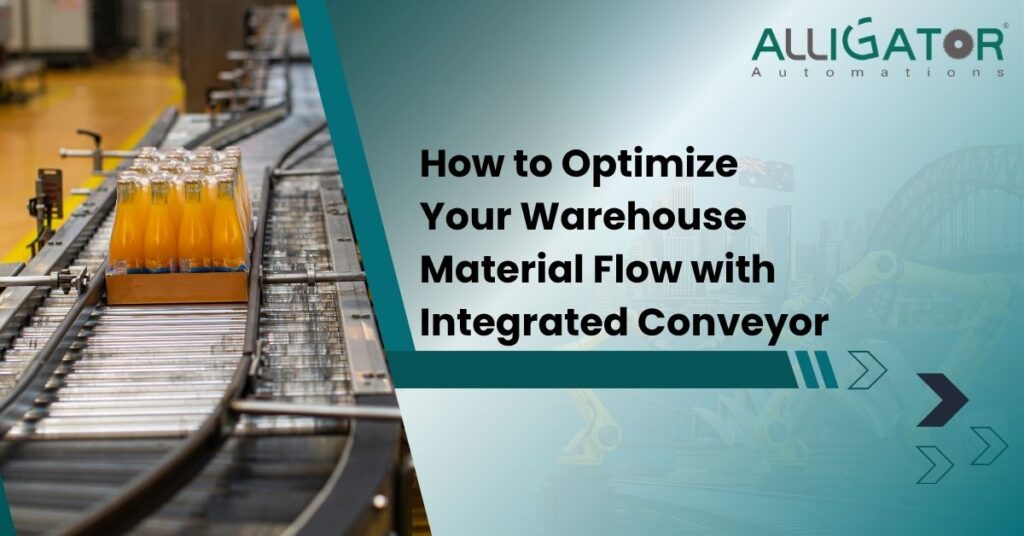
How to Optimize Your Warehouse Material Flow with Integrated Conveyor Summary : This blog explains how an integrated conveyor system can improve warehouse material flow, reduce manual handling, speed up order movement, and support safer, more efficient operations. It also covers where flow breaks down, what features matter most, how to plan an effective conveyor setup, and which mistakes to avoid when improving warehouse performance. Warehouse performance depends on how smoothly products move from one point to another. In Australia, that matters more than ever. Online shopping activity remains strong, with Australia Post reporting record eCommerce spend in 2025, while buying habits continue to shift toward more frequent orders and more brands per household. At the same time, Australian labour costs remain under pressure, with the ABS continuing to report cost growth driven by labour shortages and wage-related increases. Together, these pressures make efficient warehouse flow a practical business priority rather than a nice-to-have. That is where integrated conveyor systems make a real difference. Instead of moving goods through disconnected handoffs and manual transport steps, a well-planned conveyor setup helps create a more connected workflow from receiving to dispatch. It can reduce bottlenecks, improve visibility, support order accuracy, and make the entire warehouse easier to manage. What Warehouse Material Flow Really Means? Warehouse material flow is the path products take as they move through your facility. That includes receiving, put-away, storage, picking, packing, staging, and shipping. When the flow is smooth, work feels predictable. When it is not, delays build up quickly, staff spend more time walking and carrying goods, and small issues turn into operational slowdowns. The best warehouses treat material flow as a system, not a series of isolated tasks. Every step affects the next one. If the receiving zone is congested, the picking area can feel the impact later. If packing is under pressure, dispatch slows down. That is why flow has to be planned across the whole site, not only in one section. Why Integrated Conveyor Systems Matter? Integrated conveyor systems are more than a way to move cartons or pallets. They connect different parts of the warehouse so products can travel with less interruption and fewer manual touches. Australian automation and warehousing providers consistently describe conveyors as a core part of intralogistics because they help synchronise movement, equipment, and data across the facility. A strong conveyor setup can also link with other warehouse automation elements such as AS/RS, pallet shuttles, sortation systems, scanners, DWS stations, PLCs, and warehouse management software. That matters because the conveyor does not just move products; it supports a broader operational rhythm that keeps work moving in a controlled, trackable way. Where Does Warehouse Material Flow Usually Break Down? Most flow problems do not begin with one major failure. They start with small inefficiencies that repeat all day. Manual carrying is one of the most common issues, especially when staff need to move cartons, totes, or pallets across long distances. Over time, that creates fatigue, slower throughput, and more room for error. Another common issue is poor connectivity between work zones. When receiving, picking, packing, and dispatch are not connected well, items wait too long between steps. That waiting time creates backlogs, and backlogs often create pressure in the form of rushed work, product damage, or missed dispatch windows. A third issue is inflexible layout planning. Many warehouses grow over time, but their internal movement patterns stay fixed. Systems that once worked at a lower volume can become inefficient once order frequency rises. The result is usually more congestion, more walking, and more dependence on manual intervention. How Can You Optimize Warehouse Material Flow With Integrated Conveyor Systems? Reduce Manual Handling The most immediate benefit of conveyor integration is less manual transport. Instead of asking staff to move items repeatedly across the warehouse, a conveyor system can carry products between core zones with consistent movement and fewer physical touchpoints. That improves productivity and frees teams for higher-value work. Learn how conveyor automation can reduce material-handling costs and help businesses achieve greater efficiency with fewer manual processes. Speed Up Picking And Packing Picking and packing are often the busiest points in the warehouse. When conveyors feed items to these stations in a steady flow, staff do not waste time waiting for the next load. This helps keep workstations active, shortens cycle times, and supports a better pace during busy periods. Improve Order Accuracy Integrated systems support more controlled movement, which can improve accuracy at the handoff points between processes. When conveyors work with sensors, scanners, and sorting tools, it becomes easier to identify items, route them correctly, and reduce the chance of misplacement. Reduce Product Damage Products that are repeatedly lifted, carried, and set down are more exposed to damage. A conveyor system helps keep movement stable and predictable. That is especially useful for fragile cartons, high-turnover goods, and products that must stay in a consistent handling pattern. Remove Bottlenecks A conveyor network helps reduce the stop-start pattern that often slows warehouses down. Instead of creating a queue at every handoff, items can keep moving through connected points in the process. This makes the overall system feel calmer, faster, and easier to coordinate. Support Safety And Ergonomics Less carrying means less strain. Better flow reduces the amount of manual lifting, pushing, and repetitive movement required from staff. That can improve workplace safety and make the warehouse more comfortable to operate in over long shifts. Improve Scalability A major advantage of integrated conveyor systems is that they can grow with the business. Australian warehouse providers regularly highlight scalability as a key benefit, because businesses rarely stay at the same volume forever. A system that can expand or adapt is easier to protect as demand changes. What Features Should You Look For In An Integrated Conveyor System? Flexibility For Different Product Types Not every warehouse handles the same goods. Some move cartons, some move pallets, and others move totes or mixed loads. The right system should fit the products you actually handle, not
Top 10 Benefits of Installing a Robotic Palletizing System in Manufacturing
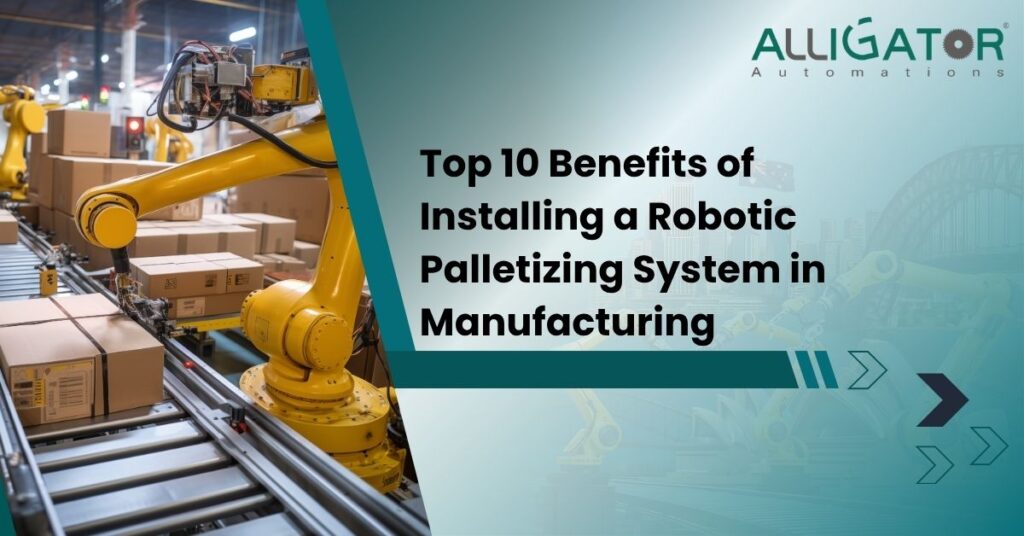
Top 10 Benefits of Installing a Robotic Palletizing System in Manufacturing Summary: This article explains what a robotic palletizing system is, why Australian manufacturers are adopting it, the top ten business benefits, what to consider before installation, how it compares with manual palletizing, and answers to common questions. Manufacturing teams are under constant pressure to move faster, work safer, and do more with fewer bottlenecks. In Australia, that challenge is amplified by labour shortages, rising operating costs, and the growing push toward smart manufacturing and Industry 4.0. Government and industry sources consistently point to automation as a practical way to improve competitiveness, productivity, and workplace safety. A robotic palletizing system is one of the most useful end-of-line upgrades a manufacturing business can make. It helps streamline repetitive stacking tasks, reduce manual handling risk, improve consistency, and support long-term growth. This guide breaks down the top benefits in a clear, practical way so decision-makers can see where the value really comes from. What Is A Robotic Palletizing System? A robotic palletizing system is an automated solution that picks products from a conveyor or feed line and stacks them onto pallets in a controlled pattern. It is commonly used at the end of a packaging line to handle cartons, boxes, bags, trays, and other finished goods with speed and precision. Australian automation providers describe these systems as a compact and flexible way to improve throughput while reducing manual labour. How Does A Robotic Palletizer Work? A typical system identifies the product, grips it with the correct end effector, places it in the right position, and repeats the process to build a stable pallet pattern. Many systems can be integrated with conveyors, stretch wrappers, and packaging equipment, which makes them suitable for end-of-line automation in busy plants. Industries That Commonly Use Robotic Palletizing Robotic palletizing is widely used in food and beverage, FMCG, pharmaceuticals, building materials, agriculture, packaging, and warehousing. These sectors rely heavily on repetitive handling, stable pallet loads, and consistent output, which is why palletizing automation has become such a common upgrade. Why Are Australian Manufacturers Investing In Robotic Palletizing? Australian manufacturers are increasingly embracing automation to address labour pressure, improve quality, and strengthen workplace safety. Industry and government sources note that automation and Industry 4.0 can help businesses deal with high labour costs, workforce shortages, and competitive global markets. Safe Work Australia also highlights the need to manage hazardous manual tasks and plant-related risks, which makes robotic handling especially relevant on busy production floors. What Challenges Can A Robotic Palletizing System Solve In Manufacturing? Many manufacturers face several common challenges that can affect productivity and safety, including: Labour shortages that make it difficult to keep production lines fully staffed Repetitive manual tasks that lead to fatigue and lower efficiency Inconsistent pallet stacking that can affect load stability and product quality Rising operational costs caused by overtime, injuries, and labour pressure Workplace injuries linked to heavy lifting and repetitive handling Product damage during manual stacking and movement Production slowdowns caused by bottlenecks at the end of the line A robotic palletizing system helps solve these issues by automating one of the most labour-intensive stages of the production process. It ensures products are stacked accurately, reduces the risk of manual handling injuries, minimises product damage, and keeps production lines running smoothly. As manufacturing demands continue to grow, automation provides a practical solution for improving productivity while maintaining consistent quality. What Are The Key Benefits Of A Robotic Palletizing System? Increased Production Speed One of the biggest advantages of robotic palletizing is speed. A robot can work at a consistent pace without fatigue, helping manufacturers reduce delays at the end of the line and keep products moving to dispatch more efficiently. Australian automation pages repeatedly highlight throughput and faster palletizing as key reasons businesses invest in this technology. Improved Workplace Safety Manual palletizing involves lifting, twisting, carrying, and repetitive motion, all of which can contribute to musculoskeletal strain and injury. Safe Work Australia identifies hazardous manual tasks as a major WHS issue, and robotic palletizing helps remove workers from the most physically demanding part of the process. That means fewer lifting injuries, less fatigue, and a safer production environment. Consistent Pallet Quality A robot repeats the same movement with the same precision every time. That creates more uniform pallet builds, better load stability, and fewer product shifts during transport or storage. This consistency is one of the strongest operational gains because it reduces damage, rework, and complaints linked to unstable stacks. Lower Labour Costs Robotic palletizing can reduce reliance on repetitive manual labour, which is especially valuable when recruiting and retaining workers is difficult. It does not remove the need for people, but it does allow teams to be redeployed into higher-value tasks such as quality control, line supervision, and maintenance support. Over time, that shift can lower overtime pressure and reduce the cost of repetitive end-of-line work. Rising labour costs and ongoing manufacturing workforce challenges are encouraging businesses to adopt automation solutions that improve productivity while reducing dependence on manual labour. Greater Operational Efficiency A robotic palletizing system can smooth out production flow by reducing bottlenecks at the packing stage. When the end of the line runs efficiently, the entire operation benefits: fewer delays, better handoff to warehousing, and more predictable dispatch. Many Australian providers position robotic palletizing as a way to strengthen overall line efficiency, not just speed up stacking. Flexibility For Multiple Product Types Modern systems can be programmed to handle different sizes, weights, shapes, and pallet patterns. That flexibility matters in manufacturing, where product mix often changes across shifts or seasons. Whether the line is moving cartons, bags, tubs, or trays, robotic palletizers can usually be adapted without rebuilding the entire line. Better Space Utilisation Floor space is valuable in any manufacturing plant, and one recurring advantage of robotic palletizing is its smaller footprint compared with some traditional systems. A compact layout can free up room for storage, easier access, and future line expansion. That is one
Selecting the Best Palletizing System for Australian Industrial Facilities
Selecting the Best Palletizing System for Australian Industrial Facilities Summary : Choosing the right palletizing system is not just about automating the end of the line. It is about improving speed, safety, consistency, and long-term efficiency across the entire facility. In this guide, we look at the main options available to Australian industrial sites, the factors that matter most before investing, and how to match the right system to your production goals. Across Australian industrial facilities, palletizing has become one of the most important areas for automation. As production demands increase and labour becomes harder to rely on, many businesses are rethinking how products are stacked, moved, and prepared for dispatch. A well-chosen palletizing system can reduce manual handling, improve throughput, and help operations run with greater consistency. But there is no single solution that works for every site. The best system for one factory may be the wrong fit for another. Floor space, product type, pallet size, line speed, shift patterns, and future growth plans all affect the decision. That is why selecting the right palletizing setup requires a practical look at how the facility really operates, not just what appears efficient on paper. Why Is Choosing The Right Palletizing System Important? Better Productivity At The End Of The Line Palletizing is often the final step before shipping, but it can create a bottleneck if the system is not designed properly. The right setup keeps products moving smoothly and prevents slowdowns that affect the rest of the line. Safer Working Conditions Manual palletizing can place repeated strain on workers, especially when loads are heavy, awkward, or repetitive. Automation reduces lifting, bending, and twisting, which helps lower the risk of injury and supports a safer workplace. More Consistent Pallet Quality A stable pallet is easier to store, move, and transport. The right system creates cleaner stack patterns, more consistent load formation, and fewer damaged products during handling. Smarter Long-Term Investment The lowest-cost option is not always the best choice. A system that fits your production now and can support future growth often delivers better value over time than a cheaper machine that quickly becomes limiting. What Factors Should You Consider Before Selecting A Palletizing System? Production Throughput Start by looking at how many cases, bags, cartons, or bundles need to be palletized each hour. A low-volume operation may not need the same level of automation as a fast-moving production line. Throughput should guide the type of palletizer you choose. Product Type And Packaging Format Not all products behave the same way. Boxes, sacks, shrink-wrapped packs, drums, and mixed-case loads all create different handling requirements. The shape, weight, and surface stability of the product can strongly influence the best solution. Floor Space And Layout Some palletizing systems need a compact footprint, while others require more open space for conveyors, guarding, and product flow. Facilities with tight layouts often benefit from more flexible automation designs that make better use of available space. Changeover Frequency If your line handles multiple product sizes or pallet patterns, frequent changeovers matter. A system that is easy to adjust can save time, reduce errors, and keep production moving across different runs. Maintenance And Access A system should not only work well, but also be easy to service. Maintenance access, part availability, and technical support all matter when evaluating long-term reliability. Future Expansion A good palletizing investment should leave room for growth. If production is likely to rise, or if additional SKUs may be added later, choose a system that can adapt without requiring a complete replacement. The adoption of advanced manufacturing and materials technologies is enabling industrial facilities to increase productivity while supporting more efficient and sustainable operations. What Are The Different Types Of Palletizing Systems? Robotic Palletizer A Robotic Palletizer uses an industrial robot arm to pick products and place them onto pallets in a controlled pattern. This option is especially useful for facilities that need flexibility. It can manage different product sizes, changing stack patterns, and mixed production runs with less mechanical reconfiguration than traditional systems. Robotic palletizers are often a strong choice for facilities with limited floor space, multiple SKUs, or variable line demands. They are also attractive for businesses that want to future-proof their end-of-line automation. Gantry Palletizer A Gantry Palletizer uses a linear frame structure to move products and place them onto pallets. It is generally suited to heavier loads and operations that need a dependable, structured palletizing method. Gantry systems can handle demanding applications well and are often selected for their strength and stability. This type of system is especially useful where heavy product handling is part of daily operations and where a more rigid mechanical arrangement is preferred. High Level Palletizer A High Level Palletizer typically receives product at an elevated level and forms pallet loads from above. It is commonly used in high-speed production environments where a large volume of cases or packs must be handled efficiently. This type of system is often chosen in industries that value speed, continuous flow, and consistent pallet formation. It works well when the production line is already designed around elevated conveyors and high-volume output. Low Level Palletizer A Low Level Palletizer receives products at a lower height, which can make the system easier to access and service. It is often a practical solution for medium-speed operations and facilities that want a straightforward palletizing setup. For many businesses, the lower working height can simplify maintenance and make the overall system more accessible to operators and technicians. Hybrid Palletizer A Hybrid Palletizer combines features of different palletizing approaches to deliver both flexibility and performance. It can be a smart option for facilities that need to manage varied product types while still maintaining good throughput. Hybrid systems are particularly valuable where business needs are changing, product lines are expanding, or a site wants a solution that balances traditional palletizing reliability with modern automation flexibility. How Do Different Palletizing Systems Compare? Palletizing System Best For Key Benefit Robotic Palletizer Multiple SKUs and flexible operations Very
Types of Conveyor Systems Used in Modern Australian Warehouses and Distribution Centres
Types of Conveyor Systems Used in Modern Australian Warehouses and Distribution Centres Summary : Modern warehouses and distribution centres rely on conveyor systems to move products faster, reduce manual handling, and improve operational efficiency. This guide explores the most common types of conveyor systems used today, their applications, advantages, and how businesses can select the right solution for smoother material flow and long-term productivity. As fulfilment demands continue to rise, warehouse teams are under pressure to process more goods in less time without compromising safety or accuracy. Conveyor systems have become an essential part of that shift because they help move products through receiving, sorting, storage, packing, and dispatch with greater control and consistency. Different facilities need different conveyor solutions. Some operations handle small parcels and cartons, while others manage bulky items, mixed loads, or palletised goods. Understanding the types of conveyor systems available can help businesses choose a solution that matches their layout, product range, and long-term growth goals. In many high-volume operations, the right conveyor design can make a noticeable difference to productivity and labour efficiency. Why Are Conveyor Systems Essential For Warehouse Operations? A well-planned conveyor system supports more than just product movement. It helps create a better flow throughout the entire warehouse. When items move efficiently between workstations, staff spend less time carrying goods manually and more time focusing on tasks that add value. Conveyors also help reduce bottlenecks. In a fast-paced environment, delays at sorting, packing, or dispatch can quickly affect order turnaround times. Automated transport systems help keep products moving at a steady pace, which is especially important in high-demand operations. Safety is another major benefit. By reducing repetitive lifting, carrying, and pushing, conveyor systems can lower the risk of strain and workplace injuries. They also help minimize product damage by offering a more controlled transport process. How Do Conveyor Systems Support Warehousing And Distribution? At a basic level, a conveyor system moves items from one point to another using a mechanical transport mechanism. However, in a modern facility, its role is much broader. Conveyors can connect different operational zones, support automated sorting, and even integrate with scanning, packing, and warehouse management processes. They are commonly used for receiving incoming stock, moving products to storage, transporting picked items to packing stations, and sending completed orders to dispatch. In large warehouses and distribution centres, this creates a more connected and efficient workflow. What Types Of Conveyor Systems Are Used In Modern Warehouses? Belt Conveyor Systems Belt conveyors use a continuous moving belt to transport items along a fixed path, making them one of the most versatile and widely used conveyor solutions. They are ideal as product handling conveyors for cases, bags, & crates, ensuring smooth, efficient, and reliable movement of cartons, parcels, bins, packaged goods, and other materials across warehouses, distribution centers, and manufacturing facilities. How Belt Conveyors Work A motor drives the belt around pulleys, creating a smooth surface that carries products along the line. The movement is steady and controlled, which makes these conveyors suitable for items that need careful handling. Where They Are Used Belt conveyors are commonly used in packing areas, dispatch lines, sorting zones, and general material transfer points. They work well when products need to travel across different distances at a consistent speed. Key Benefits They offer quiet operation, smooth movement, and flexibility for a wide range of products. They are also useful where items need to be moved on inclines or declines. Roller Conveyor Systems Roller conveyors use a series of rollers to move items forward. They are often chosen for boxes, totes, and other items with a stable base. Gravity Roller Conveyors Gravity roller conveyors rely on slope and gravity instead of powered movement. They are simple, low-maintenance, and suitable for short-distance movement or accumulation areas. Powered Roller Conveyors Powered roller conveyors use motors to move items automatically. They are ideal for higher throughput environments where items need to stop, start, merge, or change direction. Why They Are Popular Roller conveyors are reliable, practical, and easy to adapt to many warehouse layouts. They are especially useful in distribution centres that handle a steady flow of uniform packages. Chain Conveyor Systems Chain conveyors use chains to move products, often on trays or directly on the chain surface. They are built for strength and durability. Best Use Cases These systems are well suited to heavy-duty applications, including large containers, industrial components, and bulky goods that require stable support during transport. Advantages They can handle demanding loads and operate effectively in rugged environments. Their strong construction makes them a dependable choice for operations that need long-term performance. Pallet Conveyor Systems Pallet conveyor systems are designed specifically to move palletised goods. They are commonly used in facilities where large, heavy items need to be transported between storage and dispatch areas. How They Support Heavy Material Flow These conveyors are engineered to move pallets safely and efficiently, often using rollers, chains, or a combination of both. They are especially valuable in operations with high-volume pallet movement. Common Applications They are frequently used in warehousing, manufacturing, and large-scale distribution environments where pallet handling is a daily requirement. Modular Belt Conveyor Systems Modular belt conveyors use interlocking plastic modules rather than a single continuous belt. This makes them more adaptable in certain operational settings. Why They Stand Out? Their design allows for easy cleaning, repairs, and replacement of individual sections. They can also be configured for curves, inclines, and more complex layouts. Ideal For Changing Operations These systems are useful in facilities that need flexibility, hygiene, or regular layout adjustments. They are a practical option for businesses planning future expansion. Overhead Conveyor Systems Overhead conveyors move items above the floor, helping businesses maximise available ground space. Space-Saving Advantages By lifting product movement off the floor, these systems free up valuable space for storage, workstations, and staff movement. This can be especially helpful in busy facilities with limited floor area. Where They Work Best They are often used where floor congestion is a problem
How Conveyor Automation Can Reduce Material-Handling Costs?
How Conveyor Automation Can Reduce Material-Handling Costs? Summary: This blog explains how conveyor automation helps businesses lower material-handling costs by reducing manual labour, improving speed, cutting product damage, improving safety, and keeping operations running with less disruption. It also covers the key cost-saving areas, where automation delivers the strongest return, and what to consider before choosing a system. Material handling is one of those parts of a business that often goes unnoticed until it starts slowing everything down. When products are moved manually from one point to another, costs rise quietly in the background through labour, delays, damage, safety risks, and wasted space. Over time, these hidden expenses can make a major difference to profitability. Conveyor automation offers a practical way to bring those costs under control. By creating a smooth, continuous flow of materials, it reduces repetitive manual work and helps teams focus on more valuable tasks. For warehouses, factories, distribution centres, and fulfilment operations, this shift can improve both daily efficiency and long-term financial performance in Australia. What Are Material-Handling Costs And Why Do They Matter? Material-handling costs include much more than just the people moving goods around. They also cover the cost of forklifts, repeated lifting, travel time between workstations, damaged products, workflow delays, and the space needed to store or stage materials. In many facilities, these costs build up in small ways. A few seconds lost at each handoff, a few damaged items each day, or a few extra staff members needed during busy periods can add up quickly. That is why businesses often look for ways to streamline movement across the entire operation instead of simply fixing one bottleneck at a time. What Is Conveyor Automation And How Does It Work? Conveyor automation uses mechanised systems to move materials from one point to another with minimal manual handling. Depending on the application, this may include belt conveyors, roller conveyors, chain conveyors, pallet conveyors, sortation systems, and transfer units. The real value of these systems is not just transport. They help create a more predictable workflow, reduce unnecessary movement, and support better coordination between production, storage, packing, and dispatch areas. Instead of relying on people to repeatedly carry or shift products, the system does the repetitive work more consistently. How Does Conveyor Automation Reduce Handling Expenses? Reduces Dependence On Manual Labour One of the biggest savings comes from reducing the amount of manual handling required every day. In a traditional setup, workers spend valuable time lifting, pushing, carrying, or transferring goods between processes. That time has a direct cost, especially when the movement itself does not add value to the product or service. With an automated conveyor system in place, many of those repetitive movements are handled by the system. This allows staff to be redeployed to tasks that matter more, such as quality checking, packing, inventory control, or customer fulfilment. The result is a better use of labour without sacrificing output. Improves Throughput And Reduces Delays When materials move manually, the process often depends on staff availability, shift timing, or vehicle movement. That creates variation. Conveyor automation removes much of that inconsistency by keeping products moving at a steady pace. A smoother flow means fewer stoppages, fewer waiting periods, and fewer handoff delays. For high-volume operations, this can significantly improve throughput. Even a modest reduction in waiting time at each stage can make the whole operation more efficient. Cuts Product Damage Every time a product is handled manually, there is a chance of damage. Items can be dropped, bumped, stacked incorrectly, or mishandled during transfer. Damage may seem small on a single order, but repeated losses quickly become expensive. Conveyor systems reduce the number of touchpoints and help move goods in a controlled way. That consistency lowers the chance of damage, especially for fragile, boxed, or high-value items. Less damage means fewer replacements, fewer complaints, and less waste. Lowers Workplace Injury Risk Manual material handling is physically demanding. Repeated lifting, twisting, bending, and carrying can lead to strain injuries over time. These injuries can bring direct and indirect costs, including compensation claims, absenteeism, reduced productivity, and staff turnover. Automation helps reduce these risks by removing many of the tasks that place pressure on employees. A safer workplace does more than protect people. It also lowers the cost associated with lost time and operational disruption. In a busy facility, that can have a lasting impact on performance. Businesses must also consider compliance with current workplace safety regulations, as reducing manual handling risks can help create a safer and more productive work environment. Reduces Forklift Dependency Forklifts are useful, but they also bring costs of their own. There are expenses related to fuel or charging, maintenance, operator training, insurance, and traffic management. They also take up room and can create congestion in busy work areas. Conveyor automation can reduce the number of short-distance transport tasks that would otherwise require a forklift. That means fewer interruptions and lower operating costs over time. It can also help improve safety by reducing vehicle movement in areas where people are working closely together. Supports Better Use Of Space Space is expensive, especially in facilities where every square metre matters. Manual handling often requires wider aisles, staging zones, and temporary holding areas. Those areas may not contribute directly to productivity, yet they still take up valuable floor space. Conveyor systems can be designed to fit the layout of the facility more efficiently. They may use overhead paths, compact transfer points, or direct transport routes that reduce the need for excess storage and movement space. Better space use often leads to better overall efficiency without requiring expansion. Effective facility layouts and warehouse design strategies can further improve storage capacity and operational performance. How Does Manual Material Handling Compare To Conveyor Automation? Cost Factor Manual Handling Conveyor Automation Labour Requirement High Lower Movement Speed Variable Consistent Product Damage Risk Higher Reduced Safety Risk Higher Lower Space Efficiency Limited Improved Throughput Often Restricted More Steady Long-Term Operating Cost Higher Lower This comparison shows why
Choosing a Case Packaging Solution Provider in Australia: What to Consider

Choosing a Case Packaging Solution Provider in Australia: What to Consider Summary: Selecting the right case packaging solution provider is essential for achieving efficient, reliable, and scalable packaging operations. In this blog, we discuss the key factors to consider when evaluating providers, including industry expertise, customisation options, automation capabilities, system integration, local support, safety features, and long-term service. You’ll also learn how to compare providers effectively and choose a solution that aligns with your production requirements and future business growth. Australia’s manufacturing and packaging sectors are under constant pressure to improve speed, reduce labour dependence, maintain product quality, and keep operations running smoothly. In that environment, case packaging is no longer just a back-end function. It is a critical part of production efficiency, workplace safety, and long-term business growth. For businesses handling cartons, bottles, pouches, trays, cans, or mixed product formats, the right case packaging solution can make a measurable difference. But the equipment itself is only one part of the equation. The provider behind the solution matters just as much. Choosing a case packaging solution provider in Australia is about finding a partner who understands your production goals, your product requirements, and the realities of running a manufacturing line in a competitive market. The best provider will not just supply a machine. They will help design a solution that supports efficiency today and scalability tomorrow. Why Is Choosing The Right Case Packaging Solution Provider Important? A case packaging system is a long-term investment. Once installed, it becomes part of your daily operations, so the decision needs to go beyond price and machine specifications. The right provider can help you: Improve packaging speed and output Reduce manual handling and labour pressure Increase consistency across every pack Lower downtime through better design and support Adapt to changing production demands Improve safety across the packaging line A poor choice, on the other hand, can lead to bottlenecks, frequent maintenance issues, operator frustration, and higher total cost over time. That is why the provider must be evaluated carefully. What Should You Consider Before Selecting A Case Packaging Solution Provider? 1. Start With Your Production Goals Before choosing a provider, it helps to understand what your operation truly needs. Every packaging line is different, and the best solution is usually the one built around your actual production environment rather than a generic setup. Product Type And Pack Style Different products require different handling methods. A case packaging solution for lightweight cartons may not suit fragile bottles, irregular-shaped pouches, or heavy industrial goods. The provider should understand how your products move, settle, and behave during packing. Output And Throughput Requirements Think about your current production volume as well as where you want to be in the next few years. If your business is growing, the packaging system should have the capacity to grow with it. Choosing a system that only meets today’s needs can create a costly limitation later. Line Layout And Available Space Packaging equipment must fit into your current plant layout without creating unnecessary disruption. Space constraints, access points, conveyor direction, and operator movement all affect the final design. A reliable provider should assess the site properly before recommending a solution. 2. Look For Real Industry Experience A case packaging system is only as effective as the knowledge behind it. A provider with industry experience will already understand the common challenges faced by businesses in food and beverage, FMCG, pharmaceutical, consumer goods, and industrial manufacturing. That experience matters because it helps in practical ways: Better machine selection Smarter line integration Faster problem solving More suitable product handling methods Reduced trial and error during installation When a provider has worked across different sectors, they are more likely to recommend a system that performs well in real-world conditions rather than just on paper. 3. Check Customisation Capabilities No two production lines operate exactly the same way. That is why a good case packaging solution provider should be able to offer more than a standard machine. Why Customisation Matters? Customisation ensures the solution fits your product, your output goals, your line layout, and your operational preferences. A system that is tailored to your business can improve efficiency and reduce unnecessary handling. What To Look For? A strong provider should be able to offer: Flexible machine configurations Product-specific handling Multiple pack style options Integration with existing equipment Adjustable speed and format capabilities Customisation is especially important for businesses that handle multiple SKUs or expect future product changes. The more adaptable the system, the longer it remains useful. 4. Evaluate Integration With Your Existing Line The best packaging system should work smoothly with the rest of your production line. If it creates friction between upstream and downstream equipment, the result can be lost time, inconsistent flow, and avoidable breakdowns. A provider should understand how the case packer connects with: Conveyors Filling systems Cartoners Labelling machines Inspection systems Palletisers Robotic automation Integration is not just a technical detail. It affects daily performance. When every section of the line communicates well, production becomes more stable and predictable. 5. Consider Automation And Technology Automation has changed what businesses expect from case packaging systems. Today, many companies are looking for smarter machines that deliver more than simple packing. They want speed, flexibility, data visibility, and reliable control. Modern Features That Add Value Depending on your requirements, a modern case packaging solution may include: Robotic or semi-automatic case packing Quick format changeovers Smart control systems Remote monitoring Fault detection Production data tracking Reduced operator intervention The right technology can help reduce waste, improve consistency, and support better decision-making. It can also make the system easier for your team to manage in the long run. The growing focus on technology adoption in Australian industry is driving demand for automated case packaging solutions that help businesses improve productivity, accuracy, and operational efficiency. 6. Review Support And After-Sales Service The value of a provider does not end once the machine is installed. In fact, that is where the long-term relationship
Common Packaging Challenges Solved by Automated Case Packing Systems
Common Packaging Challenges Solved by Automated Case Packing Systems Summary: In This Blog, We Explore The Most Common Packaging Challenges Faced By Modern Manufacturers, including labour shortages, production bottlenecks, packaging errors, product damage, inconsistent case quality, and rising operational costs. We also explain how automated case packing systems help overcome these issues by improving efficiency, accuracy, flexibility, and overall production performance, enabling businesses to achieve more reliable and cost-effective packaging operations. Packaging is one of those parts of production that often goes unnoticed when everything is running smoothly. But the moment the packing line slows down, makes errors, or creates waste, the impact is felt everywhere else in the business. Orders get delayed, labour costs rise, product damage increases, and the entire operation starts to feel harder to control. For many manufacturers in Australia, these challenges are becoming more common. Product ranges are expanding, labour is harder to manage, and customers expect faster turnaround with consistent quality. These systems are designed to improve speed, accuracy, and reliability while reducing the pressure on staff and production teams. More importantly, they solve many of the everyday packaging problems that quietly affect output and profitability. What Makes Packaging Challenges More Difficult For Manufacturers Than Before? Every packaging line has one main goal: move finished products into cases quickly, safely, and consistently. When that process breaks down, the cost is not always obvious at first. It can show up as wasted labour, damaged goods, inconsistent presentation, or extra downtime. Australian manufacturers are also dealing with changing production demands. Many facilities now handle multiple SKUs, seasonal products, and varying pack formats. That creates more complexity and leaves less room for error. A packing line that worked well a few years ago may now be too slow or too dependent on manual handling. Automated case packing systems help solve this by bringing structure, repeatability, and efficiency to the final stage of production. Instead of relying heavily on manual labour, businesses can create a smoother process that supports growth. What Are The Common Packaging Challenges And How Can Automated Case Packing Systems Solve Them? 1. Labour Shortages And Workforce Dependence One of the biggest challenges in packaging operations is finding and keeping enough labour. Manual case packing often needs several workers on a single line, especially when production volumes are high. If a shift is short-staffed or turnover is high, the entire line can slow down. Labour shortages in manufacturing continue to impact production efficiency across many Australian industries. How Automation Helps? Automated case packing systems reduce the need for repetitive manual packing work. This allows businesses to run production more consistently, even when staffing levels change. It also helps free up employees for higher-value tasks such as quality control, line supervision, and machine support. Instead of depending on a large packing team to maintain output, manufacturers can build a more stable and efficient process around automation. 2. Packaging Line Bottlenecks A packaging line is only as fast as its slowest point. In many facilities, case packing becomes that slow point. Even if upstream production is running well, finished products can back up at the packing stage if the process is too manual or inconsistent. How Automation Helps? Automated systems keep product flow moving at a steady pace. They are designed to handle repetitive packing tasks efficiently and without the slowdown that often happens with manual labour. This improves overall line balance and helps reduce unnecessary waiting between production stages. When case packing is automated, the whole operation feels more connected. Products move through the line more smoothly, and the risk of bottlenecks is much lower. 3. Inconsistent Packaging Quality Manual packing can lead to differences from one case to the next. Products may be placed unevenly, cases may not be filled properly, or pack patterns may vary between operators. Over time, this can affect both presentation and performance. How Automation Helps? Automated case packing systems deliver repeatable results. The same pack pattern, placement, and handling process is followed every time. That means better case quality, more uniform output, and improved consistency across the entire production run. This is especially important for brands that want a professional retail-ready finish or need to meet strict packaging standards. 4. Product Damage During Packing Products that are handled too often or packed too roughly are more likely to get damaged. This can happen through crushing, misalignment, dropping, or poor case loading. Damaged products increase waste, create rework, and can damage customer trust. How Automation Helps? Automated case packing systems are designed to handle products with greater control and accuracy. Instead of rough manual handling, products are placed into cases using a controlled process that reduces impact and movement. That means less breakage, fewer rejected packs, and better protection for products as they move through the supply chain. 5. Packaging Errors And Rework Packing mistakes are expensive. A wrong count, incorrect orientation, or missing item can lead to rejected cases and extra labour spent correcting errors. In high-volume environments, even small mistakes can add up quickly. How Automation Helps? Automated systems reduce human error by following programmed settings and pack patterns. Many solutions can also be integrated with inspection or verification tools that check product placement and count before the case is sealed. This gives manufacturers more confidence in the final result and reduces the need for costly rework. 6. Long Changeover Times For businesses that handle different product sizes or case formats, changeover time can be a major issue. Manual adjustments take time, and every change between product runs creates downtime. How Automation Helps? Modern automated case packing systems are built with flexibility in mind. Many can be adjusted quickly for different product sizes, case styles, or pack configurations. That makes it easier to switch between products without losing too much production time. For businesses managing multiple SKUs, this flexibility is a major advantage. It allows the line to stay productive while still supporting a wide range of packaging needs. 7. Rising Operational Costs Labour, waste, rework, product damage,
A Complete Guide to Choosing an Industrial Palletizer
A Complete Guide to Choosing an Industrial Palletizer Summary: Selecting the right industrial palletizer is critical to maximizing end-of-line packaging efficiency. This comprehensive guide breaks down the essential factors—such as throughput speed, payload capacity, facility footprint, and flexibility—to help you choose the ideal system for your manufacturing operations. End-of-line packaging is the final hurdle before your products hit the supply chain. If this stage is slow, inconsistent, or heavily reliant on manual labor, it bottlenecks your entire manufacturing facility. Investing in automated machinery is the proven path forward, but choosing the wrong setup can lead to expensive integration headaches, underutilized equipment, or unfulfilled throughput goals. Industrial palletizers are not one-size-fits-all solutions. The optimal machine for a high-speed beverage canning plant looks drastically different from one required by a pet food factory handling heavy, shifting bags. To future-proof your investment, you must systematically evaluate your production data, space limitations, and future product roadmaps. This guide serves as a strategic manual to navigating the decision-making process. Essential Criteria for Selecting an Industrial Palletizer To narrow down your options from the vast market of automated material handling machinery, you must start with a deep dive into your current and projected operational metrics. 1. Product Type and Packaging Material The physical characteristics of what you are stacking dictate the type of palletizer and the specific tooling required. Rigid Cartons and Corrugated Boxes: These are easily handled by standard vacuum tools or top-load conventional machinery because of their flat surfaces. Heavy, Non-Rigid Bags: Products like cement, soil, or grains shift during transit. They require mechanical fork grippers or bottom-flap conventional layer formers to ensure the bag is securely supported without breaking. Pails, Drums, and Crates: These irregular payloads often require specialized mechanical clamps or magnetic grippers to handle heavy weights securely. 2. Throughput and Speed Requirements Palletizer speed is typically measured in Cases Per Minute (CPM) or Layers Per Minute (LPM). You need to calculate your peak production speed, not just the daily average. If your manufacturing line outputs 40 cases per minute at peak capacity, a collaborative robot handling 8 to 12 cases per minute will cause an immediate bottleneck. Conversely, buying a high-speed, 60 CPM conventional layer palletizer for a slow, 15 CPM production line is an inefficient allocation of capital. 3. Payload and Total Mass Capacity Every machine has a strict maximum payload limit. This limit must account for the maximum weight of a single product unit plus the weight of the End-of-Arm Tooling (EOAT) itself. If you are picking up multiple cases at once to boost throughput (multi-pick configurations), the combined mass must fall safely within the machine’s payload envelope to avoid premature motor wear or structural failure. 4. Footprint and Spatial Constraints Your facility’s layout is a hard constraint. Traditional conventional palletizers and large industrial articulated arms require significant floor space, dedicated safety fencing, and generous overhead clearance. If your floor space is limited or tucked into a tight corner near a loading dock, a compact collaborative robot (cobot) or an overhead gantry system might be the only viable choice. Comparing the Core Palletizer Technologies Industrial palletizers generally fall into distinct categories, each offering unique strengths depending on your manufacturing volume and flexibility needs. Traditional Conventional Palletizers Conventional systems receive packages from a high-speed conveyor, orient them using turning devices, and form an entire horizontal layer of product on a sliding apron before depositing it onto the pallet. Best for: Ultra-high-speed operations (exceeding 40 to 50 CPM), uniform product dimensions, and long, dedicated production runs with minimal product changeovers. Limitation: They have a very large physical footprint, require complex mechanical reconfigurations to alter stacking patterns, and struggle with highly fragile or irregular items. Articulated Robotic Palletizers These systems utilize multi-axis industrial robotic arms equipped with customized grippers to pick up individual items or groups of items and precisely arrange them on a pallet. Best for: High-to-medium speeds (up to 30 to 40 CPM), multi-line palletizing (one robot handling multiple production lines simultaneously), and environments requiring frequent pattern shifts. Limitation: They require a moderate footprint and robust safety guarding (fencing, light curtains, or scanner zones) to isolate the high-speed machinery from human workers. Gantry Palletizers Gantry systems operate on a Cartesian (linear overhead) grid. They pick products from an infeed conveyor and place them in programmable patterns. Best for: Lifting extremely heavy payloads (up to 500 kg), space optimization (compact vertical footprint), and managing multiple placements per minute. Limitation: Generally slower raw case-per-minute speeds compared to articulated multi-axis robots or conventional layer formers. Critical Technical Details to Verify Before signing off on a capital expenditure, your engineering team must scrutinize two fundamental technical components: software integration and tooling adaptability. Software Interface and Recipe Selection A flexible system should feature an intuitive Human-Machine Interface (HMI) that permits operators to adjust parameters seamlessly. Modern palletizing software utilizes visual drag-and-drop pattern builders. If your business introduces a new box size next year, your floor operators should be able to configure the new “recipe” via a touch screen in a few minutes, rather than waiting for an external software engineer to rewrite lines of code. End-of-Arm Tooling (EOAT) Versatility The gripper is the actual point of contact with your product. If your facility processes varying types of packaging on the same line, consider multi-functional or quick-change tooling. For example, a hybrid gripper can utilize vacuum suction pads for boxes while integrating mechanical side clamps to handle layer sheets and empty pallets without requiring a physical tool swap. Crafting Your Automation Strategy! Choosing an industrial palletizer requires a balanced evaluation of your immediate production metrics, your floor space constraints, and your long-term business scale. While conventional palletizers remain unmatched in raw, uniform speed, articulated robotic arms and heavy-duty gantry systems offer the modular flexibility demanded by modern supply chains. By carefully mapping out your case dimensions, peak throughputs, and payload demands, you can invest confidently in a system that maximizes operational efficiency and delivers a rapid return on investment. Partner with Australia’s Automation Experts Navigating
Future of Conveyor System in Australia’s Mining and Manufacturing Industries

Future of Conveyor System in Australia’s Mining and Manufacturing Industries Summary : This blog explores how conveyor systems are evolving to meet the future demands of mining and manufacturing industries. It covers emerging trends such as automation, predictive maintenance, smart monitoring, energy-efficient technologies, and advanced safety features, while highlighting how these innovations can help businesses improve productivity, reduce downtime, and support long-term operational growth. Conveyor systems have long been the backbone of material handling in mining and manufacturing facilities. As industries continue to pursue higher productivity, improved safety standards, and greater operational efficiency, conveyor technology is evolving rapidly. Today’s businesses need more than simple material transport solutions. They require intelligent systems that can adapt to changing demands, reduce downtime, and provide valuable operational insights. The future of conveyor systems will be defined by automation, digital connectivity, predictive maintenance, and energy-efficient designs. These advancements are helping businesses streamline operations while preparing for increasingly competitive industrial environments. Why Are Conveyor Systems Becoming More Important In Mining And Manufacturing? Modern industrial operations rely heavily on continuous material movement. Any disruption can affect productivity, increase operating costs, and impact delivery schedules. Growing Production Demands Across Industries Mining and manufacturing facilities are handling larger volumes of materials than ever before. As production targets increase, conveyor systems play a critical role in ensuring smooth and uninterrupted operations. Efficient material handling helps eliminate bottlenecks, maintain workflow consistency, and support higher production rates without placing additional strain on workers. Rising Focus On Operational Efficiency Businesses are constantly seeking ways to improve performance while controlling costs. Conveyor systems contribute significantly to operational efficiency by reducing manual handling, improving material flow, and minimizing delays. Well-designed systems can support continuous operations, helping facilities maximize output while reducing unnecessary interruptions. The Shift Toward Digital Industrial Operations Industrial facilities are increasingly adopting digital technologies to improve visibility and control. Conveyor systems are becoming part of connected operational networks that provide real-time performance data and actionable insights. This digital transformation allows operators to monitor equipment health, track productivity, and make informed decisions that improve overall performance. What Trends Are Shaping The Future Of Conveyor Systems? Several technological developments are influencing the next generation of conveyor systems. Smart Conveyor Monitoring Systems Modern conveyor systems are being equipped with advanced sensors that continuously monitor equipment performance. These sensors can track belt alignment, motor performance, vibration levels, and temperature changes. Real-time monitoring allows maintenance teams to identify issues early before they develop into costly failures. Predictive Maintenance Replacing Reactive Repairs Traditional maintenance approaches often rely on fixed schedules or reactive repairs after equipment failures occur. Predictive maintenance uses data collected from sensors to identify potential problems before breakdowns happen. This approach helps reduce downtime, improve maintenance planning, and extend the lifespan of conveyor components. Artificial Intelligence And Advanced Analytics Artificial intelligence is beginning to play a larger role in industrial equipment management. AI-powered systems can analyze operational data, identify patterns, and predict potential equipment issues. These capabilities help businesses optimize performance, improve maintenance strategies, and make better operational decisions. Remote Monitoring Capabilities Remote monitoring technologies allow operators to access conveyor performance data from virtually any location. This visibility enables faster decision-making and more efficient maintenance planning. Remote access is particularly valuable for large industrial facilities where conveyor systems may be spread across extensive operational areas. Read more: How Australian Warehouses Are Upgrading Conveyor Systems in 2026? How Will Automation Change Conveyor Operations In The Future? Automation is expected to be one of the most significant drivers of conveyor system development over the coming years. Automated Material Handling Processes Automated conveyor systems can move materials with minimal manual intervention. This improves consistency, reduces human error, and helps facilities maintain stable production rates. Automation also allows businesses to handle larger volumes of material while maintaining high levels of accuracy and efficiency. Integration With Smart Manufacturing Systems Future conveyor systems will increasingly integrate with production management software, inventory systems, and automated machinery. This connectivity allows for better coordination between different operational processes and creates a more efficient workflow throughout the facility. Improved Workforce Productivity Automation enables employees to focus on higher-value tasks rather than repetitive material handling activities. This can improve overall workforce productivity while supporting safer working environments. Rather than replacing workers, advanced conveyor technologies help employees work more efficiently and effectively. The future digital manufacturing industry is driving the adoption of smarter conveyor systems that improve efficiency, reduce downtime, and support data-driven industrial operations. What New Conveyor Technologies Will Become More Common? Several emerging technologies are expected to shape the next generation of conveyor systems. Advanced Sensor Technology Modern sensors can provide highly accurate data regarding equipment condition and performance. These devices help operators monitor critical system components and detect abnormalities early. Sensor technology will continue to improve, providing even greater visibility into conveyor operations. Digital Twin Applications Digital twins create virtual models of physical conveyor systems. These models allow operators to simulate performance, test operational changes, and identify potential issues before implementing modifications. Digital twin technology can help improve planning, reduce risks, and optimize system performance. Autonomous Conveyor Health Monitoring Future systems will increasingly use automated monitoring tools that continuously assess conveyor health. These systems can generate alerts when maintenance is required, reducing the need for frequent manual inspections and helping maintenance teams respond more efficiently. Modular Conveyor Designs Flexibility is becoming an important consideration for industrial facilities. Modular conveyor systems allow businesses to expand or modify operations without replacing entire systems. This adaptability supports future growth and makes conveyor investments more cost-effective over the long term. Why Are Energy-Efficient Conveyor Systems Important For Businesses? Energy efficiency is becoming a major priority across industrial sectors. Reducing Energy Consumption Modern conveyor systems are being designed with energy-saving features such as high-efficiency motors, variable speed drives, and optimized control systems. These technologies help reduce power consumption while maintaining strong operational performance. Supporting Sustainability Goals Many businesses are working to reduce their environmental impact and improve sustainability performance. Energy-efficient conveyor systems contribute to these objectives by lowering energy usage