
Packaging Automation in FMCG: Speed, Flexibility & Cost Savings
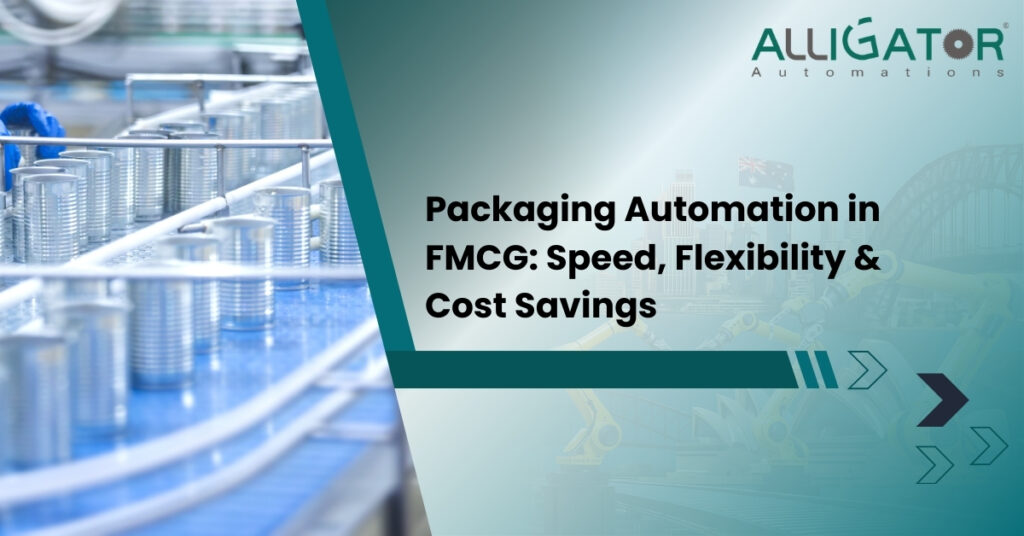
Packaging Automation in FMCG: Speed, Flexibility & Cost Savings Summary: The Fast-Moving Consumer Goods (FMCG) industry operates at extremely high production volumes where speed, efficiency, and consistency are critical. Manual packaging processes often struggle to keep up with increasing demand, leading to operational inefficiencies and higher labour costs. Packaging automation offers a powerful solution by integrating advanced technologies such as conveyors, robotic systems, and automated palletising equipment. These systems help manufacturers improve packaging speed, adapt to changing product formats, and reduce operational expenses. This blog explores how packaging automation is transforming FMCG operations through improved efficiency, flexibility, and long-term cost savings. The FMCG industry includes products that consumers purchase frequently, such as food, beverages, personal care items, cleaning supplies, and household goods. Because these products are produced and sold in large volumes, packaging plays a crucial role in ensuring efficient distribution and product protection. Traditionally, many FMCG companies relied on manual packaging processes for tasks like product sorting, boxing, sealing, and palletising. While manual labour can be effective for smaller operations, it often becomes inefficient as production scales. Human errors, slower processing speeds, and workplace fatigue can limit productivity. To address these challenges, manufacturers are increasingly adopting packaging automation systems. These technologies streamline packaging workflows, maintain consistent output, and help companies meet growing market demand while controlling operational costs. Packaging automation has become a key strategy for FMCG companies seeking to remain competitive in a rapidly evolving marketplace. The Need for Automation in FMCG Packaging The FMCG sector faces constant pressure to deliver products quickly, efficiently, and at competitive prices. Several factors are driving the need for automated packaging systems. Increasing Production Volumes As consumer demand grows, manufacturers must process and package products at higher speeds. Manual packaging processes often struggle to keep up with large-scale production lines, creating bottlenecks that slow down the entire operation. Automated packaging equipment can handle large product volumes with consistent speed, ensuring smooth production flow. Labour Shortages and Rising Costs Many manufacturing sectors are experiencing labour shortages and increasing wage costs. Relying heavily on manual labour for repetitive packaging tasks can become expensive and difficult to sustain. Automation reduces dependence on manual labour while allowing workers to focus on higher-value tasks such as system monitoring and quality control. Consistency and Quality Control Manual packaging processes can result in inconsistent packing patterns, uneven product placement, or damaged goods during handling. Automated systems ensure that every package is processed according to precise specifications, improving product quality and reducing waste. Faster Distribution and Logistics Efficient packaging is essential for maintaining smooth supply chain operations. Automated systems prepare products for shipment more quickly, helping companies meet tight delivery schedules. Key Components of Packaging Automation Modern FMCG packaging lines typically combine several automated technologies to create a fully integrated system. Conveyor Systems Conveyor systems form the backbone of automated packaging operations. They transport products smoothly between different stages of the packaging line, including inspection, sorting, packing, and palletising. These conveyors can be customised to handle various product sizes, packaging materials, and production speeds. Automated Case Packing Case packing machines automatically place products into cartons or boxes. These machines can handle a wide range of product formats, including bottles, cans, pouches, and containers. Automated case packing ensures uniform packing patterns and reduces manual handling errors. Robotic Pick-and-Place Systems Robotic arms equipped with advanced grippers are commonly used in FMCG packaging lines. These robots pick products from conveyors and place them into packaging or pallets with high speed and accuracy. Robotic systems are particularly useful for handling fragile or irregularly shaped products. Automated Palletising Once products are packed into cartons, automated palletisers stack them onto pallets for shipping. These machines create stable pallet loads by arranging cartons in optimised patterns. Automated palletising improves warehouse efficiency and ensures safe transportation of goods. Stretch Wrapping Systems After palletising, stretch wrapping machines secure the pallet load using plastic film. This step stabilises the products during transportation and protects them from environmental factors such as dust or moisture. Benefits of Packaging Automation in FMCG Automation offers several important advantages for FMCG manufacturers. Increased Production Speed Automated packaging systems can operate continuously at high speeds, significantly increasing production capacity. Manufacturers can package more products in less time without compromising quality. Improved Operational Efficiency By reducing manual intervention, automated systems streamline the entire packaging process. Products move smoothly from one stage to the next, minimising delays and bottlenecks. Greater Flexibility Modern packaging automation systems are designed to handle multiple product types and packaging formats. Manufacturers can quickly adjust machine settings to accommodate different product lines or seasonal demand changes. Reduced Labour Costs Automation reduces the need for large teams performing repetitive packaging tasks. Companies can allocate workers to more skilled roles such as system supervision, maintenance, and quality control. Enhanced Workplace Safety Packaging automation reduces the need for workers to lift heavy boxes or perform repetitive movements. This helps decrease workplace injuries and improves overall employee safety. Consistent Packaging Quality Automated systems maintain precise control over packaging processes, ensuring uniform product presentation and consistent packaging standards. Real-World Example of FMCG Packaging Automation Consider a beverage manufacturing company producing bottled drinks at high volumes. Before implementing automation, workers manually packed bottles into cartons and stacked them onto pallets. This process resulted in frequent slowdowns during peak production periods. Workers experienced fatigue from repetitive lifting, and pallet loads were sometimes unstable due to inconsistent stacking. After implementing an automated packaging line, the company introduced conveyor systems, robotic case packing, and automated palletising equipment. The results were significant. Production speed increased substantially, pallet loads became more consistent, and workplace injuries decreased. The company also reduced labour costs while improving supply chain efficiency. This example demonstrates how packaging automation can transform FMCG manufacturing operations. Future Trends in FMCG Packaging Automation The future of packaging automation is closely linked to advances in smart manufacturing and digital technologies. Artificial intelligence and machine learning are expected to improve automation systems by enabling predictive maintenance and real-time process optimisation. These technologies allow machines to
Automation for Cement, Chemicals & Building Materials

Automation for Cement, Chemicals & Building Materials Industrial sectors such as cement, chemicals, and building materials play a crucial role in infrastructure development and economic growth. However, these industries often face challenges related to high energy consumption, complex production processes, safety concerns, and the need for consistent product quality. Automation has emerged as a transformative solution that helps manufacturers optimize operations, improve safety, and increase overall efficiency. Automation technologies are increasingly being adopted across cement plants, chemical processing facilities, and building material manufacturing units to streamline production and enhance productivity. From automated material handling systems to smart monitoring tools, automation is reshaping how these industries operate. The Growing Importance of Automation in Heavy Industries Heavy industries traditionally rely on labor-intensive operations and large-scale equipment. While these methods have worked for decades, increasing demand, rising operational costs, and strict quality standards have made automation a necessity. Automation introduces intelligent systems that control processes, monitor equipment, and analyze production data in real time. This reduces manual intervention and allows manufacturers to achieve higher levels of accuracy, efficiency, and safety. For industries like cement and chemicals where production processes involve extreme temperatures, heavy loads, and hazardous materials, automation significantly minimizes risks to workers while improving operational reliability. Key Areas Where Automation Is Transforming the Cement Industry Cement production involves multiple stages including raw material extraction, crushing, grinding, blending, heating in kilns, and packaging. Each of these stages requires precision and consistency. Automation systems help monitor and control kiln temperatures, material proportions, and grinding operations. Advanced sensors and software ensure optimal process parameters, resulting in better clinker quality and reduced energy consumption. Automated conveyor systems and robotic palletizing solutions are also widely used in cement plants. These systems streamline material handling, reduce manual labor, and improve logistics efficiency within the facility. Another major advantage is predictive maintenance. Automated monitoring systems track equipment performance and detect early signs of wear or failure. This allows maintenance teams to address issues before they lead to costly downtime. Automation in Chemical Processing Plants Chemical manufacturing involves highly complex reactions and strict process control requirements. Even minor deviations in temperature, pressure, or material composition can affect product quality and safety. Automation plays a critical role in maintaining precise process control in chemical plants. Advanced control systems continuously monitor variables such as pressure, flow rate, and chemical concentrations. If any parameter deviates from the desired range, automated adjustments are made instantly. This level of precision ensures consistent product quality while minimizing waste and reducing operational risks. Automation also supports compliance with strict environmental and safety regulations by ensuring that chemical processes remain within defined safety limits. Additionally, automated batch processing systems allow chemical manufacturers to manage multiple production cycles efficiently. This improves flexibility and enables quick adjustments for different product formulations. Automation in Building Material Manufacturing The building materials industry produces a wide range of products including bricks, tiles, glass, insulation materials, and prefabricated components. Automation helps streamline the production of these materials while maintaining consistent quality standards. Robotic systems are increasingly used in cutting, shaping, and assembling building materials. Automated production lines ensure uniform dimensions, improved finishing, and faster output rates. Material handling automation also plays an important role in this sector. Conveyor belts, automated guided vehicles (AGVs), and robotic palletizers help transport heavy materials efficiently across production facilities. Packaging and palletizing automation is particularly valuable for building materials manufacturers. These systems ensure accurate stacking, reduce product damage during handling, and improve warehouse efficiency. Benefits of Automation for Cement, Chemicals, and Building Materials Industries Automation offers several advantages that directly impact productivity, safety, and profitability. One of the most significant benefits is improved operational efficiency. Automated systems can operate continuously with minimal downtime, increasing production capacity and reducing delays. Automation also enhances product quality by maintaining precise process parameters. This consistency is particularly important in industries where even small variations can affect the final product. Worker safety is another critical benefit. By automating hazardous tasks such as heavy lifting, high-temperature operations, and chemical handling, companies can significantly reduce workplace accidents and injuries. Energy efficiency is also improved through automation. Intelligent monitoring systems optimize equipment usage and reduce unnecessary energy consumption, helping manufacturers lower operational costs and meet sustainability goals. The Role of Smart Technologies in Industrial Automation Modern automation systems are powered by advanced technologies such as industrial IoT (Internet of Things), artificial intelligence, and data analytics. These technologies enable real-time monitoring, predictive maintenance, and intelligent decision-making. IoT-enabled sensors collect data from various parts of the production process, including temperature, vibration, pressure, and equipment performance. This data is analyzed to identify patterns, detect anomalies, and optimize operations. Artificial intelligence further enhances automation by enabling systems to learn from historical data and improve performance over time. For example, AI-powered predictive maintenance systems can forecast equipment failures before they occur. Digital dashboards and centralized control systems allow plant operators to monitor and manage entire facilities from a single interface. This improves visibility and enables faster response to operational issues. Challenges in Implementing Automation While automation offers numerous benefits, implementing it in heavy industries can be complex. One of the primary challenges is the initial investment required for automation infrastructure. Upgrading existing plants with automated systems often requires modifications to machinery, integration with legacy systems, and workforce training. However, the long-term benefits in terms of productivity and cost savings usually outweigh these initial costs. Another challenge is workforce adaptation. Employees need to be trained to operate and maintain automated systems. Companies that invest in employee training programs can ensure a smooth transition and maximize the value of automation technologies. Cybersecurity is also becoming an important consideration as industrial systems become increasingly connected. Protecting automation networks from cyber threats is essential for maintaining operational integrity. The Future of Automation in Industrial Manufacturing The adoption of automation in cement, chemicals, and building materials industries is expected to grow rapidly in the coming years. As technologies continue to evolve, manufacturers will gain access to more advanced tools for optimizing production and improving operational efficiency.
5 Safety Benefits of Automating Material Handling
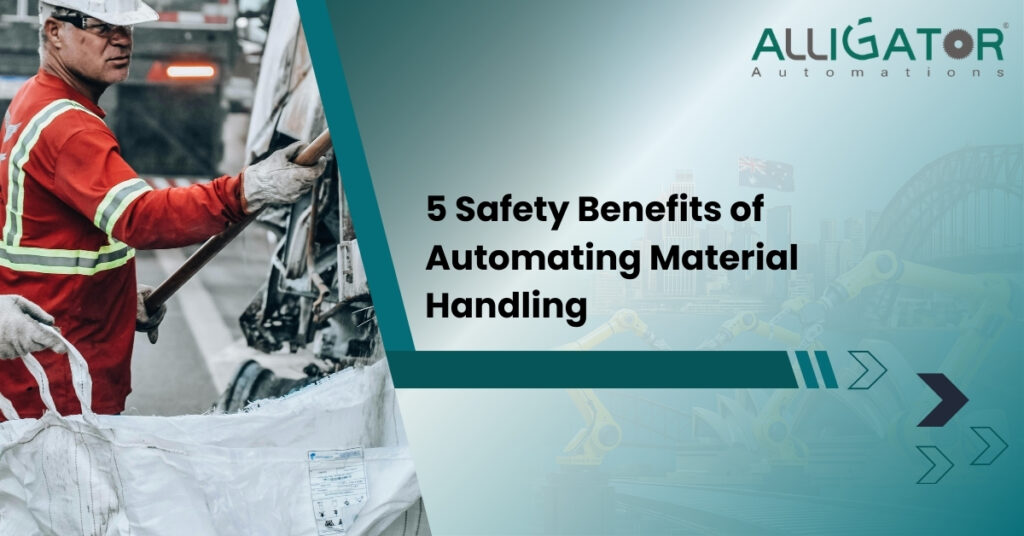
5 Safety Benefits of Automating Material Handling Summary: Automating material handling systems helps industries improve workplace safety, reduce injuries, and increase operational efficiency. By replacing manual lifting with advanced technologies such as conveyors, robotics, and automated vehicles, companies can minimize human error, enhance ergonomics, and safely handle heavy or hazardous materials. This article explores five key safety benefits that automation brings to modern material handling operations. Reduced Risk of Workplace Injuries Manual material handling often involves lifting, pushing, pulling, or carrying heavy loads. These tasks can lead to serious injuries such as back strain, muscle fatigue, joint damage, and other musculoskeletal disorders. Automated material handling systems significantly reduce the need for manual lifting and repetitive movements. Conveyor belts, automated palletisers, and robotic arms can handle heavy loads with precision and consistency. By eliminating physically demanding tasks, companies can greatly reduce the risk of employee injuries. This not only improves worker wellbeing but also reduces compensation claims, medical costs, and lost workdays associated with workplace accidents. Improved Workplace Ergonomics Ergonomics plays a crucial role in employee safety and long-term health. Poor workplace design often forces workers into awkward positions, repetitive movements, or excessive physical effort, all of which can lead to fatigue and injury. Automation improves ergonomics by redesigning workflows around machines rather than physical labour. Automated lifting equipment, adjustable workstations, and robotic systems allow materials to be positioned at optimal heights and angles for safe interaction. As a result, employees can perform supervisory or monitoring tasks rather than physically demanding work, which significantly reduces physical stress and improves overall workplace comfort. Lower Risk of Human Error Human error is one of the leading causes of workplace accidents in industrial environments. Mistakes in material handling, such as dropping loads, misplacing items, or improper stacking, can result in injuries, equipment damage, and operational delays. Automated systems operate using programmed instructions and sensors that ensure consistent and precise movement of materials. Technologies such as automated conveyors, robotic palletising systems, and automated storage and retrieval systems (AS/RS) minimize the chances of mistakes during handling processes. By reducing reliance on manual processes, companies can create safer and more predictable work environments where risks associated with human error are significantly minimized. Safer Handling of Heavy and Hazardous Materials In many industries, workers must handle extremely heavy or potentially hazardous materials. For example, chemical containers, large industrial components, or bulk raw materials can pose serious risks if handled manually. Automated material handling systems are designed to safely transport these materials without direct human involvement. Robotic arms, automated forklifts, and conveyor systems can move hazardous items efficiently while maintaining a safe distance between workers and potential dangers. This separation between humans and high-risk materials reduces the likelihood of accidents, chemical exposure, or injuries caused by falling or unstable loads. Enhanced Safety Monitoring and Control Modern automated material handling systems are often integrated with smart technologies such as sensors, monitoring software, and industrial control systems. These technologies provide real-time visibility into operations and help detect potential safety risks before they escalate. For example, sensors can detect obstacles, overload conditions, or irregular movements in automated equipment. If an issue is detected, the system can automatically stop operations or trigger safety alerts. Additionally, automation allows companies to track operational data and identify patterns that may lead to safety concerns. This proactive approach helps organizations continuously improve safety protocols and maintain a safer workplace. The Future of Safer Material Handling Automating material handling processes offers far more than just operational efficiency. One of the most significant advantages is the improvement in workplace safety. By reducing manual lifting, minimizing human error, improving ergonomics, safely handling hazardous materials, and enabling real-time monitoring, automation creates a safer and more controlled working environment. As industries continue to embrace advanced technologies, automated material handling will play a vital role in protecting employees while improving productivity. Companies that invest in automation not only enhance operational performance but also demonstrate a strong commitment to workplace safety and employee wellbeing. Businesses looking to upgrade their systems can explore advanced end of line packaging solutions in Australia to further improve efficiency and safety in their operations. FAQs What is automated material handling? Automated material handling refers to the use of machines, robotics, and intelligent systems to move, store, control, and protect materials throughout manufacturing or warehouse processes with minimal human intervention. Which industries benefit from automated material handling? Industries such as manufacturing, logistics, warehousing, automotive, food processing, and pharmaceuticals widely benefit from automated material handling systems. Does automation completely replace workers in material handling? No, automation typically supports workers rather than replacing them. Employees often transition to supervisory, technical, or system management roles while machines handle physically demanding tasks. Automated material handling refers to the use of machines, robotics, and intelligent systems to move, store, control, and protect materials throughout manufacturing or warehouse processes with minimal human intervention. Industries such as manufacturing, logistics, warehousing, automotive, food processing, and pharmaceuticals widely benefit from automated material handling systems. No, automation typically supports workers rather than replacing them. Employees often transition to supervisory, technical, or system management roles while machines handle physically demanding tasks. Recent Posts Choosing a Case Packaging Solution Provider in Australia: What to Consider Common Packaging Challenges Solved by Automated Case Packing Systems A Complete Guide to Choosing an Industrial Palletizer Categories Automation ROI Events News Packaging Automation Robotics & Automation Browse Our Automation Solutions Explore our complete product catalogue and find the perfect solution for your industry. Download Catalogue
Automating Tyre Handling & Palletising: A Case Study for the Tyre Industry
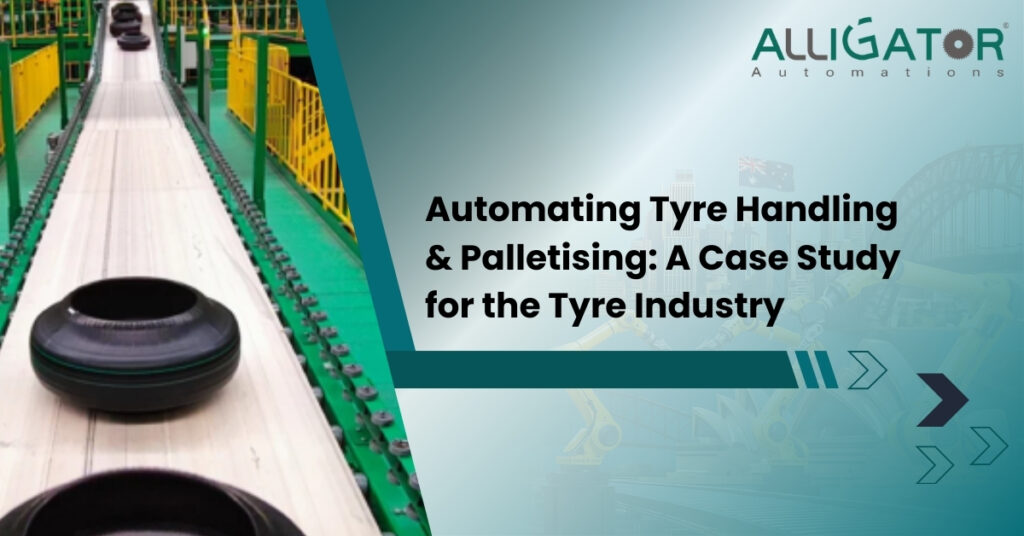
Automating Tyre Handling & Palletising: A Case Study for the Tyre Industry Summary: Automation is rapidly transforming the tyre manufacturing industry by improving efficiency, safety, and productivity. Manual tyre handling often leads to worker fatigue, inconsistent pallet stacking, and operational bottlenecks. By integrating automated tyre handling systems, conveyor technologies, robotic palletising, and stretch wrapping solutions, manufacturers can streamline operations and reduce reliance on manual labour. This case study explores how automation can optimize tyre handling processes, improve workplace safety, and enhance logistics efficiency in modern tyre production facilities. The tyre manufacturing industry operates in a highly competitive and demanding environment where efficiency, safety, and productivity are critical. Tyre manufacturers handle thousands of tyres daily, moving them through multiple stages such as inspection, sorting, stacking, palletising, and loading for distribution. Traditionally, many of these tasks have been performed manually, which often leads to inefficiencies, workplace injuries, and inconsistent output. With the rise of advanced automation technologies, tyre manufacturers are increasingly adopting automated tyre handling and palletising systems. These solutions streamline production processes, reduce manual labour, improve worker safety, and ensure consistent pallet stacking for efficient logistics. This blog presents a case study-style overview of how automating tyre handling and palletising can transform operations in the tyre industry. Challenges in Manual Tyre Handling Before implementing automation, many tyre manufacturing facilities rely on manual labour to handle finished tyres. While this approach may seem straightforward, it presents several operational challenges. Heavy and Repetitive Lifting Tyres, particularly those used in trucks, buses, and industrial vehicles, can be heavy and bulky. Workers repeatedly lift, move, and stack tyres throughout the day. Over time, this repetitive work can lead to fatigue, musculoskeletal injuries, and decreased productivity. Inconsistent Pallet Stacking Manual stacking often results in uneven or unstable pallet loads. Inconsistent stacking patterns can cause issues during storage and transportation, increasing the risk of pallet collapse or product damage. Slow Throughput Manual processes limit the speed at which tyres can be sorted, stacked, and palletised. As production volumes increase, bottlenecks often occur in the packaging and logistics stages. Workplace Safety Risks Handling tyres manually involves bending, lifting, and twisting movements, which significantly increase the risk of workplace injuries. Additionally, busy production lines create environments where accidents can occur if proper handling procedures are not followed. These challenges highlight the need for automated solutions that improve both operational efficiency and worker safety. The Role of Automation in Tyre Handling Automated tyre handling systems are designed to manage tyres from the end of the production line through sorting, stacking, palletising, and preparation for shipment. These systems typically include conveyors, robotic arms, automated grippers, palletising machines, and stretch wrapping equipment. By integrating these technologies into the production workflow, manufacturers can significantly improve operational performance. Automation ensures consistent handling, reduces manual labour requirements, and enables tyre manufacturers to scale their operations more effectively. Case Study: Implementing Automated Tyre Handling & Palletising A large tyre manufacturing facility producing passenger and commercial vehicle tyres faced several operational challenges. The company needed to improve throughput, reduce worker fatigue, and optimize pallet loading for distribution. Initial Situation The factory relied heavily on manual labour to move tyres from the production line to the palletising area. Workers manually lifted tyres from conveyors, stacked them onto pallets, and prepared them for shipping. The key problems included: Frequent worker fatigue and injuries Inconsistent pallet stacking patterns Production bottlenecks during peak output periods Limited ability to scale operations as demand increased To address these issues, the manufacturer decided to implement a fully automated tyre handling and palletising system. The Automation Solution The automation solution included several integrated components designed to streamline tyre movement and pallet preparation. Automated Conveyor Systems Conveyor systems were installed to transport tyres directly from the production line to sorting and palletising stations. These conveyors reduced the need for manual transport and ensured a continuous flow of tyres. Advanced sensors were also integrated to track tyre movement and prevent jams or misalignment. Many tyre manufacturers work with specialised providers such as a Tire Handling Conveyors Manufacturer in Australia to design customised conveyor systems that match their production requirements. Tyre Orientation and Sorting Before palletising, tyres must be properly oriented. Automated systems were used to align tyres in the correct position to ensure consistent stacking. Sorting mechanisms were also implemented to separate tyres based on size, type, or order requirements. Robotic Tyre Handling Industrial robotic arms equipped with specialised tyre grippers were introduced to handle the tyres. These robots can lift tyres of various sizes and stack them precisely according to pre-programmed patterns. The robotic system ensures accurate placement, improving pallet stability and reducing the risk of product damage. Automated Palletising Automated palletisers were integrated to stack tyres onto pallets in optimised configurations. These machines are capable of handling high volumes while maintaining consistent stacking patterns. Operators can easily adjust pallet configurations based on tyre size or shipping requirements. Stretch Wrapping for Load Stability After palletising, automated stretch wrapping machines secure the pallet load with protective film. This ensures that tyres remain stable during transport and storage. Results Achieved After implementing automated tyre handling and palletising systems, the manufacturer experienced significant improvements across several areas. Increased Productivity Automation enabled the facility to process tyres much faster than manual handling allowed. The production line maintained a continuous flow without bottlenecks in the palletising stage. Improved Worker Safety By eliminating heavy lifting tasks, the company significantly reduced workplace injuries and worker fatigue. Employees were reassigned to more skilled supervisory and maintenance roles. Consistent Pallet Quality Automated palletising ensured uniform stacking patterns for every pallet. This improved pallet stability and reduced the risk of damage during transportation. Reduced Operational Costs Although the initial investment in automation was substantial, the long-term savings in labour costs, injury-related expenses, and improved efficiency resulted in a strong return on investment. Better Space Utilisation Optimised pallet stacking allowed the manufacturer to store and transport more tyres per pallet, improving warehouse space usage and reducing logistics costs. Key Technologies Driving Tyre Automation Several technologies are
Automatic Truck Loading Systems: Streamlining Logistics in ANZ
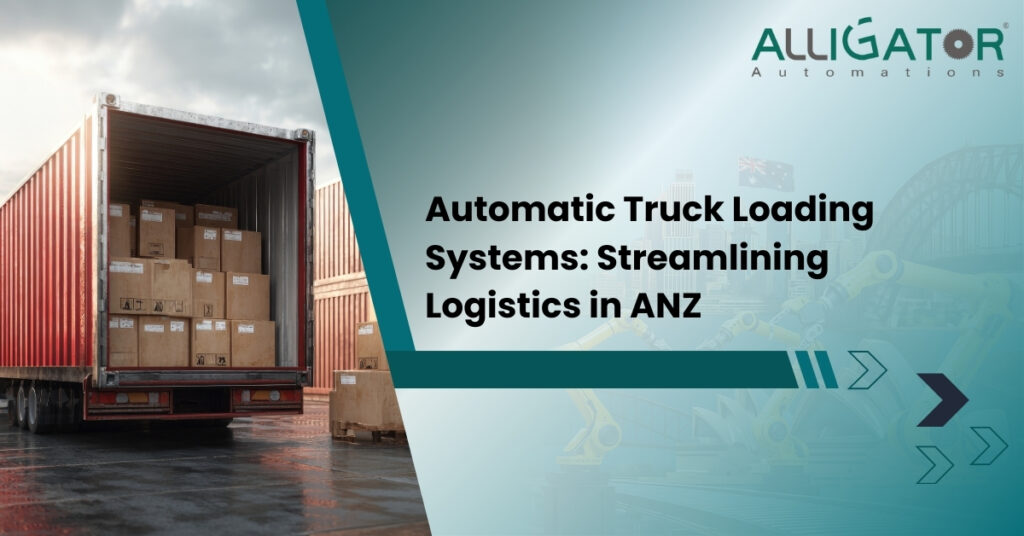
Automatic Truck Loading Systems: Streamlining Logistics in ANZ Summary: This article explores the transformative impact of Automatic Truck Loading Systems (ATLS) on the supply chains of Australia and New Zealand. It examines how these systems address critical regional challenges such as labor shortages and high operational costs. The guide details the different types of ATLS technologies available, the operational benefits regarding safety and turnaround times, and the Return on Investment (ROI) for logistics companies. Finally, it answers common questions to help businesses determine if ATLS is the right step for their distribution centers. The Bottleneck at the Loading Dock For decades, the loading dock has been the chokepoint of the warehouse. While manufacturing and palletizing processes have achieved high levels of automation, the final step getting goods onto the truck often remains a manual, labor-intensive, and time-consuming process. In the fast-paced logistics environment of Australia and New Zealand (ANZ), where transport distances are vast and delivery windows are shrinking, this inefficiency is no longer sustainable. Manual loading is fraught with inconsistency. Forklift traffic creates safety hazards, product damage is frequent, and trucks sit idle for hours waiting to be loaded. ATLS eliminates these variables, bridging the gap between the automated warehouse and the transport vehicle. Understanding Automatic Truck Loading Systems (ATLS) Automatic Truck Loading Systems refers to a suite of technologies designed to load or unload a truck with minimal human intervention. These systems can load a full trailer of 26 to 30 pallets in a matter of minutes, a task that might take a forklift operator 30 to 45 minutes. Skate and Chain Conveyor Systems These are among the most common forms of ATLS. The trailer floor is retrofitted with pneumatic rising skates or chains. How it works: The load is pre-staged on a dock conveyor. When the truck aligns, the system activates, lifting the pallets and sliding them into the truck in one smooth motion. Best for: High-volume shuttles between factories and distribution centers (DCs) where the fleet is dedicated and modified. Slat Conveyor Systems Similar to skate systems but utilizing a moving floor of slats. How it works: The entire floor moves to convey the load inside. Best for: Mixed loads or non-palletized goods, offering more flexibility than chain systems. AGV (Automated Guided Vehicle) Loading Instead of modifying the truck, some operations use specialized AGVs designed to enter standard shipping containers or trailers. How it works: Autonomous forklifts pick up pallets and drive them deep into the container, placing them with precision. Best for: Operations that use standard, unmodified sea containers or third-party logistics (3PL) trucks. Why ANZ Supply Chains are Adopting ATLS The logistics landscape in Australia and New Zealand presents unique challenges that make automation particularly attractive. Combating Labor Shortages The ANZ region faces a chronic shortage of skilled warehouse staff and forklift operators. ATLS reduces the dependency on manual labor for the loading process. A single operator can oversee multiple loading docks, allowing businesses to redeploy staff to higher-value tasks like picking or inventory management. Reducing Turnaround Time (TAT) In logistics, time is money. A standard forklift load might take 30-40 minutes. An ATLS can complete the same job in 3-5 minutes. This rapid turnaround means: Trucks spend less time idling at the dock. Drivers can complete more runs per shift (critical for short-haul shuttle runs). Dock congestion is significantly reduced. Enhancing Safety Standards Loading docks are statistically the most dangerous area of a warehouse. By removing forklifts and pedestrians from the inside of the truck, ATLS virtually eliminates the risk of collisions, crush injuries, and ergonomic strains associated with manual loading. The ROI of Automation While the upfront investment for ATLS is significant, the long-term Return on Investment (ROI) is compelling for high-volume operations. Fleet Reduction: Because trucks are turned around faster, fewer trucks are needed to move the same amount of product. Product Integrity: Automation ensures smooth, controlled handling, drastically reducing product damage caused by forklift impact. Energy Savings: Electric conveyance systems are often more energy-efficient than running propane or diesel forklifts for hours. Future-Proofing Your Operations: The Cost of Stagnation Adopting automation is no longer just about gaining a competitive edge; it is about survival in a high-cost environment. Relying on manual loading methods exposes your business to: Rising labor costs and recruitment difficulties. Inconsistent loading times that disrupt delivery schedules. Higher insurance premiums due to workplace accidents. Damaged goods rejected by customers. To fully realize the benefits of automation, the entire packaging line must be secure. If a pallet is not wrapped correctly, it cannot be automated. By implementing a robust automatic truck loading system in Australia, you ensure a seamless, touch-free journey from the warehouse floor to the customer’s door. Efficiency is not an option; it is the standard. Frequently Asked Questions (FAQ) How fast can an ATLS load a truck? Most skate or chain systems can load a full 53-foot trailer (or standard B-double trailers used in ANZ) in under 5 minutes. Some high-speed systems can achieve this in as little as 2-3 minutes. Do I need to modify my trucks for ATLS? For “dedicated” systems like skate and chain conveyors, yes, the trailer floor must be retrofitted with corresponding tracks. For AGV-based loading, standard unmodified trucks or containers can often be used. Is ATLS suitable for all types of products? ATLS works best for standardized, palletized goods (like FMCG, beverages, and paper products). Irregular, loose, or non-stackable items are more difficult to handle with standard automated loading systems. Can ATLS handle double-stacked pallets? Yes, provided the pallets are stable and wrapped securely. Double-stacking is a common practice to maximize truck fill rates, and ATLS handles these loads efficiently. Does ATLS work with slip sheets? Yes, specific systems are designed to handle slip sheets, though they are more complex than standard pallet systems. They often require specialized slat conveyors or push-pull AGV attachments. How does ATLS improve sustainability? By reducing truck idling time and optimizing the number of trucks needed (fewer trips due to better fill rates),
Palletising & Stretch Wrapping: How to Secure Pallets for Transport?

Palletising & Stretch Wrapping: How to Secure Pallets for Transport? Summary: This guide provides a comprehensive overview of how to effectively secure pallets for transport. It covers the foundational importance of proper pallet inspection and stacking patterns, detailed techniques for stretch wrapping to ensure containment force, and the use of advanced stabilization tools like edge protectors and strapping. Additionally, it compares manual versus machine wrapping and addresses common questions to help businesses minimize product damage, reduce costs, and maintain a safe supply chain. The Foundation – Proper Palletizing Techniques You cannot wrap your way out of a badly stacked pallet. If the underlying structure is flawed, no amount of film will save it. A secure load begins with the pallet itself and how you arrange your goods upon it. Inspect Your Pallet Before placing a single box, inspect the pallet. It is the foundation of your entire load. Check for damage: Avoid pallets with broken boards, protruding nails, or missing blocks. A compromised pallet can collapse under the weight of the load or damage the product from below. Size matters: Ensure the pallet is the correct size for your racking systems and the transport vehicle (e.g., standard GMA 48″ x 40″ in the US, or Euro Pallets in Europe). The Geometry of Stacking How you arrange your boxes dictates the compressive strength and stability of the load. There are generally two schools of thought here: Column Stacking: Boxes are stacked directly on top of one another, corner-to-corner. Pros: This offers the maximum compressive strength because the corners of the boxes (the strongest parts) support the weight. Cons: Without external stabilization, these stacks can easily topple or “column split” during transit. Interlocking (Brick) Stacking: Boxes are rotated on alternating layers, similar to bricklaying. Pros: This creates a naturally stable, cohesive unit that is resistant to toppling. Cons: It can reduce compressive strength by up to 50% because the corners of the top boxes often sit on the weaker middle sections of the boxes below. Pro Tip: If you use column stacking for strength, you must use stretch wrap, slip sheets, or tie sheets to hold the columns together. No Overhang, No Underhang Overhang: When boxes stick out past the edge of the pallet, they are vulnerable to impact damage from forklifts and other pallets. Furthermore, overhang reduces stacking strength significantly. Underhang: When the load is too small for the pallet, the load can shift. More importantly, the empty pallet edges create a gap that allows the load to slide around inside the truck, increasing the risk of collapse. Create a Flat Top Surface Ideally, your pallet should have a flat top level. A flat surface allows pallets to be double-stacked in trucks and warehouses, maximizing space efficiency. If you have an irregular (“pyramid”) load, do not stack another pallet on top of it, and clearly mark it as “Do Not Stack.” The Glue – Essentials of Stretch Wrapping Once your pallet is stacked, stretch wrapping provides the containment force necessary to keep the load together. It turns a collection of loose boxes into a single, transportable unit. Secure the Base First The most critical failure point in palletization is the separation of the load from the pallet. The Knot: If wrapping manually, tie the film securely to the base of the pallet (not the product). Locking the Load: You must wrap the pallet base and the bottom layer of the boxes together. Apply at least 3 to 4 revolutions around the base. This “marries” the load to the pallet, preventing it from sliding off during a sudden truck brake. Containment Force vs. Film layers A common misconception is that more layers equal a safer load. In reality, it is about containment force—the tightness of the wrap multiplied by the number of layers. The film must be stretched significantly (often 200-300% for machine films) to utilize its “elastic memory.” The film wants to snap back to its original size, and that tension is what holds the load tight. If you just drape the film around the pallet without tension, the load will shift. The Overlap Rule As you spiral up the pallet, ensure a consistent overlap of 50%. This means the middle of your film roll should cover the top edge of the previous wrap layer. This acts like shingles on a roof, providing structural integrity and water resistance. Top Wrapping Once you reach the top of the load, do not just stop. Double Wrap the Top: Apply 2 to 3 layers at the very top to secure the highest boxes, which are most prone to swaying. The “X” Pattern (Manual): If wrapping by hand, you can cross the film over the top corners to pull the load downward, providing vertical compression. Advanced Stabilization Tools Sometimes, standard boxes and film aren’t enough. For heavy, irregular, or high-value loads, you need reinforcements. Edge Protectors (Corner Boards) These are rigid cardboard or plastic angles placed on the vertical corners of the pallet stack. Why use them? They allow you to apply higher wrap tension without crushing the box corners. They also provide vertical strength, allowing for higher stacking, and create a perfect frame for the stretch wrap to grip. Slip Sheets and Tie Sheets Tie Sheets: Cardboard or paper sheets placed between layers of boxes. They increase friction and prevent layers from sliding over one another. Slip Sheets: Heavy-duty sheets placed at the bottom of the load (instead of a wooden pallet) for use with specialized push-pull forklift attachments. Strapping (Banding) For extremely heavy loads (like construction materials, machinery, or beverage crates), stretch wrap alone may yield. High-tensile strapping (steel, polyester, or polypropylene) runs vertically or horizontally to physically bind the load to the pallet. Always use strapping before stretch wrapping. Manual vs. Machine Wrapping Manual Wrapping Best for: Low volume operations (fewer than 10-15 pallets a day). Risks: It is physically demanding and often results in inconsistent containment force. It is difficult for a human to maintain the necessary tension consistently around
Conveyor Systems vs Manual Handling: What Makes the Difference?
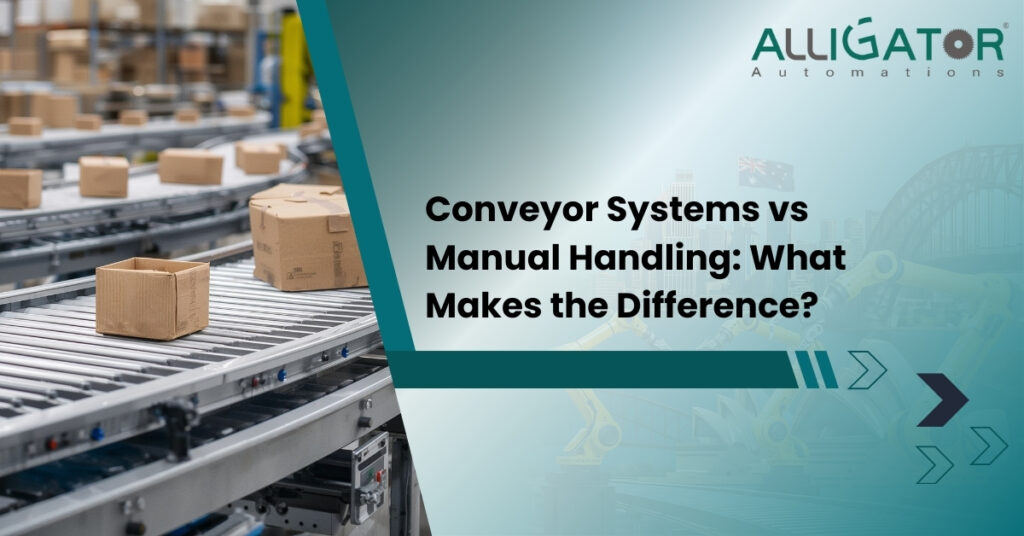
Conveyor Systems vs Manual Handling: What Makes the Difference? Summary: In modern industries, choosing between conveyor systems and manual handling can significantly impact productivity, safety, and operational costs. Conveyor systems automate material movement, while manual handling relies on human labor. This blog explores the differences, benefits, challenges, and key factors businesses should consider when deciding the best approach for their operations. Efficient material handling is critical for manufacturing, warehousing, and logistics operations. Companies face the challenge of deciding whether to rely on traditional manual handling methods or invest in automated conveyor systems. Each option has distinct advantages, limitations, and cost implications. Understanding these differences helps businesses increase productivity, reduce workplace injuries, and optimize operational efficiency. What is Manual Handling? Manual handling refers to tasks where human workers lift, move, carry, push, or pull materials without mechanized assistance. It is one of the oldest and most common methods of material transport in industries, warehouses, and retail environments. Examples include: Workers lifting boxes onto shelves or pallets Loading/unloading goods from trucks Moving items between workstations by hand Manual handling is flexible and requires minimal equipment, but it comes with challenges like fatigue, injury risk, and inconsistent productivity. What are Conveyor Systems? Conveyor systems are mechanical systems designed to transport materials or products automatically from one point to another. They are widely used in manufacturing, packaging, and logistics to streamline operations and improve efficiency. Types of conveyor systems include: Belt conveyors: Ideal for moving bulk items and packaged goods Roller conveyors: Efficient for heavy pallets or boxes Chain conveyors: Used in manufacturing for heavy-duty items Automated sorting conveyors: For warehouses and e-commerce fulfillment Conveyor systems reduce manual labor, improve speed, and ensure consistent workflow. Key Differences Between Conveyor Systems and Manual Handling Feature Manual Handling Conveyor Systems Labor Requirement High, relies entirely on human workforce Minimal, automated operation Speed Moderate, limited by human endurance High, consistent, and programmable Safety Higher risk of injuries (back, strain, slips) Safer, reduces repetitive strain and accidents Flexibility Can adapt to irregular shapes and tasks Limited to system design; less flexible Cost Low initial investment Higher upfront cost but long-term savings Consistency Dependent on worker skill and fatigue Consistent output and reliability Maintenance Minimal, mainly human training Requires routine mechanical maintenance Advantages of Conveyor Systems Increased Productivity: Conveyor systems move materials faster and more efficiently than manual labor, reducing processing time and increasing throughput. Improved Safety: By reducing manual lifting, pushing, and carrying, conveyor systems minimize workplace injuries, such as strains, sprains, and repetitive motion injuries. Consistency and Accuracy: Automation ensures consistent movement and handling of goods, reducing human errors in transport, sorting, or packaging. Long-Term Cost Savings: Although initial investment is high, conveyor systems reduce labor costs, minimize downtime, and prevent product damage, providing a strong return on investment. Scalability: Conveyor systems can expand with business growth, supporting higher volumes and more complex operations without significantly increasing labor costs. Advantages of Manual Handling Flexibility: Manual handling allows workers to adapt to unusual shapes, sizes, or fragile items that may not fit standard conveyor systems. Low Initial Investment: It requires minimal capital expenditure, making it suitable for small-scale operations or startups. Easy Implementation: Manual handling does not require specialized equipment or installation. Training workers is usually sufficient to start operations immediately. Adaptable to Changing Layouts: Manual systems can adjust to changes in workspace or production layout without major modifications. Challenges of Conveyor Systems While conveyor systems offer many benefits, they also come with challenges: High upfront cost for purchase and installation Maintenance requirements for belts, motors, and rollers Limited flexibility for unusual product sizes or shapes Energy consumption may increase operational expenses Challenges of Manual Handling Manual handling, while flexible, presents its own risks: Injury risk: Back strains, slips, and repetitive motion injuries Fatigue: Productivity decreases as workers tire Inconsistency: Human error can affect speed, accuracy, and quality Higher labor costs for large-scale operations When to Choose Conveyor Systems? Conveyor systems are ideal for: High-volume manufacturing or warehousing operations Repetitive tasks requiring speed and consistency Heavy or bulky items that are difficult to handle manually Operations where workplace safety is a priority Long-term cost savings and scalability are needed When to Choose Manual Handling? Manual handling is better suited for: Small-scale operations or startups with low budgets Tasks requiring flexibility for irregular or delicate items Environments where installation of conveyors is not feasible Temporary projects or short-term workflows Hybrid Approach: Best of Both Worlds Many businesses adopt a hybrid approach, combining conveyor systems with manual handling. For example: Conveyors for bulk movement of goods across long distances Manual handling for fragile, irregular, or customized items This approach maximizes efficiency while retaining flexibility. Making the Right Material Handling Choice! Choosing between conveyor systems and manual handling depends on your business needs, volume, budget, and safety priorities. Conveyor systems provide speed, consistency, and long-term cost savings, while manual handling offers flexibility and low upfront costs. For companies looking to optimize warehouse operations or manufacturing efficiency, a careful evaluation of workflow, product type, and labor availability will help determine the most suitable solution—or even a hybrid approach combining both methods. Businesses in Australia can explore intralogistics conveyor solutions in Australia to implement tailored systems that improve safety, productivity, and operational efficiency. FAQ’s Are conveyor systems safer than manual handling? Yes, they reduce risks of back injuries, slips, and repetitive motion injuries. Can conveyor systems handle fragile items? Yes, but they may require customized belts, padding, or handling mechanisms. Do conveyor systems require a lot of maintenance? Yes, regular inspection and maintenance of belts, rollers, and motors are necessary. How does manual handling impact worker fatigue? Extended manual handling can cause fatigue, reducing productivity and increasing injury risk. Yes, they reduce risks of back injuries, slips, and repetitive motion injuries. Yes, but they may require customized belts, padding, or handling mechanisms. Yes, regular inspection and maintenance of belts, rollers, and motors are necessary. Extended manual handling can cause fatigue, reducing productivity and increasing injury risk. Recent Posts Choosing a Case Packaging
Secondary Packaging Explained: Benefits, Applications & ROI

Secondary Packaging Explained: Benefits, Applications & ROI Summary: Secondary packaging is the outer layer of packaging that groups, protects, and transports multiple primary packaged products. It plays a critical role in logistics, product protection, branding, and cost optimization. This blog explores the benefits, applications, and ROI of secondary packaging, helping businesses make informed packaging decisions and improve overall efficiency. In the modern manufacturing and logistics industry, packaging plays a crucial role beyond just holding a product. While primary packaging the immediate packaging in direct contact with the product is essential for protection and branding, secondary packaging has emerged as a key element in supply chain efficiency, cost reduction, and marketing impact. This blog explores secondary packaging, its benefits, applications, and the return on investment (ROI) it offers to businesses. What is Secondary Packaging? Secondary packaging refers to the outer layer of packaging used to group, protect, and transport multiple primary packaged products. Unlike primary packaging, which is in direct contact with the product, secondary packaging is primarily designed for logistics, storage, and marketing purposes. Common examples include: Cartons containing multiple bottles or cans of beverages Shrink-wrapped multipacks of snacks Corrugated boxes for shipping consumer goods Pallets and crates used in bulk transportation Essentially, secondary packaging protects products during transit, enhances handling efficiency, and supports branding. Key Benefits of Secondary Packaging Secondary packaging offers numerous advantages for manufacturers, distributors, and retailers. Here’s a closer look: 1. Product Protection One of the main purposes of secondary packaging is protecting products during storage and transit. It helps: Minimize damage from physical impacts or vibrations Prevent contamination or spoilage Reduce returns and replacement costs 2. Improved Logistics and Handling Secondary packaging simplifies handling and stacking, enabling efficient transportation and warehouse management: Easier loading and unloading Organized storage and inventory control Reduced labor and handling costs 3. Cost Reduction Although it adds an extra layer of material, secondary packaging can save money in the long run: Bulk packaging lowers per-unit handling costs Optimized packaging reduces shipping and storage space Minimizes product loss due to damage 4. Branding and Marketing Opportunities Secondary packaging also serves as a marketing tool: Displaying brand logos, colors, and designs enhances visibility Supports promotions, gift packs, and seasonal campaigns Creates a premium perception of products 5. Compliance and Sustainability With growing environmental awareness and regulations, secondary packaging helps companies: Use recyclable or reusable materials Meet shipping and safety standards Reduce overall packaging waste Common Applications of Secondary Packaging Secondary packaging is widely used across industries. Here are key applications: 1. Food and Beverage Industry Secondary packaging in food and beverages is used for: Retail distribution (e.g., multipacks of soda cans) Bulk shipping (e.g., cartons of packaged snacks) Promotional or seasonal packs Shrink wraps, trays, and corrugated cartons are commonly used. 2. Pharmaceutical Industry Pharmaceutical secondary packaging ensures: Secure transport of medicines Preservation of product quality Compliance with labeling and regulatory requirements Typical examples include blister packs in cartons and palletized medicines. 3. Consumer Electronics Electronics benefit from secondary packaging by: Protecting fragile devices Organizing accessories and manuals Enhancing unboxing experience Corrugated boxes with foam inserts are widely used. 4. Cosmetics and Personal Care Cosmetic products rely on appealing packaging: Multipacks, gift boxes, and display-ready packaging Protection for delicate bottles and jars Brand visibility enhancement 5. Industrial and Manufacturing Products In B2B industries, secondary packaging is essential for: Bulk transport of raw materials or components Organizing parts for assembly lines Simplifying warehouse management Pallets, crates, and shrink wraps are standard solutions. Return on Investment (ROI) of Secondary Packaging Secondary packaging is not just an additional cost—it provides measurable ROI: 1. Reduced Product Loss Proper packaging reduces damage and returns, saving money and preserving product value. 2. Lower Transportation Costs Optimized packaging maximizes container space and reduces shipping costs. 3. Enhanced Brand Value Attractive packaging can increase sales, promote repeat business, and improve customer perception. 4. Streamlined Operations Efficient packaging reduces labor costs, simplifies handling, and improves supply chain productivity. 5. Environmental and Regulatory Compliance Sustainable secondary packaging prevents fines, aligns with regulations, and appeals to eco-conscious consumers. Calculating ROI:Businesses should consider packaging costs, savings from reduced damage and labor, transportation efficiency, and incremental revenue from improved branding. Strategic packaging investments deliver both operational savings and long-term revenue growth. Choosing the Right Secondary Packaging Selecting the ideal secondary packaging depends on: Product type: Fragile items need reinforced packaging; consumables need hygiene compliance Transportation method: Air, sea, or road transport impacts packaging strength Storage requirements: Temperature-sensitive goods may need insulation Branding goals: Premium products may need high-quality visuals Sustainability considerations: Recyclable or reusable materials reduce environmental impact The Strategic Importance of Secondary Packaging Secondary packaging is far more than a simple container. It is a strategic investment that protects products, enhances supply chain efficiency, supports branding, and drives ROI. From food and pharmaceuticals to electronics and industrial goods, effective secondary packaging ensures products reach customers safely while strengthening brand perception. By understanding the benefits, applications, and ROI potential of secondary packaging, businesses can make informed decisions that improve operational efficiency, reduce costs, and create a lasting impact on the market. Companies looking to implement these solutions locally can benefit from secondary packaging solutions in Australia for optimized logistics and product presentation. FAQ’s How does secondary packaging differ from primary packaging? Primary packaging is in direct contact with the product, while secondary packaging is an outer layer used for protection, logistics, and marketing. What are common materials used in secondary packaging? Corrugated cardboard, shrink wrap, plastic trays, and pallets are commonly used for secondary packaging. Can secondary packaging reduce product damage? Yes, it protects products from impacts, vibrations, and environmental factors during storage and transportation. Primary packaging is in direct contact with the product, while secondary packaging is an outer layer used for protection, logistics, and marketing. Corrugated cardboard, shrink wrap, plastic trays, and pallets are commonly used for secondary packaging. Yes, it protects products from impacts, vibrations, and environmental factors during storage and transportation. Recent Posts Choosing a Case Packaging Solution Provider in
Automation in 2030: What’s Next for Manufacturing & Logistics in Australia?
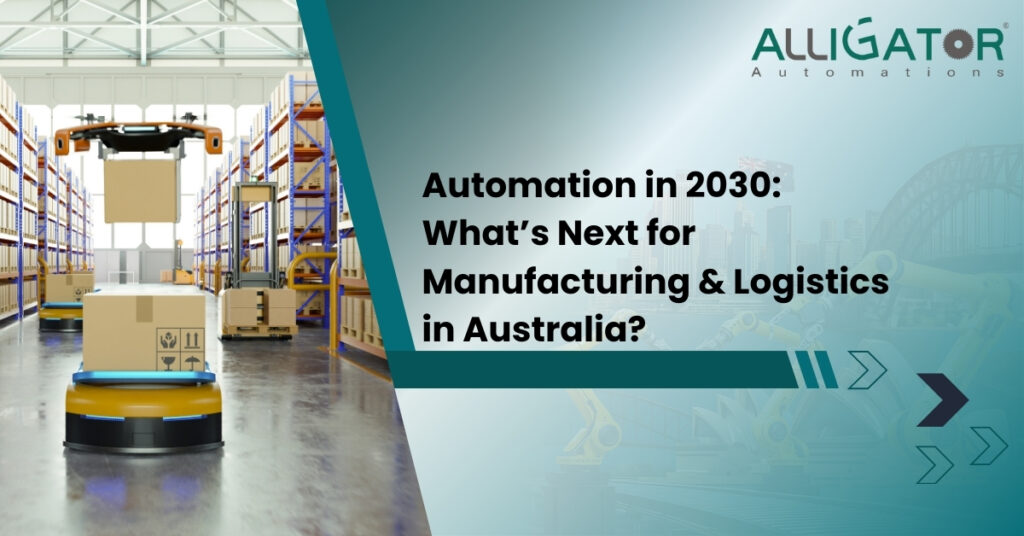
Automation in 2030: What’s Next for Manufacturing & Logistics in Australia? Summary: By 2030, automation in Australia won’t just streamline production lines — it will redefine how manufacturers and logistics businesses plan, execute, and scale. AI-driven scheduling, autonomous warehousing, predictive maintenance, and smarter packaging workflows will move operations from reactive problem-solving to proactive, data-powered growth. The companies that win won’t simply install machines — they’ll build connected, intelligent ecosystems that continually optimize performance. As Australia approaches 2030, automation is set to redefine manufacturing and logistics, transforming how businesses operate, scale, and compete. Advanced AI, robotics, and smart material-handling systems will go beyond simple task automation, enabling predictive decision-making, faster production, and optimized supply chains. Companies that embrace these innovations now will gain efficiency, reduce costs, and improve reliability, while those relying on traditional processes risk falling behind. The future favors connected, intelligent, and adaptive operations. A Decade of Transition — From Mechanization to Intelligence Australian factories and logistics hubs have already automated many repetitive tasks. The next phase is different: systems will communicate, learn, and self-adjust. Production lines will sync automatically with inventory and delivery schedules Warehouses will reorganize stock based on predicted demand Robots will coordinate tasks independently Vision systems will check quality in real time This evolution isn’t just about reducing labour — it’s about building operations that think, adapt, and improve every day. AI Becomes the Decision Engine By 2030, AI will sit at the centre of operational strategy. It will support or fully automate: Demand forecasting Workforce and shift planning Maintenance scheduling Quality inspections Energy optimization With AI, manufacturers will experience fewer stoppages, shorter lead times, and more predictable outputs. As more facilities adopt automatic packaging solutions in Australia, fulfillment will become faster and more consistent, with less reliance on manual handling. Robotics Move Beyond the Line Collaborative robots (cobots) and autonomous mobile robots (AMRs) will become standard across production and logistics environments. They will manage: Palletizing Case packing Material movement Order picking Humans won’t disappear — roles will shift toward monitoring, programming, troubleshooting, and process improvement. Early adopters will gain the biggest advantage because their teams will evolve alongside the technology. Smarter, Faster Warehousing Warehouses are becoming digital ecosystems. By 2030, many Australian facilities will feature: Dynamic storage that reorganizes itself Automated truck loading Digital twins for real-time scenario testing IoT-connected equipment that reports performance automatically This means fewer bottlenecks, reduced fuel use, and faster turnaround — critical for e-commerce, FMCG, agriculture, mining exports, and more. Sustainability Becomes a Built-In Benefit Automation’s environmental advantages are increasingly important. Smarter systems help reduce: Packaging waste Overproduction Energy usage Transportation inefficiencies With stricter regulations and conscious consumers, automation supports both compliance and brand credibility. Skills Will Evolve — Not Disappear Automation doesn’t eliminate jobs — it transforms them. High-demand roles will include: Robotics technicians Automation engineers Data analysts Process optimization specialists Companies that reskill teams today will be the ones thriving tomorrow — especially those investing in the best end-of-line packaging solutions in Australia to stay globally competitive. Predictive Systems Reduce Risk Predictive analytics will anticipate problems before they happen. Machines will self-diagnose, alert teams early, and schedule maintenance during low-impact times. This creates safer workplaces, fewer breakdowns, and longer equipment lifecycles — saving millions in potential losses. Looking Toward 2030 The most successful Australian businesses won’t just own advanced machines. They’ll operate connected, AI-driven, insight-led ecosystems that grow smarter every year. Automation will deliver: Faster time-to-market Higher product consistency Scalability without proportional labour costs Strong resilience against supply disruptions Those planning today will be leading tomorrow. Partnering With Alligator Automations Australia! Alligator Automations helps Australian industries transition into this future — not with generic equipment, but with tailored, AI-enabled packaging and material-handling systems designed around real-world challenges. We support sectors including Feed, Agriculture, Fertilizer, Minerals, FMCG, Food & Beverages, Logistics, Petrochemical, Cement, E-Commerce, Automobile, and more. What We Deliver? Automatic Bagging Solutions Case Packaging Systems Palletizing Solutions Conveyor & Material Handling Systems Automatic Truck Loading Solutions Pallet Packaging Solutions Why Choose Us? Lifetime service promise — long-term support, not one-time delivery Custom-engineered solutions aligned with operational goals Premium quality with competitive pricing Constant innovation driven by research Global experience backed by local Australian expertise If your organisation is preparing for 2030, our team can assess your processes, estimate ROI, and design automation that scales — from pilot projects to smart-factory transformation. Let’s explore how automation can make your operations faster, safer, and future-ready. FAQs Will automation fully replace human labour? No — automation reduces repetitive work while people move into supervision, technical, and quality roles. Is automation affordable for mid-size manufacturers? Yes. Modular systems let businesses start small and expand gradually while still gaining ROI. How does automation improve safety? It reduces manual lifting, repetitive strain, and hazardous workplace exposure. Which industries benefit most by 2030? Food & Beverages, FMCG, Agriculture, Logistics, E-Commerce, Minerals, Cement, and Petrochemical sectors show the strongest returns. How long do automation projects take to implement? Timelines vary, but phased rollouts allow benefits to begin early while systems expand. Can automation integrate with existing systems? Yes. Modern automation integrates with ERP, WMS, MES, and legacy machinery with minimal disruption. What happens if automated equipment fails? Predictive diagnostics detect issues early, while service support reduces downtime. Does automation help reduce waste and energy use? Absolutely — precision controls lower energy consumption and reduce material loss. How does automation support sustainability targets? By improving efficiency, minimizing rejects, and optimizing transport and resource use. Where should businesses begin? Start with a process assessment, identify bottlenecks, calculate ROI, and automate high-impact areas first — such as packaging, palletizing, or material handling. No — automation reduces repetitive work while people move into supervision, technical, and quality roles. Yes. Modular systems let businesses start small and expand gradually while still gaining ROI. It reduces manual lifting, repetitive strain, and hazardous workplace exposure. Food & Beverages, FMCG, Agriculture, Logistics, E-Commerce, Minerals, Cement, and Petrochemical sectors show the strongest returns. Timelines vary, but phased rollouts allow benefits to begin
How to Choose the Right Automation Partner: 10 Key Questions to Ask?

How to Choose the Right Automation Partner 10 Key Questions to Ask? Summary: Automation has become a crucial driver for businesses aiming to streamline operations, improve efficiency, and maintain a competitive edge. However, choosing the right automation partner is critical to ensure that your investment delivers maximum value. This blog explores ten essential questions you should ask potential automation partners to make an informed decision. Selecting the right automation partner can be the difference between transforming your business operations and wasting valuable resources on a failed implementation. As companies increasingly turn to automation to improve efficiency, reduce costs, and stay competitive, the stakes for choosing the right partner have never been higher. Before you sign any contracts, here are ten essential questions that will help you identify a partner who can truly deliver on your automation goals. 1. What Industries and Use Cases Do You Specialize In? Not all automation partners are created equal. Some excel in manufacturing robotics, while others focus on software automation or business process automation. Ask potential partners about their specific areas of expertise and request case studies from companies similar to yours. A partner with deep experience in your industry will understand your unique challenges, regulatory requirements, and operational nuances, leading to faster implementation and better results. 2. What Is Your Implementation Methodology? Understanding how a partner approaches automation projects reveals their professionalism and likelihood of success. Do they follow a structured methodology like Agile or Six Sigma? How do they assess your current processes before recommending solutions? A solid partner will conduct thorough discovery sessions, create detailed project roadmaps, and establish clear milestones. Be wary of partners who promise quick fixes without first understanding your existing workflows. 3. How Do You Measure ROI and Success? Your automation partner should be metrics-driven and committed to delivering measurable value. Ask how they define success for automation projects and what KPIs they typically track. Whether it’s time savings, error reduction, cost savings, or productivity gains, your partner should establish baseline metrics and provide regular reporting on progress. Partners who shy away from concrete success metrics may not be confident in their ability to deliver results. 4. What Training and Change Management Support Do You Provide? Technology is only part of the automation equation. The human element often determines whether an automation initiative succeeds or fails. Ask potential partners about their approach to training your team and managing organizational change. Do they offer comprehensive training programs? How do they help employees adapt to new automated workflows? A partner who understands that successful automation requires people to embrace change will be far more valuable than one focused solely on technology. 5. Can You Scale With Our Growing Needs? Your business won’t remain static, and neither should your automation solutions. Inquire about the partner’s ability to scale their services as your needs evolve. Can they expand automation to additional departments or locations? What happens when you need to integrate new systems or handle increased transaction volumes? A forward-thinking partner will design solutions with scalability in mind from day one. 6. What Is Your Approach to Security and Compliance? Automation often involves sensitive data and critical business processes, making security paramount. Ask detailed questions about how the partner handles data protection, access controls, and compliance with relevant regulations like GDPR, HIPAA, or industry-specific standards. Request information about their security certifications, audit practices, and incident response procedures. Never compromise on security when evaluating automation partners. 7. Who Will Be Our Day-to-Day Point of Contact? Strong relationships are built on clear communication and accountability. Find out who will manage your account on a daily basis and what their qualifications are. Will you have access to senior experts when needed, or will you be passed to junior team members? Understanding the team structure and communication protocols upfront prevents frustration later when you need support or have questions. 8. What Ongoing Support and Maintenance Do You Offer? Automation systems require regular maintenance, updates, and troubleshooting. Ask potential partners about their support model, including response times, availability, and how they handle emergencies. Is support included in the initial pricing, or are there additional fees? What happens if a critical automated process fails? Partners who offer robust, proactive support will keep your systems running smoothly and minimize costly downtime. 9. What Technologies and Platforms Do You Work With? The automation landscape includes countless tools and platforms, from robotic process automation (RPA) software to artificial intelligence and machine learning solutions. Ask partners about their technology stack and whether they’re vendor-agnostic or tied to specific platforms. Partners with diverse technical expertise can recommend the best solutions for your needs rather than forcing you into their preferred ecosystem. 10. Can You Provide References From Current Clients? Nothing speaks louder than the experiences of existing clients. Request references from companies similar to yours in size and industry, and actually contact them. Ask about the partner’s strengths and weaknesses, how they handled challenges, and whether they’d work with them again. These conversations often reveal insights you won’t get from sales presentations or marketing materials. Making Your Decision Choosing an automation partner is a critical decision that can shape your operational success for years to come. By asking the right questions, you gain valuable insights to objectively evaluate potential partners and select one that aligns with your business goals, company culture, and technical requirements. With Alligator Automations Australia, you partner with an industry leader known for delivering reliable, high-performance automation solutions tailored to your needs. Remember, the lowest price does not always deliver the best long-term value. Instead, focus on proven expertise, system reliability, and a strong commitment to ongoing support. When searching for the best Industrial Automation Solutions in Australia, Alligator Automations stands out with a strong track record of successful implementations across multiple industries. With Alligator Automations Australia, you gain more than a service provider — you gain a trusted technology partner. Our team becomes an extension of your operations, driving innovation, improving efficiency, and helping your business stay competitive